What Counts as Climate? Preliminary Evidence from the World Bank’s Climate Portfolio

Dear Reader,

We wanted to let you know about our new study, published this week by the Center for Global Development and the Breakthrough Institute.

Climate finance at the World Bank is a hot topic, with major shareholders pushing for reforms that would have the Bank substantially expand its climate lending. But so far the discussion has focused much more on how much money the Bank can lend, rather than where that money is going.

With our colleague Guido Núñez-Mujica, we examined 2,554 projects between 2000 and 2022 that the World Bank includes in its climate portfolio, including 2,047 projects tagged specifically as climate mitigation. We found that the Bank has a climate portfolio skewed towards mitigation, both in middle-income countries and in energy-poor, low-income countries. 

We also found that hundreds of projects tagged climate—many in poorer countries—appear to have little to do with either climate change mitigation or adaptation, from teacher training to improving healthcare access for girls. $15 billion worth of the Bank’s climate finance portfolio is attributed to projects where climate accounts for less than 20 percent of the project’s value, and there typically is no climate rationale offered to support the climate tags in these cases. Further, most of the mitigation projects tagged as 100 percent climate lack estimates of greenhouse gas (GHG) emissions reductions, and there is no standardized reporting on GHG estimates across the portfolio.

What does this mean? It’s clear that reporting on climate programming at the Bank is still in its infancy. With immense pressure on the institution to scale up climate lending, it’s important that the Bank’s shareholders and climate advocates apply scrutiny to how the World Bank is spending its climate money, not just how it is raising it.

You can read the full paper here, and a shorter analysis of what we found here.

The role of ethical leadership in curbing corruption

As much as researchers try to isolate the factors of success in controlling corruption,blog-wbginstitutionsculture-hero-0623.jpg whether it be at a national scale or that of a particular organization, there is always a residual unexplained element. It may be attributed to culture, systems, or other factors, but one catalytic ingredient is almost always leadership.

Continue reading

We can’t have a world without poverty in a world with plastic pollution

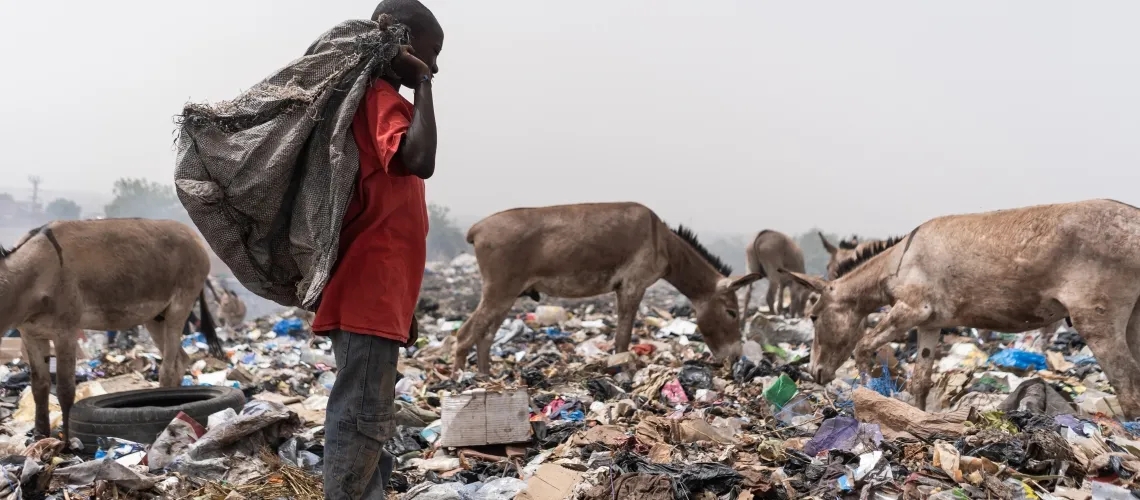
When future generations share the story of plastic pollution, it will include graphic images of plastics_blog_1140x500shutterstock_2176244901.jpgturtles choking on plastic debris, zooming out to show beaches and communities laden with trash, and panning to medical reports showing microplastic in the average person’s bloodstream.  This is a story that started as an environmental crisis, and quickly became an economic and health crisis. And it’s a story that intersects with the triple planetary crises we are grappling with today: biodiversity, climate, and pollution. We are on the brink of writing the next important chapter in this story.

Continue reading

Transition to clean energy for all – Step by Step

The upcoming Summit for a New Global Financing Pact will bring together global leaders to energy.jpglook at how international financing can bring solutions to countries facing mounting crises from climate change to poverty and pandemics.   This is an opportune time to focus on how international finance can jumpstart the clean energy transition, especially for the countries most vulnerable to climate change.

Continue reading

Weakening Growth, Financial Risks

Global Economic Prospects

Global growth is projected to slow significantly amid high inflation, tight monetary policy, and GEP-2023b-Front-Covermore restrictive credit conditions. The possibility of more widespread bank turmoil and tighter monetary policy could result in even weaker global growth and lead to financial dislocations in the most vulnerable emerging market and developing economies (EMDEs). Comprehensive policy action is needed to foster macroeconomic and financial stability. Among many EMDEs, and especially in low-income countries, bolstering fiscal sustainability will require generating higher revenues, making spending more efficient, and improving debt management practices. Continued international cooperation is also necessary to tackle climate change, support populations affected by crises and hunger, and provide debt relief where needed.

Executive Summary

Full Report


Investments in Africa

These are certainly challenging times. And in these challenging times, in Africa, the private unnamedsector is doing interesting things.

The nine stories in this second edition of IFC Insights Africa, published for the 2023 Africa CEO Forum in Abidjan, Côte d’Ivoire, showcase the innovative ways African businesses—both large and small—are addressing some of the continent’s most pressing challenges, and improving lives and creating jobs while doing it.

Continue reading

eC2: Integrating Seismic Risk Considerations into Energy Efficiency Investments in North Macedonia, Kosovo, Bosnia and Herzegovina, and Montenegro

Deadline: 27-Nov-2019 at 11:59:59 PM (Eastern Time – Washington D.C.)RISK

This project is anticipated to result in the following outcomes:
i. Improved understanding by task teams and counterparts on seismic vulnerability of buildings and consideration during preparation of new EE operations
ii. Seismic vulnerability considerations systematically integrated into eligibility criteria and building-specific assessments for EE investments.
iii. Knowledge on safer public facilities is deepened

Continue reading

eC2: Support to the identification and implementation of priority reforms in the agribusiness sector in Guinea

Deadline: 24-Jun-2019 at 11:59:59 PM (Eastern Time – Washington D.C.)

The Investment Climate (IC) in Agribusiness project is a pillar of the IFC-World Bank imagesAction Plan to promote the agribusiness sector in Guinea. The World Bank Group recently assessed the main constraints and opportunities for the development of the agribusiness sector in Guinea.

The IC in Agribusiness project aims to improve the business climate for agribusiness through the implementation of targeted reforms aimed at unlocking investments high potential value chains and improving investments retention and generation. To implement these reforms, a dialogue mechanism to mobilize government and business community’s commitment is needed.

The IFC seeks to hire the services of a Consultant to support the identification and implementation of priority reforms for the agribusiness sector in Guinea. The Consultant will help drive the reforms on the Guinea agribusiness sector and will work closely with the designated teams within to implement these reforms.

Continue reading

eC2: Detailed PV Integration Studies in Guinea

Deadline:  27-Nov-2018 at 11:59:59 PM (Eastern Time – Washington D.C.) solar-wind (CC0) Pixabay-Kenueone

Guinea has a potential variable solar resource according to the regions. Guinea is positioning itself to become a major producer of electricity by 2021, aiming for the export of a large part of its production to its neighbors Mali, Senegal and Guinea-Bissau. In this perspective, it wants to study the possibility of integrating a large fleet of solar power plants on its network. This detailed study for the integration of solar projects in Guinea will be used to undertake the following main objectives:
Study of the capacity reserve for frequency regulation and realization of an economic Dispatch study. Update of the integration study. Diagnosis and Evaluation Investments for the Strengthening and Modernization of the Dispatch Center

Continue reading

eC2: Improving empirical evidence and analytical support on investments in Coastal Resilience in India and Bangladesh

Deadline: 10-Oct-2018 at 11:59:59 PM (Eastern Time – Washington D.C.)blog-in-benin-can-resilient-investment-solutions-save-a-battered-coast-780x439

Assignment Description:  The World Bank aims to apply financing from GFDRR to support efforts to improve the resilience of its coastal areas in India and Bangladesh to enable future investment plans towards building long-term resilience. This technical assistance aims to support the Governments of Bangladesh and India to enhance analytical understanding of past and current interventions, determine lessons learned to assess and improve the quality of resilient investments and improve service delivery of disaster risk management by building and expanding institutional capacities through knowledge exchange and technical and operational collaboration. The expected outcomes of this study are a detailed study assessing past and current coastal resilience interventions (such as multi-purpose cyclone and flood shelters, early warning and dissemination systems, coastal embankments, and community based disaster risk management), cost-benefit analysis of various intervention options, and best practices and lessons learned through data analysis, conceptual/numerical modeling and stakeholder consultations. Also, a comprehensive dissemination strategy will be developed to share the results of the study with the involved agencies, practitioners, and the public in general.

Continue reading