
Over one hundred participants converged in Mumbai for networking and to share lessons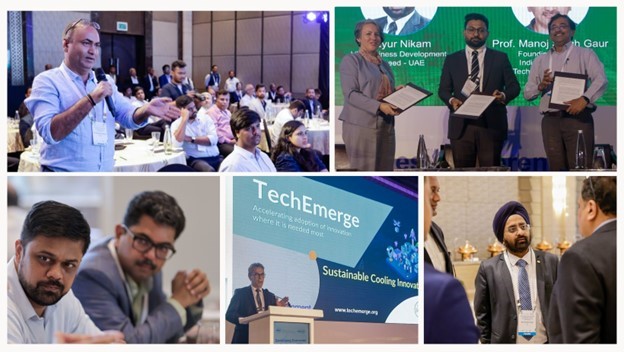 learned from three years of TechEmerge sustainable cooling pilots. Leading corporates—including Indian Hotels Company Ltd (IHCL), Chalet Hotels, Tata Realty, and others—joined IFC India Country Head, Wendy Werner, and TechEmerge manager, Selcuk Tanatar, for a deep dive on the future of cooling and financing mechanisms to scale up these climate-smart solutions. A representative from our development partner, the UK’s Department for Energy Security & Net Zero, delivered opening remarks. The event also included the signing of an MoU among IFC, the Indian Institute for Technology in Jammu, and district-energy company Tabreed, our partner in the TechEmerge Cooling Innovation Lab in India.
Please keep an eye out for more TechEmerge events showcasing sustainable cooling innovations and financing tools, including a global summit in October in Birmingham in the UK.
 People woke up to smog, haze, and a red sun, and were warned to stay indoors to protect themselves from a toxic cocktail of air pollutants. In New York City, the levels of
  Bank Group’s headquarters in Washington D.C. Aware of corruption’s high societal and environmental costs, the World Bank has reaffirmed its commitment to anticorruption as a development priority and seeks to foster partnerships with other stakeholders working towards better governance and integrity. Equally important to the Netherlands, the event was co-hosted by the
  Meteorological Department started its weather records. Extreme weather events like this are becoming frequent and are expected to get worse due to climate change. India is among the countries


You must be logged in to post a comment.