Leveraging the Power of Energy to Light Up Africa

STORY HIGHLIGHTS leveraging-the-power-of-energy-to-light-up-africa-780x439

  • West Africa has made great strides in electrification, but there is still a long way to go to connect the entire population and provide everyone with reliable and affordable energy.
  • While several countries in the subregion have significant renewable energy sources, they lack the conditions to develop them.
  • To accelerate Africa’s energy transformation, the World Bank is supporting the West Africa Power Pool (WAPP) through financing for interconnection infrastructure and reforms aimed at developing a regional electricity market.

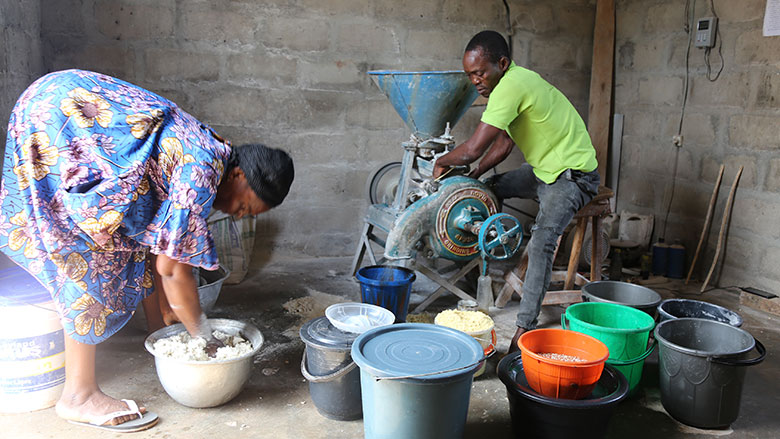
ABOMEY-CALAVI, July 22, 2021—In a corn mill in Zoundja, a district in Abomey-Calavi, a northern suburb of Cotonou, Benin, about twenty pots and pans compete for space amidst a deafening noise that can be heard all over the neighborhood. At the control of his machine, Antoine K has the privilege of serving the households of the district by grinding their corn into flour. The only problem is that not everyone can afford his services in this urbanized area where rich and poor live side by side. “I grind a kilo of corn for CFAF 75 (1.5 cents), which is too expensive for some women, but I have no choice if I want to be able to pay the electricity bill and keep the mill running,” says the miller.
 

Image
At Antoine K.’s corn mill, higher electricity rates mean higher prices for services, which is a problem for poor households. Zoundja, Abomey-Calavi, Benin. Zoundja, Abomey-Calavi, Benin. © Gnona Afangbedji/World Bank


In 25 years of service, Antoine, now in his 50s, has seen a lot of improvement in access to electricity. Neighborhoods have been progressively electrified and today power outages are less and less frequent.

But he has also seen the cost of services rise as electricity rates in Benin have increased. The last bill he received from the Beninese power company was for more than CFAF 100,000 (about $180), including taxes—too much for his CFAF 200,000 ($365) monthly income. The increase in electricity rates has a domino effect on the cost of his services.

In Benin, as is the case everywhere in West and Central Africa, the mill occupies a central place in the life of households that consume corn or other grain-based foods on a daily basis. But the price of electricity represents an exorbitant cost for these small businesses, whose clientele is made up essentially of poor households.

Still a long way to go despite significant progress

With an electrification rate of 53% in 2019 against only 34% in 2000, West Africa has made significant progress, but challenges remain, and nearly half the population still lacks electricity.

The story of the electrification of Rosalie Zongo’s village in Burkina Faso illustrates this progress and also shows the need to address persistent challenges, develop the potential of diverse energy resources, and strengthen interconnections.


Toward an efficient regional power market in West Africa

A regional solution that goes beyond the efforts made at the national level is imperative to ensure a sustainable energy future in Africa. “Our region has immense electrical energy resources, which are capable of meeting demand for many years. But they are concentrated in a few countries that sometimes lack the means to develop them. Through interconnection, we are making power available to countries,” says Apollinaire Siengui Ki, Secretary General of the West Africa Power Pool (WAPP). “Connectivity makes it possible to supply the amount of energy needed at a lower cost.”

Created in 1999, WAPP brings together 14 countries. Its mission is to promote and develop infrastructure for the production and transmission of electrical energy and to ensure the coordination of power exchanges between the member states of the Economic Community of West African States (ECOWAS).

With the support of its partners, including the World Bank, WAPP has mobilized approximately $5 billion to complete nine cross border interconnections and aims to interconnect all 14 countries by 2024. This has improved access in several countries of the region, some of which, such as Côte d’Ivoire, are now able to sell excess electricity to other countries that need it.

Trust: an essential component of any successful commercial venture

For such a regional market to work, significant reforms are required at the country level to enable market stakeholders to effectively and efficiently play their roles as reliable buyers and reliable suppliers of electricity.

To help Burkina Faso, Côte d’Ivoire, Guinea, Liberia, Mali, and Sierra Leone implement the sectoral reforms needed to successfully create this regional electricity market, the World Bank provided $300 million in financing approved in July 2020. The goal: to support the implementation of the December 2018 ECOWAS directive on securing cross border trade in electricity, which is based on three main pillars: increasing confidence in the application of electricity trade agreements by supporting mechanisms to improve  payments and the supply of electricity; implementing least-cost supply decisions for electricity that take into account regional options and promote competition; and promoting transparency by addressing the issue of the solvency of national electricity companies and keeping the market informed of key investment decisions that may impact supply and demand.   

“The World Bank has consistently prioritized the development of interconnections and regional electricity trade in order to reduce the costs of electricity and therefore to limit the sector’s fiscal burden and to lower costs for businesses and consumers,” says Ousmane Diagana, World Bank Vice President for West and Central Africa. “Pooling the region’s diverse green resources, such as hydropower in Guinea and Liberia and solar energy in the Sahel, will help build a more resilient system that will be better able to adapt in the long run to the various shocks that the region faces.”


Banking on green energy and powering the digital revolution

By 2030, regional electricity consumption is expected to increase by 100%. Meeting this exponential growth in demand by expanding the existing electricity mix would increase carbon emissions by an estimated 102%. But closer regional cooperation will make it possible to adopt cleaner technologies and reduce the carbon intensity in power generation by 32%. Regional trade will thus enable the development of renewable energy projects that are too large to be accommodated by a single country’s power system. Also noteworthy is the approval of $465 million of new financing in June 2021, which will help increase renewable energy integration and improve the operation of the regional power grid through battery energy storage—an innovative initiative that will boost investment in renewable energy.

“We want to move out of the hydrocarbon era and into green energy,” says Gesler Murray, Liberia’s Minister of Mines and Energy. “Liberia is in a region that is rich in solar energy, and we also have many rivers on which various types of hydroelectric systems could be installed.”

The COVID-19 pandemic has prompted rapid growth in the use of digital platforms and applications in all sectors and at all levels. But digital transformation cannot be achieved in the region without better access to electricity.

The time has come to optimize the management of energy resources in West Africa in order to improve the daily lives of the region’s inhabitants and enhance the productivity of its economies. From Antoine’s mill in Benin, to Rosalie’s family in Burkina Faso, to the major industries of the subregion, Africa is being transformed by the driving power of energy.


Investments in human capital require bold financing actions for a resilient recovery

Inclusive investments in health, early childhood development, learning, and women’s economic 20033631845_d902e0cc95_cempowerment can contribute to an inclusive, resilient, and sustainable recovery.  This was the clear message, focusing on human capital, that the ministers of finance and planning of 81 Human Capital Project HCP countries sent at the last Ministerial Conclave.

Continue reading

Optimizing vaccine delivery by teaching healthcare workers digital skills

This blog is part of a series on digital safeguards and enablers for COVID-19 vaccine delivery.health_care_workers_using_digital_tools_1

Countries around the world are developing and executing national plans for COVID-19 vaccine delivery, balancing short-term goals — accelerated mass vaccination to reach herd immunity — with efforts to strengthen long-term health systems. Many, if not all, will be using digital technologies to face the scale and complexity of accelerated mass vaccination administration. Their intended users will need to be equipped with the right digital skills if these digital tools and platforms are to be successful. Likewise, the public health ecosystem needs to acquire the capabilities to develop, operate, maintain, and sustain the underlying databases, services, systems, and infrastructure necessary for the tools to work correctly. 

Continue reading

Updated estimates of the impact of COVID-19 on global poverty: Turning the corner on the pandemic in 2021?

More than a year into the pandemic, there is still much we don’t know concerning its impact on global poverty. Though high-frequency phone surveys have helped gain a broad understanding of the economic consequences of the pandemic, the collection of detailed, household surveys needed to understand its impact on poverty has largely been put on hold. While awaiting household surveys, we continue our previous approach of trying to understand the poverty consequences of the pandemic by extrapolating the income and consumption from past household surveys using national accounts growth forecasts. Simple as it is, this method generally outperforms more complicated methods in nowcasting poverty.

Continue reading

New CAO Policy Enhances IFC and MIGA Environmental and Social Accountability

WASHINGTON, July 1, 2021 – The Boards of Directors of the International Finance Corporation (IFC) and the Multilateral Investment Guarantee Agency (MIGA) have approved a new policy for the Compliance Advisor Ombudsman (CAO), the independent accountability mechanism of IFC and MIGA. The Independent Accountability Mechanism (CAO) Policy, which becomes effective today, improves effectiveness of the complaints process in projects supported by IFC and MIGA, with an increased focus on outcomes for communities and IFC/MIGA clients, and responds to recommendations from an independent external review.

Continue reading

Primary health care needs to be fit for the post COVID world – how do we do that?

As a physician, I know firsthand the important role that primary health care plays in the health of individuals, families, and communities. When it works well, it is the foundation of a good life and a thriving national health care system.  When it is weak, people suffer.

Continue reading

Walking the Talk: Reimagining primary health care after COVID-19

Strong primary health care (PHC) saves lives and money and makes health systems work

better for all people. The current COVID-19

crisis exacerbated pre-existing weaknesses and inflicted devastating health and economic costs. However, it also created a once-in-a-generation chance for transformational health-system change.

COVID-19 has exacerbated pre-existing distortions and exposed underlying system weaknesses. It has also highlighted the important role PHC must play during a health emergency through measures such as surveillance, testing and contact tracing, and in keeping hospitals from overfl owing with critically ill patients. Strong PHC systems are also key to the efficient delivery of crucial health services, including vaccinations. 

Continue reading

World Bank Financing for COVID-19 Vaccine Rollout Exceeds $4 Billion for 50 Countries

WASHINGTON, June 30, 2021 – The World Bank announced today that it is providing over $4 billion for the purchase and deployment of COVID-19 vaccines for 51 developing countries, half of which are in Africa. More than half of the financing comes from the International Development Association (IDA), the Bank’s fund for the world’s poorest countries, and is on grant or highly concessional terms. This financing is part of the Bank’s commitment to help low- and middle-income countries acquire and distribute vaccines and strengthen their health systems.

The World Bank reiterated its call to governments, pharmaceutical companies, and organizations involved in vaccine procurement and delivery to help increase transparency and build greater public information regarding vaccine contracts, options and agreements; vaccine financing and delivery agreements; and doses delivered and future delivery plans. It asked those countries anticipating excess vaccine supplies in the coming months to release their surplus doses and options as soon as possible, in a transparent manner, to developing countries with adequate distribution plans in place.

Since the start of the COVID-19 pandemic, the World Bank Group has approved more than $150 billion to fight the health, economic, and social impacts of the pandemic. Since April 2020, the Bank has scaled up its financing by over 50 percent, helping more than 100 countries meet emergency health needs, strengthen pandemic preparedness, while also supporting countries as they protect the poor and jobs, and jump starting a climate-friendly recovery.

The World Bank is helping developing countries in every region of the world with vaccine purchase and rollout,” said Axel van Trotsenburg, World Bank Managing Director of Operations. “Significant challenges still remain regarding vaccine deployment and hesitancy. We are taking action on all fronts to tackle these challenges, working in solidarity with international and regional partners to expedite doses to as many people as possible and to enhance disease surveillance, preparedness, and response.”

Full details of World Bank vaccine operations are posted on our vaccine operations portal, with regular updates. The $4 billion is supporting COVID-19 vaccination efforts in Afghanistan, Bangladesh, Benin, Cabo Verde, Cambodia, Comoros, the Republic of Congo, Côte d’Ivoire, Democratic Republic of Congo, Ecuador, El Salvador, Eswatini, Ethiopia, The Gambia, Georgia, Ghana, Guinea, Guinea Bissau, Guyana, Honduras, Indonesia, Jordan, Kenya, Kosovo, the Kyrgyz Republic, Lao PDR, Lebanon, Lesotho, Madagascar, Malawi, Moldova, Mongolia, Mozambique, Nepal, Niger, Pakistan, Papua New Guinea, Philippines, Rwanda, São Tomé e Príncipe, Senegal, Sierra Leone, South Sudan, Sri Lanka, Sudan, Tajikistan, Togo, Tunisia, Ukraine, Yemen, and Zambia.

The Bank’s vaccine finance package is designed to be flexible. It can be used by countries to acquire doses through COVAX, the Africa Vaccine Acquisition Task Team (AVATT) or other sources. It also finances vaccine deployment and health system strengthening, such as vaccine cold-chains, training health workers, data and information systems, and communications and outreach campaigns to key stakeholders which are crucial to ensure vaccination acceptance. The Bank has aligned its eligibility criteria for COVID-19 vaccines with the revised eligibility criteria of COVAX and other multilateral partners.

The World Bank is partnering with the African Union and the World Bank-supported Africa Center for Disease Control to support AVATT initiative with resources to allow countries to purchase and deploy vaccines for up to 400 million people across Africa. The Bank is also convening a task force with the IMF, WHO, WTO, and other partners to track, coordinate, and advance delivery of COVID-19 vaccines to developing countries.

The Bank continues to work with governments and partners (UNICEF, the Global Fund, WHO, and GAVI) to assess the readiness of over 140 developing countries to deploy vaccines. Countries have made good progress since the publication of the effort’s first report. Latest findings show that 95 percent of countries have developed national vaccination plans, 79 percent have safety measures in place, and 82 percent have prioritizations of populations to receive the vaccine. However, only 59 percent have developed plans to train the large number of vaccinators needed and less than half have a plan in place to generate public confidence, trust, and demand for COVID-19 vaccines.


PRESS RELEASE NO: 2021/186/HNP