Spring Meetings 2015

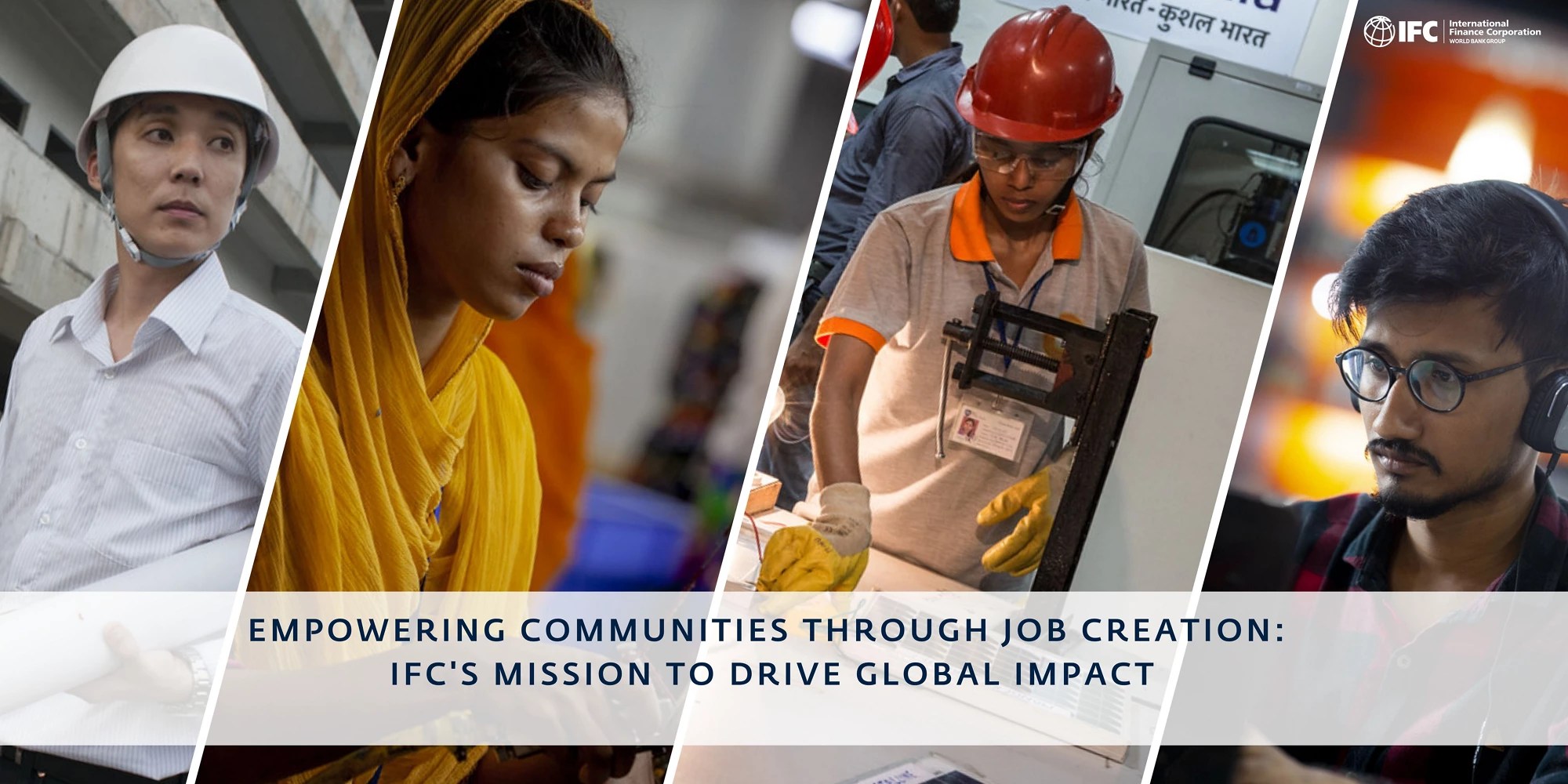
With 1.2 billion young people in emerging economies reaching working age over the next decade—and only about 420 million jobs expected to be generated—the urgency of finding scalable and sustainable solutions has never been greater.

SPRING MEETINGS 2025

Jobs – The Path to Prosperity

Tuesday, April 22, 2025
2:00-3:30 PM EDT/GMT-4 (local time)

Event | Spring Meetings 2025: Jobs – The Path to Prosperity | World Bank Live

This event tackles one of the defining and complex challenges of our time: how to meet the stable employment aspirations of the developing world’s fast-growing youth population.

Through powerful stories of young entrepreneurs, dialogue with private sector executives, and insights from World Bank Group leadership, the session will explore how to energize the creation of more and better jobs. From innovation to investment, skills to sectors, this event will be a moment to catalyze collective action for a future where every young person has a pathway to decent work.

The event will take place on April 22 at the World Bank headquarters in Washington, D.C. and will be broadcast on World Bank Live with interpretation in ArabicFrench and Spanish.

Spring Meetings | World Bank Group

Supporting more and better jobs by investing in nature-based solutions

Investments in nature can restore biodiversity, reduce the impacts of disasters, and revitalize cities. Integrating nature-based solutions (NBS) into public infrastructure and disaster-risk-reduction efforts can also create job opportunities, both during project implementation and over the long term.

Continue reading

Development is how we compete, grow, and stay secure

Private investment flows only where the right conditions exist and where there’s a clear probability of return

The World Bank was not born of altruism, but of strategic design. Its original purpose, shaped by U.S. interests, was to forge a global economic landscape ripe for private sector investment. This wasn’t charity—it was a calculated move to promote economic growth and prevent instability. Over time, our mission has evolved, sometimes drifting into humanitarian efforts. But during the past two years of reform, we have refocused on our core mandate: driving development and reducing poverty. The resources needed to achieve this require the private sector to be an active player.

Continue reading

Investing in nutrition is smart economics

Every day, millions of children are robbed of their potential before they even start school. This is not a distant tragedy—it’s a global emergency. Malnutrition is one of the most critical, yet often overlooked, development challenges of our time. Although some progress has been made in recent years, the global fight against malnutrition has stalled, continuing to impact millions, especially in low- and middle-income countries.

Continue reading

Secure Property Rights in the Western Balkans Help Grow Businesses and Create Jobs

Story Highlights

Easier Access to Property Rights - Bosnia and Herzegovina
Entrepreneurs like Dženana are benefiting from easier property registration in Bosnia and Herzegovina.
  • Streamlining access to property ownership supports entrepreneurs in the Western Balkans, allowing them to focus on innovation and expansion.
  • With World Bank assistance, Bosnia and Herzegovina, Kosovo, and Serbia have digitized land registration processes facilitating new business ventures.
  • Empowering small and medium-sized businesses is crucial for creating jobs, strengthening supply chains, and boosting economic growth.
Continue reading

Countries and Co-Financiers Working Together to Power Regional Energy Integration in Western Africa

The Development Challenge

default

Access to reliable, affordable, and sustainable energy is key to unlocking Africa’s socio-economic transformation. This is the focus of Mission 300, an ambitious effort between the World Bank and the African Development Bank, amongst other partners, to connect 300 million people to electricity in sub-Saharan Africa by 2030. With electricity comes new opportunities for jobs, trade, and investment, as well as better schools, hospitals, and other essential services. Lives change. In 2020, only 52 percent of the population in Western and Central Africa had access to electricity services. Reaching those without access, including over 220 million people in Western Africa, requires overcoming challenges related to geography, high electricity costs, weak institutional capacity, and political instability.

Continue reading

Are emerging market risks for private investors overstated? What the data show

The G20 has delivered a strong message that multilateral development banks (MDBs) need to be “better, bigger, and more effective.”  That’s the headline of the G20 reform plan adopted in November 2024, which not only sets out the future path but also establishes how to get there with a detailed roadmap of 13 recommendations and 44 actions. 

Continue reading

Evolving to create digital pathways for all

The digital world doesn’t wait. It evolves—fast. Those who don’t adapt risk being left behind. For the World Bank Group, this isn’t just a challenge, it’s a mandate. 

In low- and middle-income countries, where this transformation can be key to unlocking jobs, economic growth, and better public services, the urgency to act is even greater. That’s why we’re changing our approach to digital development to better meet the speed and scale of today’s transformation.

Continue reading

Five things to know about the new Human Capital Data Portal

Investing in human capital—the knowledge, skills, and health people accumulate over a lifetime— unlocks a nation’s wealth and the full potential of individuals. Reliable measurement of human capital development is crucial to this effort. From local to global, human capital data provides key insights into effective approaches, guides efficient resource allocation, and strengthens policymakers’ commitment to investing in people, fostering sustainable and inclusive economic growth.

Continue reading

Sahel RESILAND: Scaling-up sustainable solutions for dryland forests

Dryland forests in the Sahel are remarkable ecosystems that embody resilience and adaptability. Stretching across the arid landscape, iconic tree species such as Acacia, Baobab, and Shea trees stand as symbols of endurance, providing vital resources like food, medicine, and shade for both communities and livestock. These tenacious forests are not only lifelines for biodiversity but also cornerstones of local livelihoods.

Continue reading