IFC: Creating New Commercial Relationships in India

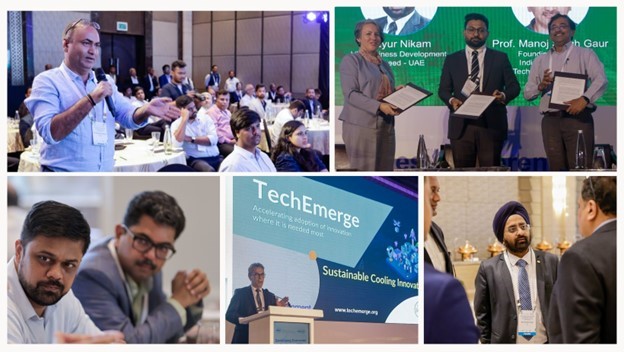
Over one hundred participants converged in Mumbai for networking and to share lessonsindia learned from three years of TechEmerge sustainable cooling pilots. Leading corporates—including Indian Hotels Company Ltd (IHCL), Chalet Hotels, Tata Realty, and others—joined IFC India Country Head, Wendy Werner, and TechEmerge manager, Selcuk Tanatar, for a deep dive on the future of cooling and financing mechanisms to scale up these climate-smart solutions. A representative from our development partner, the UK’s Department for Energy Security & Net Zero, delivered opening remarks. The event also included the signing of an MoU among IFC, the Indian Institute for Technology in Jammu, and district-energy company Tabreed, our partner in the TechEmerge Cooling Innovation Lab in India.
Please keep an eye out for more TechEmerge events showcasing sustainable cooling innovations and financing tools, including a global summit in October in Birmingham in the UK.  


World Bank Group Announces Comprehensive Toolkit to Support Countries After Natural Disasters

June 22, 2023—The World Bank Group today announced a suite of new and expanded actions to help countries respond quickly and effectively to an ever-growing onslaught of crises.

At the Summit for a New Global Financial Pact, Ajay Banga announced an expanded toolkit for crisis preparedness, response, and recovery that includes: (1) pausing debt repayments; (2) redirecting financing; (3) linking crisis preparedness and financing; (4); backstopping development projects with private sector support, and (5) building enhanced catastrophe insurance without debt.

Continue reading

India incorporates green bonds into its climate finance strategy

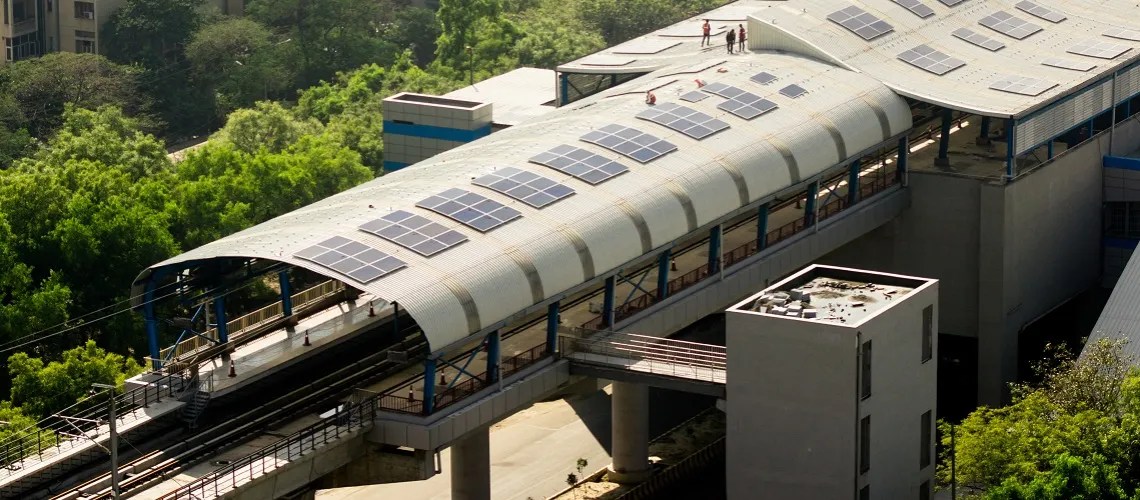
In 2023, India experienced the hottest February since 1901, the first year the country’sdehli_metro_adobestock_252063301_blog.jpg Meteorological Department started its weather records. Extreme weather events like this are becoming frequent and are expected to get worse due to climate change. India is among the countries most affected by the impacts of extreme weather events
Continue reading

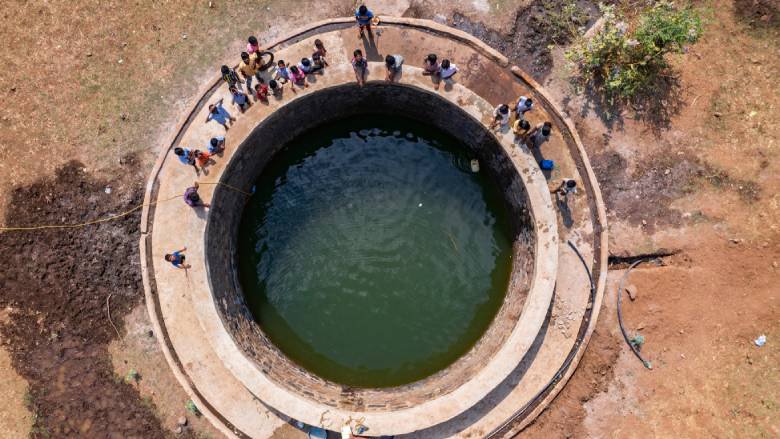
The Hidden Wealth of Nations: Groundwater’s Critical Role in a Changing Climate

STORY HIGHLIGHTS econ-of-groundwater-india-well-780x439

  • As “nature’s insurance,” groundwater protects food security, reduces poverty, and boosts resilient economic growth, but the resource is threatened by overexploitation and pollution.
  • High-level political action is needed to prioritize groundwater and align the private and social costs of its use.
  • A new World Bank report considers the economic value of groundwater, the costs of misusing it, and the opportunities to leverage it more effectively.

Continue reading

World Bank Group Intensifies Focus on Private Sector, Launches Effort to Scale Investment in Emerging Markets

PARIS, June 22, 2023—The World Bank Group today launched the Private Sector Investment Lab, a concrete step in a broader effort to develop, and rapidly scale, solutions that address the barriers preventing private sector investment in emerging markets.

Continue reading

Work with USAID June 2023

UPCOMING EVENTS

USAID 14th Annual Small Business Conference
On Wednesday, June 21, USAID’s Office of Small and Disadvantaged Business Utilization (OSDBU) will host its 14th Annual Small Business Conference, this year titled “Pathways to Partnership.” The conference will provide existing and prospective U.S. small business partners to engage with USAID Bureaus, Independent Offices, and Mission staff. Register here.

Talking with Primes: Best Practices for Working with USAID as a Sub-Awardee
On Tuesday, July 11, at 10:30 a.m. ET, join USAID’s Industry Liaison and Konektid International for an interactive webinar on sub-awards. The webinar will cover best practices for USAID sub-awards, identify ways to connect with prime partners and discuss strategies for identifying funding opportunities. Register here

How to Work with USAID 101
On Thursday, July 20, at 9:00 a.m. ET, join USAID’s Industry Liaison team for a virtual How to Work with USAID 101 session. Current and prospective partners will engage with Agency staff and learn about USAID’s operational framework and how to find funding opportunities. Register here.


What Counts as Climate? Preliminary Evidence from the World Bank’s Climate Portfolio

Dear Reader,

We wanted to let you know about our new study, published this week by the Center for Global Development and the Breakthrough Institute.

Climate finance at the World Bank is a hot topic, with major shareholders pushing for reforms that would have the Bank substantially expand its climate lending. But so far the discussion has focused much more on how much money the Bank can lend, rather than where that money is going.

With our colleague Guido Núñez-Mujica, we examined 2,554 projects between 2000 and 2022 that the World Bank includes in its climate portfolio, including 2,047 projects tagged specifically as climate mitigation. We found that the Bank has a climate portfolio skewed towards mitigation, both in middle-income countries and in energy-poor, low-income countries. 

We also found that hundreds of projects tagged climate—many in poorer countries—appear to have little to do with either climate change mitigation or adaptation, from teacher training to improving healthcare access for girls. $15 billion worth of the Bank’s climate finance portfolio is attributed to projects where climate accounts for less than 20 percent of the project’s value, and there typically is no climate rationale offered to support the climate tags in these cases. Further, most of the mitigation projects tagged as 100 percent climate lack estimates of greenhouse gas (GHG) emissions reductions, and there is no standardized reporting on GHG estimates across the portfolio.

What does this mean? It’s clear that reporting on climate programming at the Bank is still in its infancy. With immense pressure on the institution to scale up climate lending, it’s important that the Bank’s shareholders and climate advocates apply scrutiny to how the World Bank is spending its climate money, not just how it is raising it.

You can read the full paper here, and a shorter analysis of what we found here.

The role of ethical leadership in curbing corruption

As much as researchers try to isolate the factors of success in controlling corruption,blog-wbginstitutionsculture-hero-0623.jpg whether it be at a national scale or that of a particular organization, there is always a residual unexplained element. It may be attributed to culture, systems, or other factors, but one catalytic ingredient is almost always leadership.
Continue reading

We can’t have a world without poverty in a world with plastic pollution

When future generations share the story of plastic pollution, it will include graphic images of plastics_blog_1140x500shutterstock_2176244901.jpgturtles choking on plastic debris, zooming out to show beaches and communities laden with trash, and panning to medical reports showing microplastic in the average person’s bloodstream.  This is a story that started as an environmental crisis, and quickly became an economic and health crisis. And it’s a story that intersects with the triple planetary crises we are grappling with today: biodiversity, climate, and pollution. We are on the brink of writing the next important chapter in this story.

Continue reading