
The global economy is facing substantial headwinds, emanating largely from an increase in trade tensions and heightened global policy uncertainty. For emerging market and developing economies (EMDEs), the weak outlook limits their ability to boost job creation and reduce extreme poverty. This challenging context is compounded by subdued foreign direct investment into EMDEs. Global cooperation is needed to restore a more stable global trade environment and scale up support for vulnerable countries, including those in fragile and conflict situations. Domestic policy action is also critical to contain inflation risks and strengthen fiscal resilience. To unlock job creation and long-term growth, reforms should focus on raising institutional quality, attracting private investment, and strengthening human capital and labor markets.
Tag Archives: Global Economy
Private Investment in Infrastructure: Where are we now?
A quick scan of the headlines tells you everything that those of us working in international development already know: today’s world is not business as usual. In just a few short years, the global landscape has transformed in a way that very few of us could ever have anticipated.
Annual Meetings 2022: Development in Crisis
Increased poverty. Food shortages. Energy shocks. Debt crises. Climate change. Inflation. War.
The headlines are grim. And they set an unavoidable backdrop for this year’s Annual Meetings of the World Bank Group and the International Monetary Fund. The Meetings provided an opportunity to raise the alarm to these dangers—and discuss how to move forward to help the poor and vulnerable.
World Bank Live – Annual Meetings RECAP 2022
The 2022 IMF-World Bank Group Annual Meetings: Unity in a time of crises
As we prepare for the upcoming IMF-World Bank Group Annual meetings, the impacts of the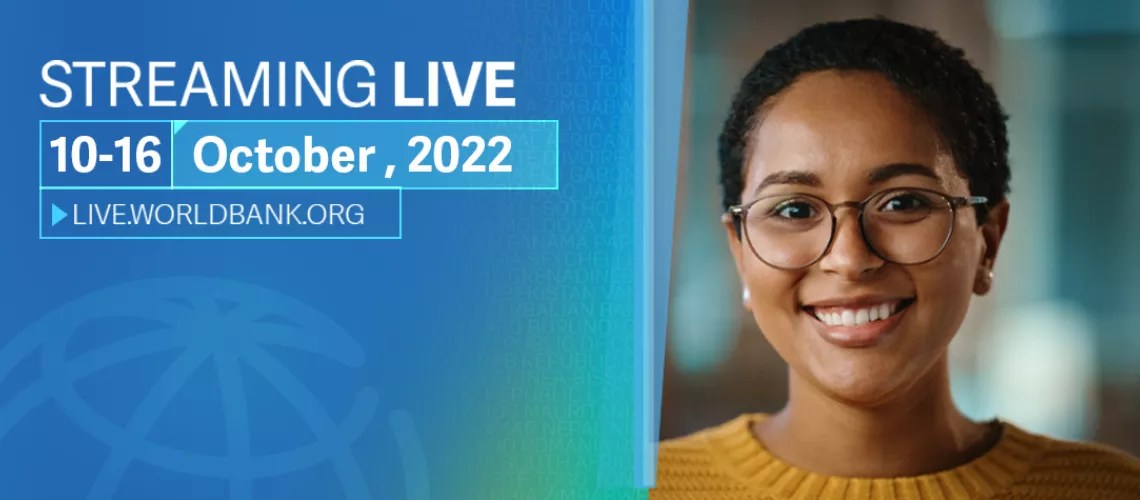 ongoing economic crisis continue to bear down on nearly all facets of the global economy – pushing more people into poverty and impacting lives and incomes around the world. The pandemic has forced roughly 70 million more people into extreme poverty and global median incomes declined for the first time since measurements began in 1990.
Further complicating these global development challenges are the effects of the high food, fuel, and fertilizer prices rippling through the supply chains of an interconnected world, creating global disruptions and battering incomes and livelihoods – especially among the poorest and most vulnerable populations around the globe.
The 2022 IMF-World Bank Group Annual Meetings: Unity in a time of crises
As we prepare for the upcoming IMF-World Bank Group Annual meetings, the impacts of the ongoing economic crisis continue to bear down on nearly all facets of the global economy – pushing more people into poverty and impacting lives and incomes around the world. The pandemic has forced roughly 70 million more people into extreme poverty and global median incomes declined for the first time since measurements began in 1990.
Further complicating these global development challenges are the effects of the high food, fuel, and fertilizer prices rippling through the supply chains of an interconnected world, creating global disruptions and battering incomes and livelihoods – especially among the poorest and most vulnerable populations around the globe.
The 2022 IMF-World Bank Group Annual Meetings: Unity in a time of crises
As we prepare for the upcoming IMF-World Bank Group Annual meetings, the impacts of the ongoing economic crisis continue to bear down on nearly all facets of the global economy – pushing more people into poverty and impacting lives and incomes around the world. The pandemic has forced roughly 70 million more people into extreme poverty and global median incomes declined for the first time since measurements began in 1990.
Further complicating these global development challenges are the effects of the high food, fuel, and fertilizer prices rippling through the supply chains of an interconnected world, creating global disruptions and battering incomes and livelihoods – especially among the poorest and most vulnerable populations around the globe.
What does it take to deliver quality early learning that nurtures children’s full potential?
Quality early childhood education (ECE) is one of the most important investments societies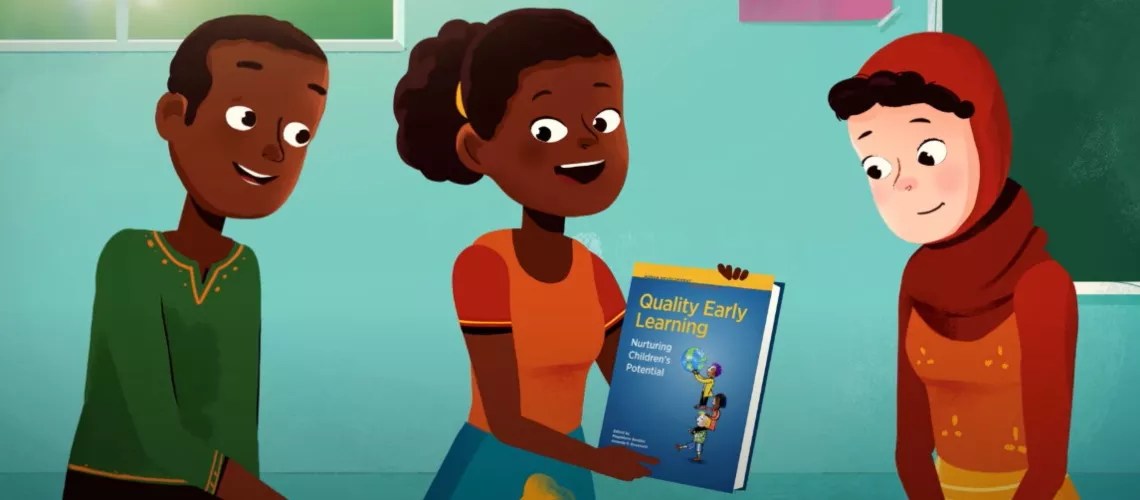 can make to help children build strong foundations that will support a lifetime of learning. This summer, we launched the World Bank’s new volume Quality Early Learning: Nurturing Children’s Potential, which makes the case for more and better investments in quality ECE to make the most of its enormous potential. The volume distills the evidence on the best ways to support a child’s early learning, bringing together insights from renown researchers and implementation experts across multiple disciplines—including neuroscience, psychology, education, and economics—on what it takes to deliver the critical elements of quality ECE at scale in low- and middle-income countries.
World Bank Group Climate Change Action Plan 2021–2025 : Supporting Green, Resilient, and Inclusive Development
The Climate Change Action Plan 2021–2025 aims to advance the climate change aspects of 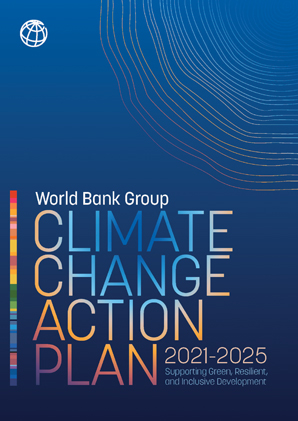 the WBG’s Green, Resilient, and Inclusive Development (GRID) approach, which pursues poverty eradication and shared prosperity with a sustainability lens. In the Action Plan, we will support countries and private sector clients to maximize the impact of climate finance, aiming for measurable improvements in adaptation and resilience and measurable reductions in GHG emissions. The Action Plan also considers the vital importance of natural capital, biodiversity, and ecosystems services and will increase support for nature-based solutions, given their importance for both mitigation and adaptation. As part of our effort to drive climate action, the WBG has a long-standing record of participating in key partnerships and high-level forums aimed at enhancing global efforts to address climate change. The new Action Plan represents a shift from efforts to “green” projects, to greening entire economies, and from focusing on inputs, to focusing on impacts. It focuses on (i) integrating climate and development; (ii) identifying and prioritizing action on the largest mitigation and adaptation opportunities; and (iii) using those to drive our climate finance and leverage private capital in ways that deliver the most results. That means helping the largest emitters flatten the emissions curve and accelerate the downward trend and ramping up financing on adaptation to help countries and private sector clients prepare for and adapt to climate change while pursuing broader development objectives through the GRID approach.
the WBG’s Green, Resilient, and Inclusive Development (GRID) approach, which pursues poverty eradication and shared prosperity with a sustainability lens. In the Action Plan, we will support countries and private sector clients to maximize the impact of climate finance, aiming for measurable improvements in adaptation and resilience and measurable reductions in GHG emissions. The Action Plan also considers the vital importance of natural capital, biodiversity, and ecosystems services and will increase support for nature-based solutions, given their importance for both mitigation and adaptation. As part of our effort to drive climate action, the WBG has a long-standing record of participating in key partnerships and high-level forums aimed at enhancing global efforts to address climate change. The new Action Plan represents a shift from efforts to “green” projects, to greening entire economies, and from focusing on inputs, to focusing on impacts. It focuses on (i) integrating climate and development; (ii) identifying and prioritizing action on the largest mitigation and adaptation opportunities; and (iii) using those to drive our climate finance and leverage private capital in ways that deliver the most results. That means helping the largest emitters flatten the emissions curve and accelerate the downward trend and ramping up financing on adaptation to help countries and private sector clients prepare for and adapt to climate change while pursuing broader development objectives through the GRID approach.Citation
“World Bank Group. 2021. World Bank Group Climate Change Action Plan 2021–2025 : Supporting Green, Resilient, and Inclusive Development. World Bank, Washington, DC. © World Bank. https://openknowledge.worldbank.org/handle/10986/35799 License: CC BY 3.0 IGO.”
World Bank Group Is Leading the Effort on Methane Emissions Reduction with Impactful Projects and Initiatives
Given the short-term potency of methane, cost-effective interventions to reduce  methane emissions should be an immediate priority for the sectors with the largest emissions. The agriculture, energy, sanitation and waste sectors are collectively responsible for 90-95% of global anthropogenic sources of methane:
- Agriculture accounts for ~41% of methane emissions from human activity, including from rice cultivation and agriculture waste burning, manure management, and gas from cows and sheep;
- Energy accounts for ~35%, including from oil and gas extraction, pumping, transport and coal mining;
- Sanitation and waste account for ~20%, including from landfills and wastewater treatment.
 Netherlands for the World Bank
You must be logged in to post a comment.