
Emergency Financing for Locust Affected Countries will help people recover from losses
WASHINGTON, May 21, 2020 — The World Bank Group approved today a US$500 million program to help countries in Africa and the Middle East fight the locust swarms that are threatening the food security and livelihoods of millions of people.
The Emergency Locust Response Program (ELRP), approved today by the World Bank’s Board of Executive Directors, will focus on providing immediate assistance to help poor and vulnerable farmers, herders, and rural households overcome one of the worst locust upsurges in decades. ELRP will provide immediate support to affected households through targeted social safety nets like cash transfers, while investing in the medium-term recovery of agriculture and livestock production systems and rural livelihoods in affected countries.
 billion


 today’s agri-food system. Whether it’s today’s soil moisture, tomorrow’s weather forecast, or the price of rice in Riyadh, every bit of data can improve the efficiency with which the world’s 570 million farmers put food into the mouths of its soon-to-be eight billion consumers. Digital technologies are facilitating the flow of data through the food system, shrinking information asymmetries and fashioning new markets along the way. How can we ensure these new markets are appropriately contested, and the treasure does not end up in the hands of a couple of gunslingers? Is there a public sector’s role in generating and disseminating data that on the one hand encourages innovation and competition and on the other reduces opportunities for market capture? One place to look may be at the crossroads of internet and public goods.

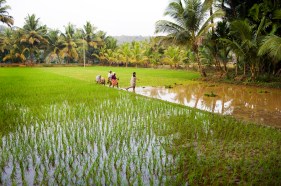 investments in agriculture and rural communities by introducing insurance solutions to reduce the risks faced by farmers and lenders/businesses working with farmers due to adverse weather events/risks related to climate change (drought/flood/hurricane, etc.).
 hington D.C.)
 Netherlands for the World Bank
You must be logged in to post a comment.