Improving Transport Connectivity for Food Security in Africa

Download Now

Despite increasing food production over the past three decades, 58% of Africans remain food insecure. Transport is an often-overlooked contributor to this challenge. Poor transport connectivity, failures at critical ports and border crossings, and high trade costs create long food supply chains that fail to reliably get staple products to people.

Continue reading

Investing in nutrition is smart economics

Every day, millions of children are robbed of their potential before they even start school. This is not a distant tragedy—it’s a global emergency. Malnutrition is one of the most critical, yet often overlooked, development challenges of our time. Although some progress has been made in recent years, the global fight against malnutrition has stalled, continuing to impact millions, especially in low- and middle-income countries.

Continue reading

4 key facts about forests and food: our experts weigh in

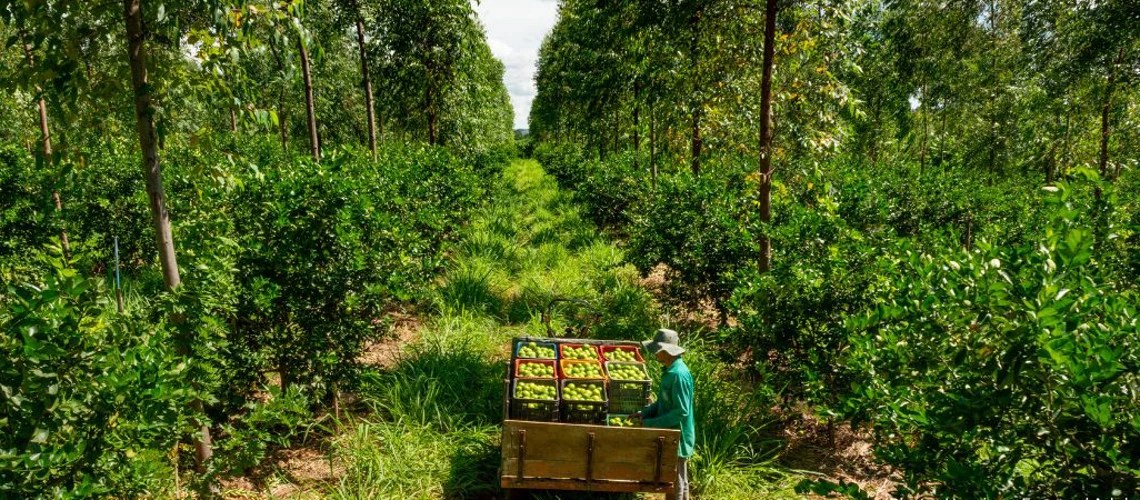
Forests and food are interconnected. As the world accelerates towards a food transition that delivers better, more sustainable outcomes for people and the planet, we must recognize that forests, woodlands, and landscapes are critical to this transition, but also to wider sustainable development goals. Investments in forests are investments in local communities, national economies, and our planet. We spoke to two of our forestry and agriculture experts on the topic.

Continue reading

Five alarming statistics on global hunger

As we welcome 2025 and close the first quarter of the 21st century, it is a moment for reflection. We find ourselves at a pivotal midpoint—five years since the onset of the COVID-19 pandemic and five years away from the 2030 deadline for the Sustainable Development Goals (SDGs). Yet, food and nutrition insecurity remain pressing global challenges. Many countries continue to grapple with recurring crises fueled by climate change, high food prices, and conflict, all of which undermine access to the healthy, nutritious food that people need to thrive.

Continue reading

Global Food and Nutrition Security Dashboard

Latest Update – September 30, 2024

Domestic food price inflation remains high in many low- and middle-income countries. Inflation higher than 5% is experienced in 77.3% of low-income countries (18.2 percentage points higher since the last Update on June 27, 2024), 54.3% of lower-middle-income countries (8.7 percentage points lower), 44% of upper-middle-income countries (8.0 percentage points higher), and 10.7% of high-income countries (0.2 percentage points lower). In real terms, food price inflation exceeded overall inflation in 55.6% of the 167 countries where data is available.

Download the latest brief on rising food insecurity and World Bank responses

2024 Annual Meetings: Agriculture and Food

imf-world-bank-annual-meetings-october-2024-700x644-Food-Agriculture-v2_348x320

The global agriculture and food system can do more than just feed a growing population—it holds immense potential as a driver of growth and job creation. However, to unlock this potential for the long term, the agrifood system needs to prioritize nutrition, climate resilience, and halting environmental degradation.

This flagship event at the World Bank Annual Meetings 2024 will explore how governments and businesses can lead this transformation.

Have questions? Don’t wait—submit them below. Our experts will be responding live on October 23rd! 

WEBINAR LINK

Food Security Update | World Bank Response to Rising Food Insecurity

Latest Update – July 5, 2023

Domestic food price inflation remains high around the world. Information from the latest month between February 2023 and May 2023 for which food price inflation data are available shows high inflation in most low- and middle-income countries, with inflation higher than 5% in in 61.1% of low-income countries, 81.4% of lower-middle-income countries, and 77% of upper-middle-income countries, with many experiencing double-digit inflation. In addition, 80.4% of high-income countries are experiencing high food price inflation. The most-affected countries are in Africa, North America, Latin America, South Asia, Europe, and Central Asia. In real terms, food price inflation exceeded overall inflation in 83.2% from 161 countries where data is available.

Continue reading