Introduction: Advisor to Executive Director Nadia van Huisstede

About 3 months ago (September 2024) I started my position at the Dutch executive NvH_pasfotodirector’s office at the World Bank. Coming from the NL Ministry of Finance, my previous job was coordinating the team responsible for World Bank, IMF and G20 matters where my focus was on the World Bank and sovereign debt. Great to be at the Bank now and to remain engaged – albeit in a different role – in the leading multilateral development bank.

In previous roles at the Ministry of Finance I focused on the European Investment Bank and on the NL budget. My expertise is in financial issues (capital increases, domestic resource mobilization, illicit financial flows, financial instruments). No surprises there when looking at my background.

At the Bank I will continue to cover those issues and IDA, climate including biodiversity & nature and procurement.


Finding a path to peace, stability, and development in Haiti


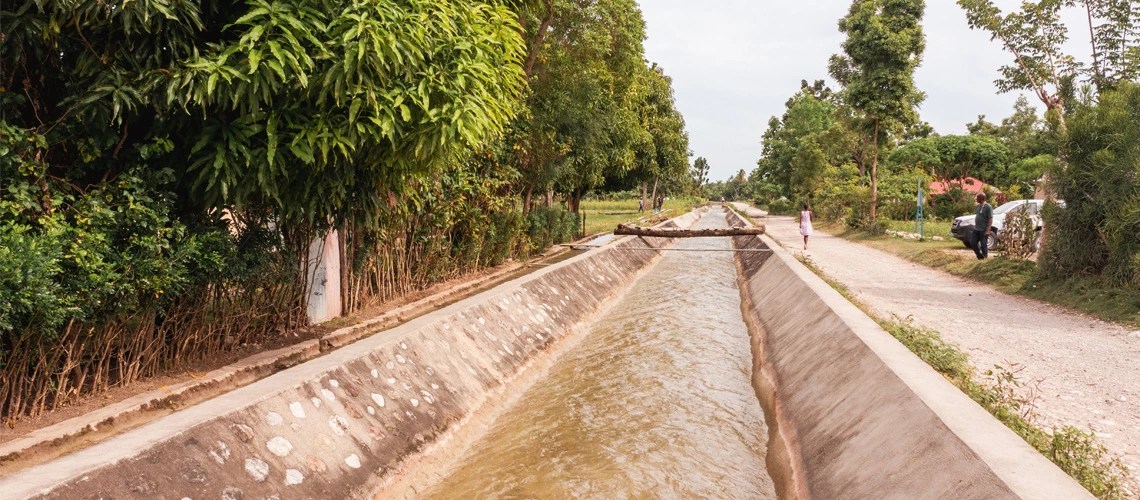
Less than an hour after landing in Port-au-Prince, Haiti, on Wednesday last week we were ida-haiti-1140x500already at the National Emergency Operation Center of the Direction Générale de la Protection Civile discussing how the International Development Association (IDA) can help strengthen the country’s disaster risk management capacity. Remarkably, the center was launched in May 2024 despite the ongoing security and political crisis at the time, demonstrating the resilience of the IDA program implementation in Haiti. We witnessed similar results in other programs and during the field visit to the Southern Peninsula, where IDA projects are having a visible impact on the lives of the Haitian residents of that area.  

Continue reading

A new World Bank database to support a new era in biodiversity conservation

Biodiversity conservation is vital for sustainable development, poverty alleviation, biodiverstiy-illustration-1-960-540-1and a livable planet. It sustains ecosystems that support human livelihoods, particularly in developing nations, by providing essential resources like food, clean water, and climate stability. Healthy ecosystems are crucial for agriculture, fishing, and forestry, which reduce poverty and foster sustainable economic growth. Additionally, biodiversity fuels industries such as ecotourism and pharmaceuticals, generating jobs and income. Maintaining biodiversity strengthens ecosystem resilience, stabilizes climate, and mitigates climate change impacts, making it key to environmental health and global sustainability.

Continue reading

More than 400 Million Students Affected by Climate-Related School Closures since 2022

 For less than $20 per student schools can adapt and minimize learning losses

WASHINGTON, Sept. 4, 2024 – A staggering 400 million students globally experienced school closures from extreme weather since 2022, according to a new World Bank report released today. The report examines the detrimental impacts of climate change on education in low- and middle-income countries and offers solutions to harness education to spur climate action. It also estimates that a one-time investment of $18.51 per child can mitigate the impact from climate shocks.

Continue reading

World Bank Group Supports Delivery of Essential Education Services

Unprecedented Shocks Hit the Palestinian Economy

WASHINGTON, February 21, 2024 – The World Bank Group announced a $30 million grant to help ensure the continuity of crucial education for children. A sharp decline in economic activity, including trade, coupled with a lack of clearance revenues since October 2023, has worsened an already acute fiscal crisis, thus severely impacting the delivery of public services. This grant will contribute to the education sector to help ensure that learners don’t miss out on essential education.

Continue reading

Did you say, “Women and Girls in Science”? Meet Sally, who proves that women can succeed in STEM

STORY HIGHLIGHTSwomen-girls-in-science-v3-780x439

  • Promoting women in science is a key focus of the African Higher Education Centers of Excellence (ACE) program, launched in 2014 to support higher skills development in the areas of science, technology, engineering, and mathematics.
  • These fields tend to be male dominated, especially in Africa. Across the continent, the ACE program –supported by the World Bank – is more and more attracting female students for whom “science has no gender”.
  • Mbassally “Sally” Manneh is one of those “Girls in Science” who has successfully achieved her dream to become an architect. Her story is impressive and interesting.

Continue reading

Preparing now for the next health emergencies

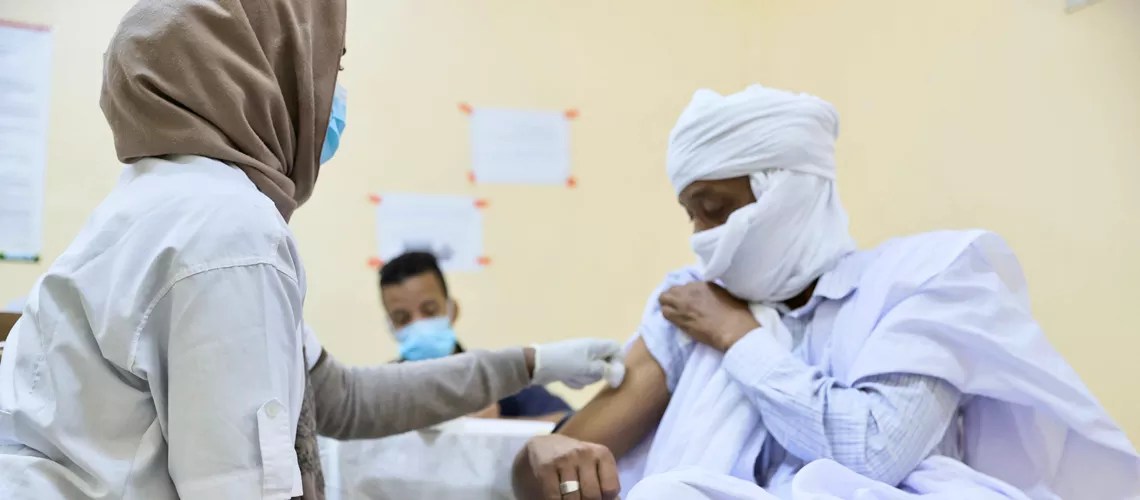
While it is tempting to put the COVID-19 pandemic in the rear-view mirror, now is the time tomauritania_hero.jpg prepare for future public-health crises. Governments should focus on boosting their health systems’ resilience, which includes strengthening prevention and response capacities, improving readiness, and strengthening primary care.

Continue reading

Transforming Education Across Eastern and Southern Africa

Expand Systems, Equip with Skills, Empower Allburundi-3-1430x953Building forward-thinking systems to turn the tide on learning poverty

In Eastern and Southern Africa, about 89% of ten-year-old children are unable to read and understand a short text, reflecting a high percentage of learning poverty that was exacerbated during the pandemic. Globally, Sub-Saharan Africa continues to have the lowest participation rate in tertiary education despite enrollment doubling globally between 2000 and 2013 across all regions of the world. And in many parts of the region, especially the fragile and conflict-prone countries, societal barriers continue to persist, keeping many girls and boys out of school and preventing women especially from being educated and becoming equal members of society.

Continue reading