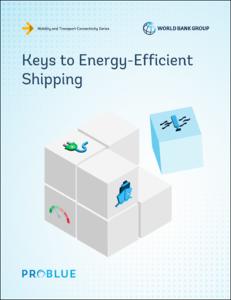
Publication: Keys to Energy-Efficient Shipping

Abstract

This report quantifies the extent to which energy efficiency measures can reduce greenhouse gas (GHG) emissions and fuel costs in global shipping. Drawing on a fleet-wide analysis across key vessel segments (bulk carriers, container ships, and tankers), it assesses the untapped potential of technical and operational efficiency measures through to 2050. Findings show that maximizing energy efficiency can cut global shipping’s GHG emissions by up to about 40% by 2030, exceeding current IMO interim targets, while simultaneously lowering the costs of the energy transition. Roughly half of these potential GHG savings by 2030 pay for themselves, offering savings of up to $220 billion annually in total costs as green fuel supply chains develop, and helping to build resiliency against fuel price volatility and rerouting shocks. The report highlights the role of short-term operational measures (such as forms of port call and speed optimization) and medium-term technical innovations (for example, wind-assisted propulsion) in achieving substantial efficiency gains. It identifies persistent economic, behavioral, and organizational barriers to uptake and illustrates them through deep dives on port call optimization and wind-assisted propulsion, showcasing innovative industry initiatives being applied to overcome these barriers. Finally, the report offers targeted recommendations for policymakers, industry, ports, and financiers to accelerate the adoption of energy efficiency solutions at scale.

“Credit: World Bank Group. All rights reserved”

Multilateral Development Banks to Boost Climate Finance

BAKU, 12 November 2024 – Multilateral development banks (MDBs) today issued a joint statement at COP29 in Baku outlining financial support and other measures for countries to achieve ambitious climate outcomes.

Continue reading

Oversupply Could Mute Effects of Wider Middle-East Conflict on Oil Prices

Global Commodity Prices Set to Fall Through 2026 Amid Historic Oil Glut

WASHINGTON, October 29, 2024Global commodity prices are set to tumble to a five-year low in 2025 amid an oil glut that is so large that it is likely to limit the price effects even of a wider conflict in the Middle East, according to the World Bank’s latest Commodity Markets Outlook. Even so, overall commodity prices will remain 30% higher than they were in the five years before the COVID-19 pandemic.

Continue reading

How to build more livable cities for a livable planet

As we mark World Cities Day, we are reminded that livable cities are key to a livable planet.  

For most of us, cities are our homes and workplaces. Today, nearly 60% of the world’s population lives in cities—a share that will rise to almost 70% by 2050. Cities are also a key driver of national growth and development, accounting for more than 80% of global GDP and almost 90% of private sector job creation.

Continue reading

Letter: G20 must step up aid to world’s poorest countries

This piece originally appeared in the Financial Times.

The world’s poorest countries are in a development crisis and need greater access to affordable financing (Opinion, October 1; and Letters, October 11).

IDA, the World Bank’s concessional financing facility for these countries, has a proven track record for providing this support and its upcoming replenishment is a moment for the international community to match their stated concern with a stepped-up financial contribution. We urge finance ministers of the G20 countries to lead this effort and increase contributions to the 21st replenishment of the International Development Association (IDA21).

Continue reading

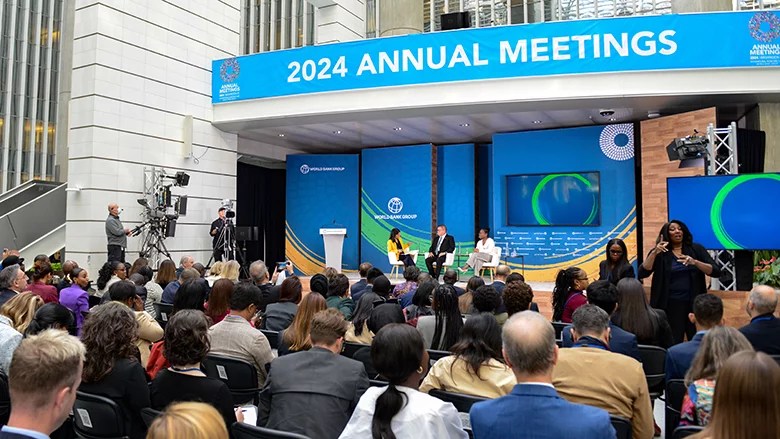
Annual Meetings 2024: Progress and Ambition for the Future

The World Bank Group’s journey to become a better, bigger, and more effective Bank has AM-2024-1advanced at a rapid pace. That progress—and a new focus and ambition on jobs—was on full display at the Annual Meetings.

Continue reading

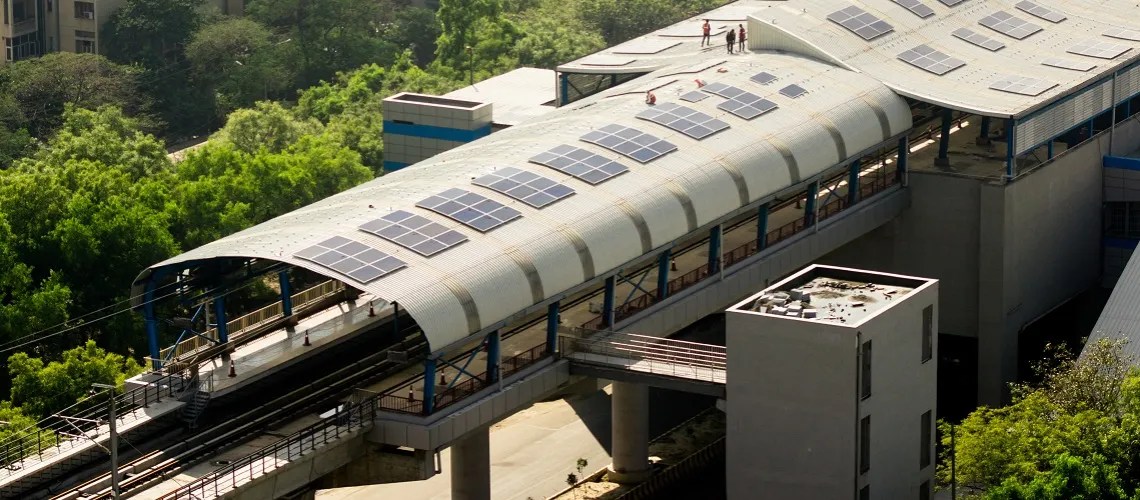
India incorporates green bonds into its climate finance strategy

In 2023, India experienced the hottest February since 1901, the first year the country’sdehli_metro_adobestock_252063301_blog.jpg Meteorological Department started its weather records. Extreme weather events like this are becoming frequent and are expected to get worse due to climate change. India is among the countries most affected by the impacts of extreme weather events

Continue reading

World Bank Group Announces New Financing, Adjusts Pricing Terms

New Equity-to-Loans Ratio and other measures could enable $150 bln over 10 years

WASHINGTON, October 15, 2024—The World Bank Group announced on Tuesday a package of financial measures that will boost lending capacity and make loans from the International Bank of Reconstruction and Development more affordable at a time of immense development need. Combined with previous reforms, the package could enable more than $150 billion in additional financing over 10 years.  

Two key elements announced today are:

  • The minimum Equity-to-Loans ratio is being lowered to 18% from 19%, generating $30 billion more in additional financing.
  • In an effort to be a better partner to the countries we serve, we have removed some fees so they can borrow money and pay it back more easily. And we are charging less for loans to smaller countries that need our help the most. Together, these steps will make our loans easier to get and cheaper to repay.

“These new financial measures will boost our lending capacity and enable us to drive meaningful change in the lives of people. Our Equity-to-Loans change is the latest step of sustained effort, and whenever we are able to responsibly secure additional optimization to IBRD’s balance sheet – we will,” said World Bank Group President Ajay Banga.

IBRD was able to secure an additional percent reduction in its Equity-to-Loans ratio because of new protections that safeguard its triple-A rating. These include a strengthened IBRD credit rating monitoring system with contingency measures to restore IBRD’s financial health in a stress event. Contingency measures include cutting costs, adjusting lending volumes, raising loan prices, suspending income transfers, and possibly additional shareholder support.

In a move to better serve countries and ease costs, financing term changes include introducing a grace period for paying commitment fees on undisbursed balances, removing the pre-payment premium to widen clients’ repayment options, introducing discounted pricing for short maturity loans with a final maturity of seven years, and extending IBRD’s lowest pricing to more vulnerable, small states.  

The latest package includes a new way to enhance the value of callable capital, part of stakeholders’ capital that can be called on in extreme circumstances. In a first for development banks, this Enhanced Callable Capital is a portion of callable capital that can be leveraged like equity and called on earlier if the Bank’s rating is under pressure. Shareholders can now sign up for this instrument.

The World Bank Group has implemented a series of reforms and developed innovative financial instruments as part of the Capital Adequacy Framework review, which was recommended by the G20 Expert Group. These reforms include:

  • A shareholder hybrid capital product and a Portfolio Guarantee Platform – expanding lending by $70 billion over 10 years thanks to the generosity of 12 donors.
  • The adjustment of the minimum Equity-to-Loans ratio since April 2023 adds $70 billion in additional capacity over 10 years.
  • Increased limits for shareholder bilateral guarantees by up to $10 billion.

PRESS RELEASE NO: 2025/023/MDCFO


Contacts

In Washington:
David Young
(202) 473-4691
dyoung7@worldbankgroup.org

Poorest Economies Face Toughest Conditions in Two Decades

As Share of GDP, Global Aid to 26 Low-Income Economies Falls to 21-Year Low

WASHINGTON, October 13, 2024The world’s 26 poorest economies—home to about 40 percent of all people who live on less than $2.15 a day—are deeper in debt than at any time since 2006 and increasingly vulnerable to natural disasters and other shocks, new analysis from the World Bank shows. Yet international aid as a share of their GDP has dwindled to a two-decade low, forcing many to obtain financing on punishing terms.

Continue reading