Can AI give small scale producers the right advice?

The World Bank has long recognized the critical importance of agricultural extension services – ranging from training and data to technology transfer – which make up the second-largest share of its agriculture portfolio.  Yet farmers have often been slow to adopt the very methods and tools these services are designed to deliver—limiting their own productivity and the sector’s potential to create jobs.

That’s in large part because they depend on limited numbers of extension agents: the field advisors responsible for providing them with data, training and advice. Most countries have just one extension agent for every 1,000 to 2,000 farmers.

Continue reading

From open data to AI-ready data: Building the foundations for responsible AI in development

The production and use of development data have undergone significant transformation over the past two decades. The shift from paper-based records to digital formats has made data more accessible and easier to share. The open data movement has dramatically increased the availability of government and institutional datasets, which in turn catalyzed greater opportunities for analysis, transparency, and innovation. And major advances in big data and data science have further expanded both the volume and diversity of information guiding development policy.

Amid rapid advances in artificial intelligence (AI), development data has now reached another pivotal juncture: the evolution to AI-ready development data—data that is readily discoverable, comprehensible, accessible, and usable by both humans and AI applications.

Continue reading

How AI can support anticipatory action to address forced displacement

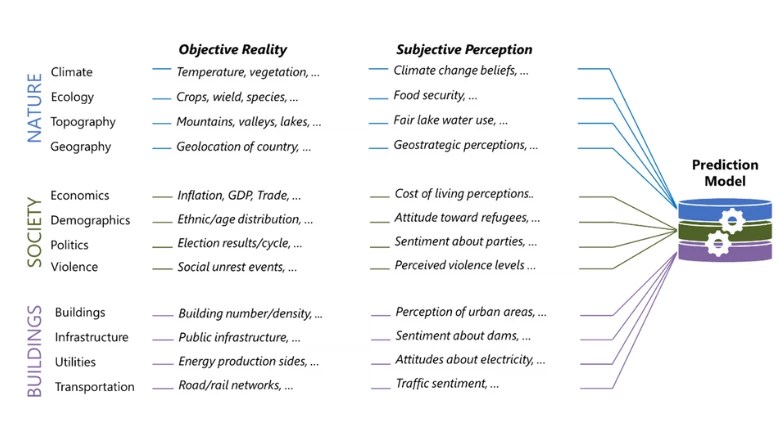
Refugee crises are often seen as unpredictable emergencies.  In a context of acute suffering, assistance is often rushed to those who have just fled conflict and violence and delivered within the communities that receive them. But what if refugee movements could be forecasted? What if hosting countries and their partners had the time to prepare for large inflows of people?  With more than 122 million forcibly displaced people worldwide — double that of ten years earlier — these questions are pressing.

Continue reading

Is Artificial Intelligence the future of farming? Exploring opportunities and challenges in Sub-Saharan Africa

Across Sub-Saharan Africa, a quiet revolution is underway. Smallholder farmers are increasingly leveraging Artificial Intelligence (AI), once a futuristic concept, to transform agriculture. AI now plays a crucial role in addressing the region’s most pressing challenges: food insecurity, environmental degradation, and economic inequality. 

Continue reading

AI’s impact on jobs may be smaller in developing countries

Artificial intelligence is transforming the global workforce, but its impact may not affect all regions equally. Much of the conversation about AI and jobs focuses on high-income countries—where the technology threatens to reshape entire industries. But what will AI mean for workers in developing nations, who constitute 80 percent of the global workforce?

To better understand AI’s labor market impact in the developing world, in a recent paper we analyzed data from 25 countries, covering a population of 3.5 billion people. For workers in those countries, we assessed the level of AI exposure, which captures to what extent their jobs could be performed using AI. Our findings suggest that AI’s effects on jobs will be more gradual in the Global South, particularly in low-income countries.

Continue reading

International Day of Education 2025: Digital solutions for equitable education systems

The 2025 International Day of Education inspires reflectionson the power of education to equip individuals and communities navigate, understand and influence technological advancement. This year the focus is “AI and Education: Preserving Agency in a World of Automation.”

Continue reading

Educating for the present and the future: using Artificial Intelligence (AI) to address the learning crisis

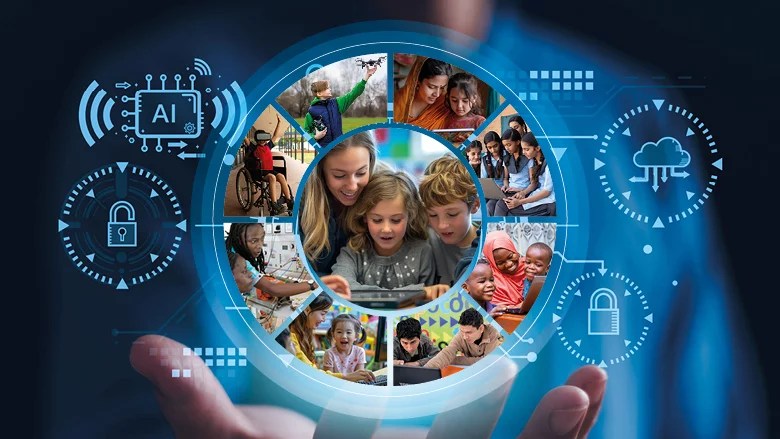
Can Artificial Intelligence (IA) help address massive education gaps? The answer is a cautious EducacionTecnolog-aLAC 1140x500and optimistic yes. 1.8 billion students in the world should receive a good education. However, half of them do not achieve basic reading and numeracy skills needed for life.

Continue reading

Tipping the scales: AI’s dual impact on developing nations

Artificial Intelligence (AI) is transforming our world, and its potential to reshape development, especially in emerging markets and developing economies, is nothing short of revolutionary. But this isn’t just about getting AI to help with scheduling or recipe recommendations, it’s about real change, real challenges, and monumental opportunities.

Continue reading

We need to change the way we support refugees – now !

We are at a pivotal moment in shaping the future of education. The potential for generative AI to improve teaching efficiency and enhance teacher effectiveness is immense.  It’s a potential that is in the process of being realized in small classrooms and large educational systems alike.

Teachers are arguably the most important school-based determinant of whether and how much students learn. Given this complex and important job, how can generative AI-driven technologies help teachers, and what policy measures should be prioritized to harness the potential of the technology?

Continue reading