There are over 830 million people around the world living in extreme poverty today, but who are they, and what do we know about their daily lives? A deeper understanding of the characteristics of people and households living in extreme poverty can help us design more effective policies. To gain those insights, we need key data.
Across the world, people are feeling the strain of a changing environment. In 2025, nine out of 10 people were living in places where the land is losing productivity, the air is polluted, or the water is becoming scarce or unsafe. In low-income countries, most people face all three of these challenges at once—putting health, jobs, and growth at risk.
The OMVG transmission network has increased Guinea’s electricity trade capacity to 340,000 KVA, up from zero in 2015, surpassing the original project target and enabling reliable cross-border energy exchange.
Guinea’s hydropower plants (Kaleta and Souapiti) now supply clean energy domestically and export 1,174 GWh annually to Senegal, The Gambia, and Guinea-Bissau, supporting regional energy transition and reducing reliance on fossil fuels.
Commercial losses in Guinea’s grid are projected to decrease from 40% in 2025 to 20% by 2030, thanks to grid modernization, regularization of illegal connections, and deployment of pre-paid meters under the project.
In an era marked by unprecedented challenges, rapid change, and fiscal constraints, the need to effectively implement development efforts for greater impact has never been higher.
The 21st round of financing for the International Development Association (IDA21), our fund for low-income countries, is ushering in a bold new chapter to build a better life for all, supported by up to $100 billion in commitments from donors and the World Bank. As 78 countries prepare to chart their own courses toward prosperity, the spotlight turns to the tactics and partnerships that will transform this ambition into tangible progress for the world’s most vulnerable communities.
Thanks to the World Bank-financed Eastern Electricity Highway Project (EEHP) Kenya is now importing cheaper renewable electricity from Ethiopia. The 1,065 kilometers power transmission line is helping Kenya balance its electricity supply and demand. This is the first publicly financed high-voltage direct current (HVDC) transmission line in Sub-Saharan Africa that promotes regional integration and power exchange. With a 500 kV capacity, the project is facilitating regional power trade within the Eastern African Power Pool (EAPP) by allowing for the bi-directional transfer of up to 2,000 MW of power. The transmission line became operational in December 2022 and is on track to connect to Tanzania and the Southern Africa Power Pool. The project was also supported by the African Development Bank (AfDB), the Agence Française de Dévelopement (AFD), the Government of Ethiopia and Kenya.
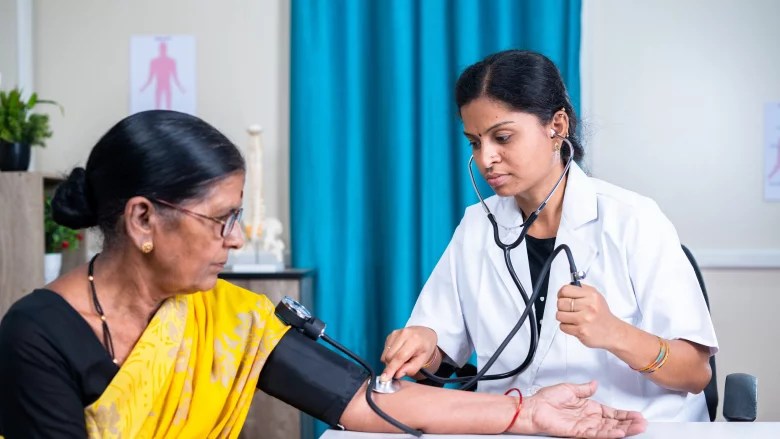
WASHINGTON, Oct. 23, 2025 — The World Bank’s Board of Executive Directors today approved a new program to improve the life expectancy and quality of life for 11 million elderly and vulnerable people in the state of Kerala through wider access to health coverage and resilient health systems.
A new World Bank report shows how partners are joining forces to deliver impact at greater speed and scale, reducing fragmentation and strengthening country ownership.
In a world facing compounding crises—from climate change and fragility to shrinking fiscal space—the ability to mobilize resources efficiently and collaboratively has never been more urgent.
A new report, Building Together: Co-Financing with the World Bank – Progress Report 2025 (PDF), showcases how the World Bank and its partners are working together to deliver development impact at greater speed and scale. The report highlights how co-financing reduces fragmentation, lowers transaction costs, and strengthens country ownership by aligning partners behind shared priorities.
Good health empowers people, creates jobs, and drives economic growth. It fuels productivity, strengthens resilience, and acts as a powerful engine for employment—each health job generates up to 3.5 additional jobs in related sectors. We are working closely with countries and partners to reach 1.5 billion people with quality, affordable health services by 2030 which could create 29 million additional jobs. Investing in health is investing in economic opportunity. Join us in advancing health for all—share this video, start a conversation, and support efforts to expand quality, affordable health care. Together, we can create healthier communities, unlock economic opportunity, and build a brighter future for all.



 Netherlands for the World Bank
You must be logged in to post a comment.