
Russia’s invasion of Ukraine continues to inflict a devastating toll on the country and is causing serious global repercussions. Ukraine’s recovery, reconstruction, and operating needs are staggering. According to the recent Rapid Damage and Needs Assessment (RDNA2), the estimated cost of Ukraine’s recovery and reconstruction stands at $411 billion over the next decade. For 2023, Ukraine is facing an additional funding gap of $11 billion for critical economic and capital expenditures. The highest needs are in transport (22%), housing (17%), energy (11%), social protection and livelihoods (10%), explosive hazard management (9%) and agriculture (7%).
The Interlocking Challenges of Climate Change and Poverty | The Development Podcast
FEATURING: Richard Damania, Chief Economist for Sustainable Development, World Bank / Roselyn Fosuah Adjei, Director of Climate Change for the Ghana Forestry Commission / Professor Denis Aheto, Director of the Centre for Coastal Management, World Bank Africa Centre of Excellence in Coastal Resilience / Cathy Kamanu, farmer from Kenya.
How do we address climate change, reduce poverty, and boost shared prosperity on a livable planet? Climate change is one of the defining issues of our time, and no country is immune.
On this episode of The Development Podcast, we hone in on voices across Africa about the experience of climate change and how it intersects with poverty, and we hear from the World Bank’s Chief Economist for Sustainable Development in Washington, DC. Tune in as we speak with Cathy Kamamu, a farmer from Kenya, Professor Denis Aheto, Director of the Centre for Coastal Management, World Bank Africa Centre of Excellence in Coastal Resilience, Roselyn Fosuah Adjei, Director of Climate Change for the Ghana Forestry Commission, and Richard Damania, Chief Economist for Sustainable Development at the World Bank.
Tell us what you think of our podcast here >>>. We would love to hear from you!
Operational procurement update
Rated Criteria!
Effective September 1, 2023, the World Bank will require the use of Rated Criteria as the default approach for most international procurements. Using Rated Criteria more widely will increase Borrowers’ flexibility to procure works, goods, and non-consulting services best suited to their specific situation and provide a more fit-for-purpose approach. Rated Criteria will also increase willingness of the best suppliers to bid and participate in Bank- financed projects—with the knowledge that their added value will be part of the evaluation, thereby increasing options, global competition, and likelihood for effective market solutions.
RFx Now
This article is to inform that eConsultant2 corporate procurement platform of the World Bank Group has been replaced by the WBGeProcure RFx Now platform.
The new platform will enable registered Vendors to express interest and participate in business opportunities for consulting services for operational purposes.
The World Bank Group tried to transfer all eConsultant2 registered accounts to the new platform. Firms interested in exploring opportunities and that are not currently registered as Vendors are encouraged to complete an application to become a potential supplier in the WBGeProcure Supplier Registration portal.
Guidance and user resources are available in the Operational Consulting Opportunities section of the Corporate Procurement website.
Please contact us at corporateprocurement@worldbank.org for any clarifications or questions.
Please contact vincent.kooijman@minbuza.nl if there are updates or improvement suggestions that can help further develop the new WBGeProcure RFx Now.
Food Security Update | World Bank Response to Rising Food Insecurity
Latest Update – July 5, 2023
Domestic food price inflation remains high around the world. Information from the latest month between February 2023 and May 2023 for which food price inflation data are available shows high inflation in most low- and middle-income countries, with inflation higher than 5% in in 61.1% of low-income countries, 81.4% of lower-middle-income countries, and 77% of upper-middle-income countries, with many experiencing double-digit inflation. In addition, 80.4% of high-income countries are experiencing high food price inflation. The most-affected countries are in Africa, North America, Latin America, South Asia, Europe, and Central Asia. In real terms, food price inflation exceeded overall inflation in 83.2% from 161 countries where data is available.
USAID’s First Localization Progress Report: Four Highlights
Sarah Rose is USAID’s Senior Advisor for Localization.
In November 2021, Administrator Samantha Power set forth in a speech, “A New Vision for Global Development,” two ambitious goals for supporting locally led development. First, by the end of FY 2025, USAID will channel 25 percent of its funding directly to local partners. And second, by 2030, at least 50 percent of USAID programs will create space for local actors to exercise leadership over priority setting, activity design, implementation, and defining and measuring results.
World Bank Group Intensifies Focus on Private Sector, Launches Effort to Scale Investment in Emerging Markets
PARIS, June 22, 2023—The World Bank Group today launched the Private Sector Investment Lab, a concrete step in a broader effort to develop, and rapidly scale, solutions that address the barriers preventing private sector investment in emerging markets.
Work with USAID June 2023
UPCOMING EVENTS
How Safer and More Resilient Schools Withstood the Earthquakes in Türkiye
Pricing emissions from shipping: Where should the money go?
The backbone of worldwide trade, international shipping moves more than 80 percent of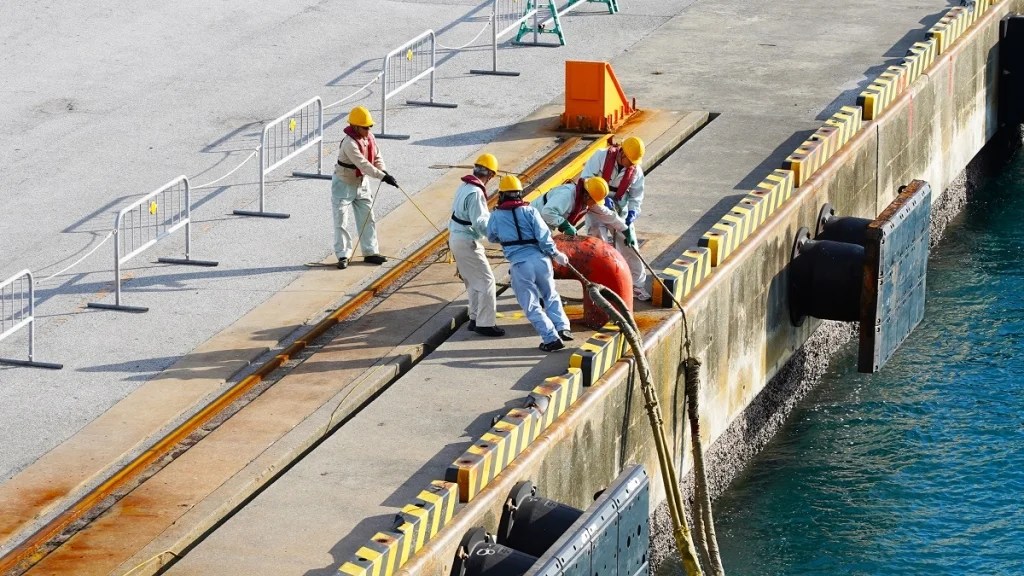 global trade by volume. As a result, international shipping accounts about three percent of global greenhouse gas emissions. Unless shipping moves to zero-carbon fuels and innovative technologies to green its energy footprint, the latest estimates suggest that carbon emissions will grow by 90-130 percent by 2050, as compared to 2008 levels.
 Netherlands for the World Bank
You must be logged in to post a comment.