
When working in an international financial institution, it is hard to find a document that does not refer to “developing countries” or “the developing world.” (Fortunately, it is now rare to find the term “third world”.) In the World Bank, this concept typically encompasses all 135 countries classified as low- or middle-income, whose 6.7 billion people are home to 84% of the world’s population.
Fireside Chat: World Bank President Ajay Banga
Record IDA Replenishment Essential as Debt Crisis Looms
Highlights:
Low-income countries face a sweeping debt crisis, making it all the more urgent for the IDA21 replenishment to be the largest ever.
Ballooning debt payments are pulling scarce resources from development priorities, threatening hard-won development gains and investment in people and environment.
Private lending to low-income countries has evaporated, leaving the World Bank and other multilateral development banks the lender of last resort for many countries—particularly the poorest.
Eugene Rhuggenaath: New Executive Director at the World Bank Group

Eugene Rhuggenaath took up his function as Executive Director at the World Bank Group representing the Constituency of Armenia, Bosnia & Herzegovina, Bulgaria, Croatia, Cyprus, Georgia, Israel, Macedonia, Moldova, Montenegro, The Netherlands, Romania, and Ukraine on November 1, 2023. At the Board of Executive Directors, Mr. Rhuggenaath serves on the Audit Committee, the Human Resources Committee and Ethics Committee.
Continue readingIFI Water Sector Fact Finding Mission
With pleasure we would like to tell you more about our upcoming mission: The International Financial Institutions (IFI) Water technology fact-finding mission to Washington D.C. 22-25 January 2024. This event is co-organized with the other private sector liaison officers of Austria, Germany, Spain, Canada, Switzerland and England.
Can small farmers in Central America export coffee to the European Union?
The European Union (EU) has introduced new legislation to prevent imports of commodities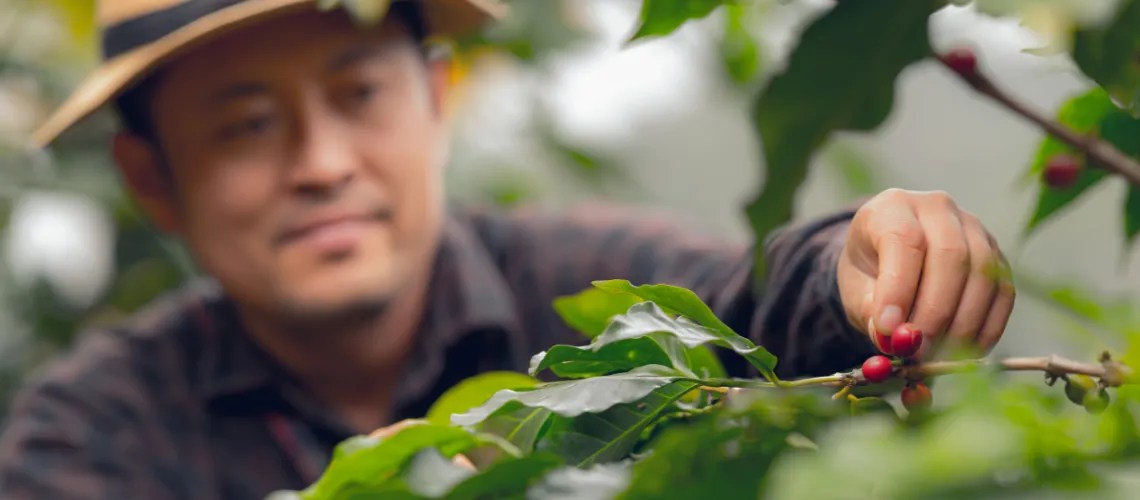 contributing to deforestation. One of the commodities affected is coffee, a key export of Central American countries . Coffee represents 14 percent and 52 percent of total agrifood exports in Guatemala and Honduras respectively, and a fifth of all exported Guatemalan coffee and half of the coffee exported from Honduras are destined to the EU. The new EU regulation is thus very relevant for these two countries, and in particular for their many smallholder coffee producers.
The Global Economy in Five Charts
Global growth is expected to slow to 2.4 percent in 2024—the third consecutive year of deceleration—reflecting the lagged and ongoing effects of tight monetary policies to rein in decades-high inflation, restrictive credit conditions, and anemic global trade and investment. Output in emerging market and developing economies (EMDEs) is set to follow a notably lower path than it did before the pandemic, with sluggish per capita growth, especially in fragile countries. The recent conflict in the Middle East has heightened geopolitical risks, and an escalation could weigh on global growth. This comes while the global economy is continuing to cope with the lingering effects of the overlapping shocks of the past four years—the COVID-19 pandemic, the Russian Federation’s invasion of Ukraine, and the rise in inflation and subsequent sharp tightening of global monetary conditions. Financial stress related to elevated real interest rates represents another source of risk to the global outlook.
WBG Procurement Opportunities
Interested in Doing Business with the World Bank Group? Please see selected opportunities below.
Procurement Framework and Regulations for Projects After July 1, 2016 (worldbank.org)
2023 in Nine Charts: A Growing Inequality
If 2022 was a year of uncertainty, 2023 is the year of inequality. For countries hoping to bounce back from the devastating losses of the COVID-19 pandemic, the battle has been made tougher by the compounding threats of climate change, fragility, conflict and violence, or food insecurity, to name a few—that make it difficult for economies across the board to fully recover.
As with most crises, it’s the world’s poorest countries that are getting hit the hardest. Many of these countries, already in debt distress, find themselves even more squeezed for resources. Online gig work is a vital aspect of the labor market and a source of income—but only for those who can access it. And let’s not forget today’s refugee crisis. Better migration policies can not only help alleviate the crisis—they can also help boost economic growth and prosperity.
These polycrises have made development work more complicated. How the World Bank responds to and manages new and existing threats is ever more critical. The 2023 World Bank Group-IMF Annual Meetings were a turning point for the Bank Group in particular, as its President Ajay Banga unveiled a new mission and vision for the organization: to create a world free of poverty on a livable planet.
As we end the year shifting our focus to our new mission and vision and how we can best address the concerns facing people, planet, prosperity, digital, and infrastructure, let’s look back and see how we fared in addressing some of our most pressing development concerns and priorities.
1. Poverty
While extreme poverty in middle-income countries has decreased, poverty in the poorest countries and countries affected by fragility, conflict, or violence is still worse than before the pandemic. The persistence of poverty in these countries makes other key global development goals much harder to achieve.
Nearly 700 million people around the world today live in extreme poverty, meaning they live on less than $2.15 per day.
Between 2010 and 2019, this number fell by 40%.
Though we have made strides in global poverty reduction, those hard-won gains faced a huge setback with the COVID-19 pandemic, which brought with it not just loss of lives and devastation, but the onslaught of shocks and crises that have resulted in about three years of lost progress in poverty reduction.
This means, we have lost three years in the fight against poverty.
Similar trends can be observed for people living below $3.65 a day,
and people living below $6.85 a day.
In fact, since 2019, the number of people below $6.85 a day have slightly increased.
2. Debt
The World Bank’s yearly International Debt Report (IDR), formerly International Debt Statistics (IDS), is celebrating fifty years of being the most comprehensive and transparent source of external debt data and analysis for the 121 low- and middle-income countries that report to the World Bank Debt Reporting System (DRS).
Last year’s IDR highlighted rising debt-related risks for all developing economies—low as well as middle-income economies—but the strain was intensifying for the world’s poorest countries, which were squeezed by surging debt service payments. The pressure continues this year.
According to this year’s IDR, developing countries spent a record $443.5 billion to service their external public and publicly guaranteed debt in 2022. The poorest countries eligible to borrow from the World Bank’s International Development Association (IDA) paid a record $88.9 billion in debt-servicing costs in 2022, 4.8 percent more than in 2021. The world’s poorest face the risk of debt crises as borrowing costs surge. The increase in costs shifted scarce resources away from critical needs such as health, education, and the environment.
https://flo.uri.sh/visualisation/16102443/embed?auto=1
3. Global Economic Prospects
January 2023’s edition of the Global Economic Prospects report highlighted that global growth was slowing sharply in the face of elevated inflation, higher interest rates, reduced investment, and disruptions caused by Russia’s invasion of Ukraine.
The global economy was projected to grow by 1.7% in 2023 and 2.7% in 2024, with the sharp downturn in growth expected to be widespread. Forecasts in 2023 were revised down for 95% of advanced economies and nearly 70% of emerging market and developing economies.
The economic outlook for developing economies has darkened in 2023. The first four years of the 2020s have proved to be among the weakest in three decades.
https://flo.uri.sh/visualisation/16025887/embed?auto=1
As the New Year dawns, the world is at the halfway point of what was meant to be a critical decade for development. The World Bank’s upcoming Global Economic Prospects report—out January 9—will provide a crucial glimpse into the challenges that lie ahead.
4. Falling Long-Term Growth Prospects
The World Bank’s report, Falling Long-Term Growth Prospects: Trends, Expectations, and Policies, offers the first comprehensive assessment of long-term potential output growth rates in the aftermath of the COVID-19 pandemic and the Russian invasion of Ukraine. These rates can be thought of as the global economy’s “speed limit,” and the findings from this year are concerning.
At current trends, the maximum long-term rate at which the global economy can grow without sparking inflation—is expected to fall to a three-decade low over the remainder of the 2020s. That’s because most of the forces that have powered prosperity since the early 1990s have weakened—including a growing working-age population.
https://flo.uri.sh/visualisation/16036727/embed?auto=1
5. Climate
Climate change leaves no person and no economy unscathed. It could drive 216 million people to migrate within their own countries by 2050. It could increase water stress and cut crop yields, especially in the world’s most food-insecure regions. Agrifood systems are also responsible for one third of all emissions. Scaling up renewables and energy efficiency, and investing in electrification at scale, while avoiding new coal plant construction and retiring old ones, is critical to providing clean energy to power homes, schools, hospitals, and businesses.
Reducing emissions and boosting resilience is possible, but will require significant social, economic, and technological changes. Just this month during COP28 in Dubai, the World Bank announced bold actions to increase climate financing, broaden the scope of climate resilient debt clauses, enhance efforts on carbon markets, and to “decisively bend the methane emissions curve,” and much more.
In a world where the world’s poorest face the brunt of shocks, climate change is no different. Tackling it is at the heart of the development challenge and of building a livable planet.
High-income countries comprise 16 percent of the global population, but produce 31 percent of GHG emissions.
The height of the bar shows the level of GHG emissions per capita.
UAE (with 26 tonnes CO2e) and Australia (with 23 tonnes CO2e) are two among the highest GHG emissions per capita. This means, on average, every person in UAE produces about 26 tonnes CO2e of GHG emissions.
Area of the bar indicates the size of total greenhouse gas emissions for each country.
In terms of total greenhouse gas emission, China topped the list producing 26.4 percent of global greenhouse gas emissions (with 18 percent of global population),
followed by the United States at 12.5 percent (with 4 percent of global population),
India at 7.1 percent (with 18 percent of global population),
and the European Union at 7.0 percent (with 6 percent of global population).
6. Commodity Markets
According to the latest Commodity Markets Outlook report, an escalation of the current conflict in the Middle East—coming on top of disruptions caused by the Russian invasion of Ukraine—could push global commodity markets into uncharted waters.
Global commodity prices declined by almost 25 percent in 2023 relative to 2022, the sharpest drop since the pandemic. The start of the conflict in the Middle East in early October led to an initial uptick in prices, though the impact so far has been small. Prices of most commodities remain above their 2015-19 average.
Oil prices are expected to average $90 a barrel in the current quarter before declining to an average of $81 a barrel next year as global economic growth slows, and overall commodity prices are projected to fall 4.1% next year. Prices of agricultural commodities are expected to decline next year as supplies rise, and prices of base metals are also projected to drop 5% in 2024. Commodity prices are expected to stabilize in 2025.
https://flo.uri.sh/visualisation/16068467/embed?auto=1
7. Women, Business and the Law
Around the world, nearly 2.4 billion women of working age still do not have the same rights as men. The 2023 Women, Business and the Law (WBL) report measures the laws and regulations affecting women’s economic opportunity in 190 economies—the barriers women face for economic participation as well as how to go about creating reform of discriminatory laws that may hold them back.
In 2022, the global average score on the World Bank’s WBL index rose just half a point to 77.1—indicating women, on average, enjoy barely 77 percent of the legal rights that men do. This year’s report has found that the global pace of reforms toward equal rights for women has fallen to a 20-year low, with only 34 gender-related legal reforms across 18 countries in 2022—the lowest number since 2001.
This marks quite the roadblock for women’s economic growth and empowerment at a time the global economy is already suffering setbacks. At this current pace, women entering the workforce today will retire before they’re ever able to gain the same rights as their male counterparts.
https://flo.uri.sh/visualisation/15913707/embed?auto=1
8. World Development Report—Migration
Migration is one of our pressing development challenges. About 184 million people—2.3 percent of the world’s population—live outside of their country of nationality, and almost half of them are in low- and middle-income countries. How we address migration and protect migrants as they move from their origin to host communities is key to ensuring their economic growth and success.
The World Development Report 2023 finds that better migration policies can help boost prosperity in all countries. According to this year’s report, as populations age at an unprecedented pace across the globe, countries are increasingly reliant on migration for long-term growth potential. We can use this as an opportunity to find better ways to make migration work for people and societies.
https://flo.uri.sh/visualisation/15941504/embed?auto=1
9. Working Without Borders
Online gig work is a growing part of many labor markets, accounting for up to 12% of the global labor force. It is a growing source of income for millions of people. The demand for online gig workers is rising faster in developing countries than in industrialized countries. It also offers flexibility and potential for extra income as two important motivators.
Local gig platforms play a vital role in the local labor market, but they face challenges in establishing a viable business model. Online gig work can support inclusion by providing work opportunities for youth, women and low-skilled workers. The gig economy can help governments build digital skills, increase income-earning opportunities, and expand social protection coverage of informal workers.
WBG Procurement Opportunities
Interested in Doing Business with the World Bank Group? Please see selected opportunities below.
Procurement Framework and Regulations for Projects After July 1, 2016 (worldbank.org)


You must be logged in to post a comment.