
From massive theft of state assets to the low-level corruption that erodes productivity and weakens service delivery, corruption steals from the poor and erodes progress.
How to Build Back Better After the COVID-19 Crisis? A Practical Approach Applied to Fiji
Water touches every aspect of development and flows through nearly every Sustainable  : By Sam Fargher and Stephane Hallegatte
Like every other country, the Republic of Fiji faces the unprecedented challenge of managing the consequences of the COVID-19 pandemic. While the number of cases remains low, in a country where international tourism is a cornerstone of the economy, the implications of the crisis are massive. GDP is expected to contract by more than 20 percent in 2020, with a 75 percent drop in international tourist arrivals and 40,000 tourism jobs already lost. In response, the government is planning a 3.7-billion-Fijian-dollar stimulus package to protect the population and support economic activity.
Knowledge, Empowerment and Techonology – Supporting Micro-Scale Irrigation in Uganda
How AI can help developing countries rebuild after the pandemic
Technology has been a lifeline to developing countries during the COVID-19 crisis, helping to  maintain essential services and keep companies in business. It has also offered a glimpse of a brighter future, one in which gains in income and employment are driven by technologies such as artificial intelligence.
Even before the pandemic, commercial uses for AI were expanding rapidly in emerging markets, in fields ranging from manufacturing and energy to education and financial services. The necessary lockdowns and travel restrictions imposed by countries have accelerated that trend. Companies like Clinicas de Azucar in Mexico are using AI to analyze data and improve health outcomes for thousands of at-risk diabetic patients. In India, 1mg uses AI to help customers compare prices for medical services from different labs.
eC2: Opportunities to promote gender considerations and empowerment in low-carbon value chains.
Deadline: 01-Oct-2020 at 11:59:59 PM (Eastern Time – Washington D.C.)

The objectives of the assignment are to:
i. Review women’s role in forest-related livelihoods and economic activities, women’s access to low carbon value chains and constraints to and opportunities around such access including good practices in selected Emission Reductions Program countries.
ii. Recommend specific measures to mitigate risks and empower women to be engaged in low carbon livelihood value chains.
iii. Develop 4 detailed feasibility studies for piloting low-carbon women dominated value chains.
Pandemic Threatens Human Capital Gains of the Past Decade, New Report Says
WASHINGTON, Sept. 16, 2020 – The COVID-19 pandemic threatens
hard-won gains in health and education over the past decade, especially in the poorest countries, a new World Bank Group analysis finds. Investments in human capital—the knowledge, skills, and health that people accumulate over their lives—are key to unlocking a child’s potential and to improving economic growth in every country.
eC2: AQUACULTURE WASTE MANAGEMENT STUDY AND TECHNICAL TRANSFER PLANNING
Deadline: 05-Oct-2020 at 11:59:59 PM (Eastern Time – Washington D.C.)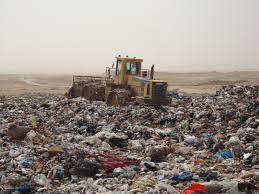
The overall objective of this consultancy is better aquaculture waste management in Pakistan through technical transfer of aquaculture waste management from Korea to Pakistan. The consultancy tasks are composed of three sub-tasks; (1) compiling aquaculture waste management baseline study in Pakistan with coordination with the World Bank Task Team and the Pakistani counterparts; (2) analyzing suitable advanced aquaculture techniques to be transferred to Pakistan, focusing but not limiting on advanced environmentally friendly less waste aquaculture techniques in Korea; and (3) developing two-years practical technical transfer plan from Korea to Pakistan, based on findings and recommendations of the (1) and (2) studies.
New child and youth mortality estimates show dramatic reductions, but progress is threatened by impact of COVID-19
This blog is based on new mortality estimates and a report released today by the United  Nations Inter-agency Group for Child Mortality Estimation (UN IGME).
eC2: Support Private Sector Participation in LGUs Water Supply and Sanitation Systems
Deadline: 28-Sep-2020 at 11:59:59 PM (Eastern Time – Washington D.C.) 
The objective of the assignment is to undertake the following: (i) support the province in preparation for the DBO/DBL through capacity building and perform collaborative activities with national government agencies through NEDA to ensure that WSS subprojects are in sync and within the implementation reforms that will be instituted under the currently approved PWSSMP, specifically the achievement on the KPIs and proper operationalization of the Unified Resource Allocation Framework (URAF); (ii) strengthen technical and economic analysis of the projects; (iii) assist in the market survey to ensure robust interests of the private sector; and (iv) support the preparation of an O&M plan .
Automated Water Kiosks Provide Continuous Water for Malawians During COVID-19
STORY HIGHLIGHTS 
- Replacing Lilongwe’s manually-operated water kiosks with automated systems helps reduce congestion and contact, lowering COVID-19 risk
- The automated systems have also reduced the cost of water by 65%, allowing for increased hygiene and handwashing for households dependent on water kiosks
- The new kiosks are financed through the World Bank-supported COVID-19 response package, implemented by the Lilongwe Water Board


You must be logged in to post a comment.