Netherlands for the World Bank

Your guide to the World Bank Group

Netherlands for the World Bank

Handbook for Gender-Inclusive Urban Planning and Design

STORY HIGHLIGHTS handbook

  • Urban planning and design shape the environment around us – and that environment, in turn, shapes how we live, work, play, move, and rest.
  • Cities have historically been planned and designed for men and by men. They tend to reflect traditional gender roles and gendered division of labor. In general, cities work better for heterosexual, able-bodied, cisgender men than they do for women, girls, sexual and gender minorities, and people with disabilities.
  • The Handbook for Gender-Inclusive Urban Planning and Design seeks to respond to these urgent questions: how might we design and plan cities that work well for everyone? What would such a city look like, and how would we go about creating it?

Continue reading

Off-Grid Solar Market Trends Report 2020

STORY HIGHLIGHTSscaling+solar+main+banner

  • The off-grid solar sector has expanded into a $1.75 billion annual market serving 420 million users over the past decade and continues to grow.
  • As the sector matures and productive use of off-grid solar solutions such as solar water pumps, cold storage and other products servicing public institutions become natural expansion areas, companies are increasingly focused on its financial sustainability.
  • To achieve universal access to electricity by 2030, the off-grid solar sector would need to serve as many as 132 million households, which in turn would require between $6.6 billion to $11 billion in additional financing.

Continue reading

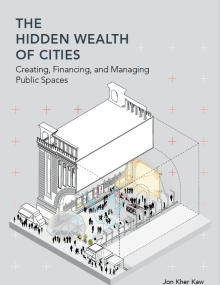
The Hidden Wealth of Cities: Creating, Financing, and Managing Public Spaces

STORY HIGHLIGHTS Hidden-wealth-of-cities

  • Many cities around the world are missing out on significant development opportunities by ignoring, under leveraging or mismanaging public-space assets.
  • There is enormous opportunity for smarter use of public spaces, and to unlock the “hidden” value they create for communities, neighborhoods, and cities.
  • “The Hidden Wealth of Cities: Creating, Financing, and Managing Public Spaces” identifies a rich palette of creative and innovative strategies that every city can undertake to plan, finance, and manage both government-owned and privately-owned public spaces.

[Click here to download a PDF version of the publication]

Continue reading

Scaling up climate-smart agriculture in Lesotho

Lesotho’s agricultural system faces a growing number of climate-related vulnerabilities scaling-climate-smart-agriculture-lesotho-1140x500with drought, floods, pests, and extreme temperatures occurring more frequently. In response, the Government of Lesotho is collaborating with the World Bank to integrate climate change into the country’s agriculture policy agenda through the Lesotho Climate-Smart Agriculture Investment Plan (CSAIP).

Continue reading

It’s time to start solving Latin America’s migration crisis with creative housing solutions

The world’s largest migration crisis today may no longer be in the Middle East or Africa, ninha_-_by_greta_granados_de_orbegoso_world_bank_herobut in Latin America , where 4.8 million people have already fled Venezuela’s political and economic crisis to seek better lives, mainly in Colombia; but also in Peru, Chile, the U.S., and even Spain.

Surveys have indicated that over half of Venezuela’s young professionals wish to leave, and departures could reach 20% of the total population by the end of 2020. Yet, this crisis remains alarmingly underfunded by the international community, which is spending a mere $300 per capita to help Venezuelans compared to $5,000 per Syrian refugee. To be sure, these Venezuelan migrants are not fleeing armed conflict, but they are facing deadly living conditions.

Continue reading

TechEmerge challenge- Health East Africa

The TechEmerge Health East Africa program was launched at CES 2020 as part of a index.pngWorld Bank Group (WBG) – CES Global Tech Challenge. TechEmerge brings technologies to new markets to drive sustainable innovation in regions that need it the most.

TIMELINE 2020

Timeline

TechEmerge challenge- Health East Africa

The TechEmerge Health East Africa program was launched at CES 2020 as part of a index.pngWorld Bank Group (WBG) – CES Global Tech Challenge. TechEmerge brings technologies to new markets to drive sustainable innovation in regions that need it the most.

TIMELINE 2020

Timeline

Policy priorities for achieving food and nutrition security in Africa by 2030

A key priority for Africa over the next decade should be to address a deteriorating food drc-tremeau-069security situation  that is compounded by the effects of climate change, declining agricultural productivity, and rapid population and urbanization growth. Encouragingly, this priority is reflected in initiatives shared by Africa and the world. Already, the African Union member states are committed to ending hunger by 2025 under the Comprehensive Africa Agriculture Development Program (CAADP). Similarly, United Nations Sustainable Development Goal 2 calls for ending hunger and all forms of malnutrition by 2030. Despite these and other commitments, though, progress has been modest with only 9 out of 55 African countries currently on track to reduce under-nutrition to 5 percent or less by 2025. This insufficient progress underscores the need to redouble efforts. Going forward, policy priorities centered around leveraging science and digital technology, and addressing fragility hold the greatest promise.

Continue reading

World Bank data infrastructure: shortening the path from data to insights

Data is not valuable in a vacuum. Data is only valuable once information, insight or in data_infrastructure_visualother words knowledge is extracted from it and is used to make decisions, shape policies, and change behaviors.
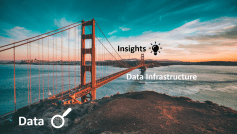
Data scientists, analysts, and researchers spend a significant amount of time and effort extracting knowledge from data and communicating it. Because extracting knowledge from data can be expensive, it is important to find ways to reduce its cost. A robust and well-designed data infrastructure can contribute to this cost reduction by smoothing the frictions involved with data analytics projects: storing, searching, accessing, understanding, cleaning, transforming, analyzing, and visualizing data. Lowering that cost can go a long way toward increasing data use and knowledge production.

Continue reading