
As countries grapple with the impact of COVID-19, policy makers are seeking effective,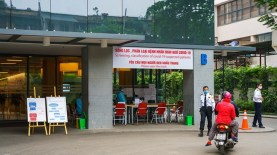 balanced solutions to address both public health and economic recovery challenges. To understand which approaches have been successful and how these might help other countries and regions, policy makers from Colombia, Ghana, South Africa, Vietnam, and Italy’s Veneto region shared with us their stories of response and recovery.
Category Archives: WBG News & Reports
New World Bank country classifications by income level: 2020-2021
Updated country income classifications are available here.
The World Bank assigns the world’s economies to four income groups—low, lower-middle, upper-middle, and high-income countries. The classifications are updated each year on July 1 and are based on GNI per capita in current USD (using the Atlas method exchange rates) of the previous year (i.e. 2019 in this case).
World Bank ranked among top positions in the International Aid Transparency Index (IATI)
Today, we at the World Bank are honored to be in one of the top positions in  the International Aid Transparency Index (IATI), an independent measurement of aid transparency. This ranking demonstrates our strong commitment to transparency, timely and effective information disclosure, and Open Data.
The transparency of development finance data is even more important now, as we enhance our support to countries addressing the impact of the COVID-19 Pandemic. High quality and timeliness of development data allows for better coordination of such a response, more efficient resource use and a better-informed decision-making process.
Fiscal Year-End Update to Governors of the World Bank Group
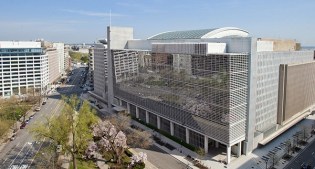 Dear Governors,
I hope this finds you well, safe, and healthy during these very difficult times. I have enormously appreciated your support over the past year, and our warm and constructive interactions. Face-to- face meetings have become harder over recent months, so at our fiscal year-end, I wanted to provide an update on World Bank Group (WBG) deliveries, as well as other efforts over the past year. I would like to focus in particular on the COVID-19 emergency response, the Debt Service Suspension Initiative for the world’s poorest countries, and progress made on debt transparency since the Development Committee on April 17. I would also like to update you on a few organizational, leadership, and governance matters.
Outsource2LAC Virtual Week 2020
Name of the event: Outsource2LAC Virtual Week 20202 (O2LAC Virtual 2020)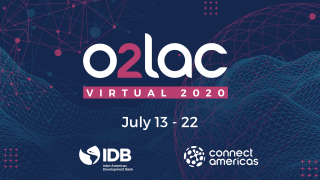
Format: Web seminars (webinars) and one-on-one business matchmaking meetings
Place: Online, hosted in a virtual platform
Editions: 7 in-person editions of the Outsource2LAC series
Latest edition: Made in the Americas Global Digital Services Summit (MITA GDS) powered by Outsource2LAC in Buenos Aires, Argentina on July 2019 (in-person)
Organizer: The Inter-American Development Bank through its Integration and Trade
Sector and ConnectAmericas.com1
Opening the gateway between the Dutch water sector and West African countries
On 29 June 2020, the Netherlands Water Partnership (NWP) and the World Bank signed a  Memorandum of Understanding (MoU) to support West Africa’s efforts to build coastal resilience. Developed under the West Africa Coastal Areas (WACA) Program, this marks an important step towards making Dutch expertise in coastal and flood management available to West African countries. Bianca Nijhof, Managing Director at NWP, and Simeon Ehui, Regional Director for Sustainable Development for Africa at the World Bank, sealed the agreement and highlighted how effective coastal management and nature-based climate solutions are at the nexus of economic development and poverty reduction.
The impact of the coronavirus on foreign investors: Early evidence from a global pulse survey
The coronavirus (COVID-19) pandemic has severely impacted multinational enterprises  (MNEs) and foreign direct investment (FDI) in developing countries, jeopardizing these firms’ contributions to crucial development outcomes. In addition to bringing capital to developing countries, MNEs are key drivers of global trade, accounting for about 80 percent of total exports. FDI can drive economic transformation by introducing new technologies and best practices in developing countries.
How Can We Increase Women’s Participation in Infrastructure Projects?
On construction sites, it is more common to see men working than women. With the aim  of improving the gender balance in construction, the World Bank is implementing gender strategies in urban transport projects in Colombia. These have led to the increased participation of women in infrastructure projects.
Gender discrimination not only has a negative impact on women’s income; it also impedes companies and society from making use of the special skills that women contribute to the economy. The implementation of a gender equality strategy in the Bucaramanga Integrated Mass Transport System– Metrolínea – revealed the advantages of including women in this type of project and provided lessons that could be shared with other systems, sectors and projects.
Climate Finance Drives Action on the Ground
STORY HIGHLIGHTS
- Climate finance, along with falling renewable energy prices, is enabling developing countries to expand and diversify their energy supply.
- A new report identifies eight ways policymakers can drive clean, resilient growth, including through innovation and climate intelligence products.
- An effort to create a new market for rooftop solar in India has mobilized $4.4 billion in commercial financing.
Debt Service Suspension Initiative could save countries around $12 billion

Since the COVID-19 outbreak, developing economies have suffered unprecedented capital outflows. The World Bank Group has created a virtual one-stop for the latest information about Debt Service Suspension Initiative (DSSI). It highlights the potential savings for each eligible country—both in dollar terms and as a percentage of GDP. Explore the data!
 Netherlands for the World Bank
You must be logged in to post a comment.