Can Asia-Pacific achieve sustainable energy for all?

The Asia-Pacific region, comprised of 58 economies, is geographically expansive and a picture of diversity. The trends for sustainable energy in Asia-Pacific, which mirror the region’s economic and resource diversity, are underscored by the fact that Asia-Pacific comprises 60 percent of the global population, generates 32 percent of global GDP, consumes more than half of the global energy supply, while generating 55 percent of global emissions from fuel combustion.

The region’s sustainable energy picture is captured in a new report by the United Nations Economic and Social Commission for Asia and the Pacific (UNESCAP), entitled “Asia-Pacific Progress in Sustainable Energy: A Global Tracking Framework 2017 Regional Assessment Report.” The report is based on the World Bank and International Energy Agency’s Global Tracking Framework (GTF), which tracks the progress of countries on energy access, energy efficiency, and renewable energy under Sustainable Development Goal 7 (SDG7).


Continue reading

Water works: how a simple technology in Dhaka is changing the way people get clean water

Amy Pickering laughs when she thinks of all the things that went wrong with the impact evaluation she recently completed of a water chlorination project in the slums of Bangladesh’s capital city Dhaka: delays, monsoons, and more delays.“It was the hardest project I’ve ever done,” says the seasoned research engineer, now a professor at Tufts University, who was working on a project funded through the World Bank’s Strategic Impact Evaluation Fund.

Clean water is an issue in Dhaka and other overcrowded cities in the region, where contamination by bacteria can lead to high rates of diarrhea, harming children’s growth and health. For Pickering, who specializes in water quality and diarrheal disease, the challenge was finding a water treatment technology that could work without electricity and operate in Dhaka’s extreme weather.

Continue reading

Global Economic Prospects Broad-Based Upturn, but for How Long?

The World Bank forecasts global economic growth to edge up to 3.1 percent in 2018 after a much stronger-than-expected 2017, as the recovery in investment, manufacturing, and trade continues. Growth in advanced economies is expected to moderate slightly to 2.2 percent in 2018, as central banks gradually remove their post-crisis accommodation and the upturn in investment growth stabilizes. Growth in emerging market and developing economies as a whole is projected to strengthen to 4.5 percent in 2018, as activity in commodity exporters continues to recover amid firming prices. Find this WB-report here.

doing business

Continue reading

Africa’s partnership with the G-20: Compact with Africa in 2018

Germany’s presidency of the G-20 in 2017 introduced a new initiative for supporting African countries’ development: the G-20 Compact with Africa. The compact brings together interested African countries with the World Bank Group, the International Monetary Fund, the African Development Bank, and other multilateral and bilateral partners to develop and support policies and actions that are essential for attracting private investment. To date, 10 countries have signed up for the initiative and outlined their aspirations and reform programs under a framework adopted by the G-20 finance ministers in March 2017.

Continue reading

Climate-smart agriculture: Lessons from Africa, for the World

The world’s climate is changing, and is projected to continue to do so for the foreseeable future. The impact of climate change will be particularly felt in agriculture, as rising temperatures, changing rainfall patterns, and increased pests and diseases pose new and bigger risks to the global food system. Simply put, climate change will make food security and poverty reduction even more challenging in the future.

Continue reading

The Disaster Risk Management Challenge for Small Cities

Colombia has been frequently hit by disasters. In 2016 alone, nearly a million Colombians were affected by disasters associated with adverse natural events, mainly caused by floods and droughts. In a region such as Latin America, where the number of recorded disasters tripled between 1970 and 2014, strengthening policies for disaster risk management and climate change adaptation is crucial and increasingly urgent.

Continue reading

Ec2: DEVELOPMENT OF COASTAL MULTI-HAZARD MAPPING, VULNERABILITY AND RISK ASSESSMENTS AND INVESTMENT FRAMEWORK FOR COASTAL INTERVENTIONS IN SELECTED COASTAL COMMUNITIES IN VIETNAM

Deadline: 10-Feb-2018 at 11:59:59 PM (Eastern Time – Washington D.C.)

Objective: The World Bank is providing support to the Government of Vietnam (GoV) for the implementation of the second phase of the Technical Assistance (TA) funded by the imagesGlobal Facility for Disaster Reduction and Recovery (GFDRR), Supporting Resilience of Critical Infrastructure Investments in Vietnam, which was undertaken in 2016-2017 in the coastal regions of Northern and Central Vietnam, and which aimed at obtaining a rapid overview of the greatest coastal risks in these regions. This TA was thought of as a first phase to be followed up by a second phase where a detailed assessment of these risks would be undertaken in selected areas, and the necessary measures and investments that could mitigate the consequences of these hazards would be identified and prioritized.
Continue reading

Guarantees light the way for clean energy through renewable auctions

What is a common thread between Argentina, Maldives, and Zambia? In each of these countries, the World Bank provided guarantees to support transparent auctions for renewable energy. Through these, I have seen how the Bank’s involvement helped increase private investors’ confidence, attract world-class developers, and ultimately reduce tariffs.

Continue reading

Mobilizing Islamic Finance for Infrastructure Public-Private Partnerships

This PPIAF-funded report aims to discuss and disseminate information on how Islamic finance has been applied in infrastructure projects through PPP schemes, what the structural challenges and solutions are, and what can be done to deepen and maximize the use of Islamic finance for this purpose. This report has two broad dimensions. The first is to enhance the understanding of Islamic finance building blocks as they relate to financing infrastructure PPP projects, and the second, and perhaps less well understood, is to explore how the building blocks of Islamic finance can fit within a PPP context. This report paves the way for providers of Islamic finance capital to become partners in infrastructure development and thus contribute to its overall global financing pool. Read the full report here.

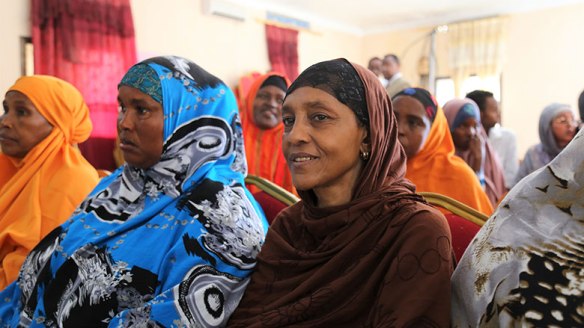
so-somali-authorities-make-urban-resilience-a-priority-780x439

Continue reading

PPP & Infrastructure: A critical piece of the infrastructure puzzle

A major factor hindering infrastructure implementation and delivery is the absence of good governance, according to the 130 delegates from 27 countries who came together for the first Regional Roundtable on Infrastructure Governance in Cape Town in November.

There’s no denying infrastructure is crucial to Africa’s growth prospects. Nor can one ignore the ever-growing need for infrastructure on the continent—in Sub-Saharan Africa, only 35% of the population has access to electricity, and 23% still lack access to safe water and sanitation. Despite an estimated shortfall of nearly $100 billion in infrastructure investment in Africa, lack of financing is not the biggest problem.

Continue reading