
As discussions concluded at COP24, countries still struggle to translate their climate  commitments into effective and socially acceptable actions. This sense of stagnation is particularly evident in transport. With 23% of energy-related GHG emissions coming from the sector, transitioning to greener mobility will be crucial to the overall success of the climate agenda. Yet the world remains largely reliant on fossil fuels to move people and goods from A to B. As shown in Sustainable Mobility for All’s Global Roadmap of Action, there are multiple policy options that could help countries move the needle on green mobility, each with their own fiscal and political costs. To illustrate this, let’s look at three countries that did take concrete measures to cut carbon emissions from transport but opted for three different options: France, Luxembourg, and Norway.
Category Archives: WBG News & Reports
Managing urban forced displacement to build resilient communities
Globally, around 68.5 million people have fled their homes from conflict or persecution  either as refugees, internally displaced persons, or asylum seekers.
 Contrary to what some may think, most of the displaced people don’t live in camps. In fact, it’s estimated that about 60%–80% of the world’s forcibly displaced population lives in urban areas.
The “urban story” of forced displacement is often compounded by its hidden nature. Compared to those displaced in camps, it is more difficult to track the living conditions of those displaced in urban areas, obtain precise numbers, and many are not recipients of humanitarian assistance.
Stronger social accountability, key to closing “human capital gap”
With the creation of the World Bank’s Human Capital project and launch of the Human  Capital Index in October 2018 it is fitting for social accountability practitioners to ask how countries would be able to close the ‘human capital gap’ and to be accountable for their efforts?
The Index will enable measurement and transparency and create demand for improved performance, so the Fifth Annual Global Partners Forum of the Global Partnership for Social Accountability set out to discuss precisely that question, with a focus on the role of public finance.
How is the Human Capital Index prompting action?
Whew, it’s out!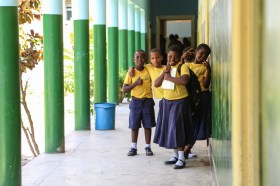
On October 11, 2018, the World Bank Group released its inaugural Human Capital Index (HCI), a tool that quantifies the contribution of health and education to the productivity of a country’s next generation of workers. The question underpinning the HCI asks, “How much human capital can a child born today expect to acquire by age 18, given the risks to poor health and poor education that prevail in the country where she lives?” Globally, 56 percent of children born today will lose more than half their potential lifetime earnings because governments and other stakeholders are not currently making effective investments to ensure a healthy, educated, and resilient population ready for the workplace of the future.
Making remittances work for the poor-Three lessons learned from three Greenback 2.0 Remittance Champion Cities in Southeast Europe
“Mother, you shall not fear as long as your sons live in Germany” goes a popular folk  song in Kosovo. Its equivalent in Bosnia and Herzegovina says “I am from Bosnia, take me to America” and in Albania the most famous morning show goes by the motto “Love your country, like Albania loves America”. In these countries, migration and remittances are synonyms of economic prosperity in the homeland. More than 40 percent of the population of these countries lives and works abroad for decades, and regularly sends money to their families back home. Remittance inflows in 2018 are estimated to range from $1.3 to $2.3 billion in these countries, exceeding foreign direct investment and accounting for 10 to 16 percent of the GDP.[1]
Tackling climate change in the poorest countries
How can we help the poorest countries deal with climate change? The challenge is huge. Globally, the last three years were the hottest on record. Emissions of carbon dioxide from fossil fuels and industry started rising again in 2017 after briefly leveling off. Many regions are experiencing more severe and frequent storms, floods, and drought. According to the latest Intergovernmental Panel on Climate Change report, the climate consequences of a 2°C warmer world are far greater than for a rise of 1.5°C, and we are not on track for either. 
Recognizing the urgent need for more action, the World Bank Group announced new and ambitious targets for our climate work with developing countries at COP24, this month’s global climate change conference in Katowice, Poland.
Riding the Climate Storm in Patagones, Argentina
When 31-year old Hipolito de Carmony, a third-generation farmer, wants to explain why 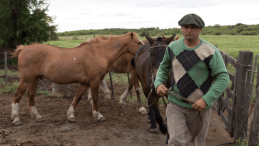 he introduced change in the management of his family’s land, he pulls out a picture of a giant dust storm that swept through the area of Patagones, about 1,000 km south of the city of Buenos Aires, in January 2010.
“We couldn’t see from one house to the other. Even with the doors and windows shut, we had to constantly sweep layers of fine dust,” he said.
The ongoing impact of ‘nudging’ people to pay their taxes
Sustainability is the holy grail of development. There are many interventions that yield  positive results in the short term but somehow fail to be sustained over time. This is why the experience in Guatemala that we are about to describe is worth paying attention to. In short, it shows that behavioral insights can lead to lasting change.
Newsletter December 2018: Impacting Development
NL4WorldBank December 2018 edition of the NL4WorldBank newsletter is out! 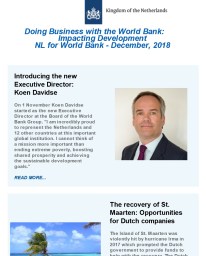
Impacting Development which was published on the 18th of December.
Get creative: Join the World Bank Group and Financial Times’ blog writing competition for high school students
Do you often wonder what kind of job you will have when you grow up? Do you think 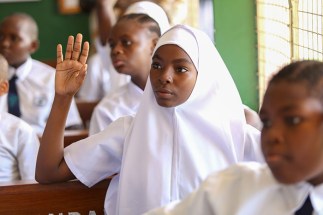 your school is preparing you for the work you may do in the future? What will classrooms and teachers of the future be like? Do you think there are better ways to learn? Do you have inspired and imaginative ideas to re-invent education? Are you between the ages of 16 and 19 and currently enrolled in high school or a secondary education institution?
 Netherlands for the World Bank
You must be logged in to post a comment.