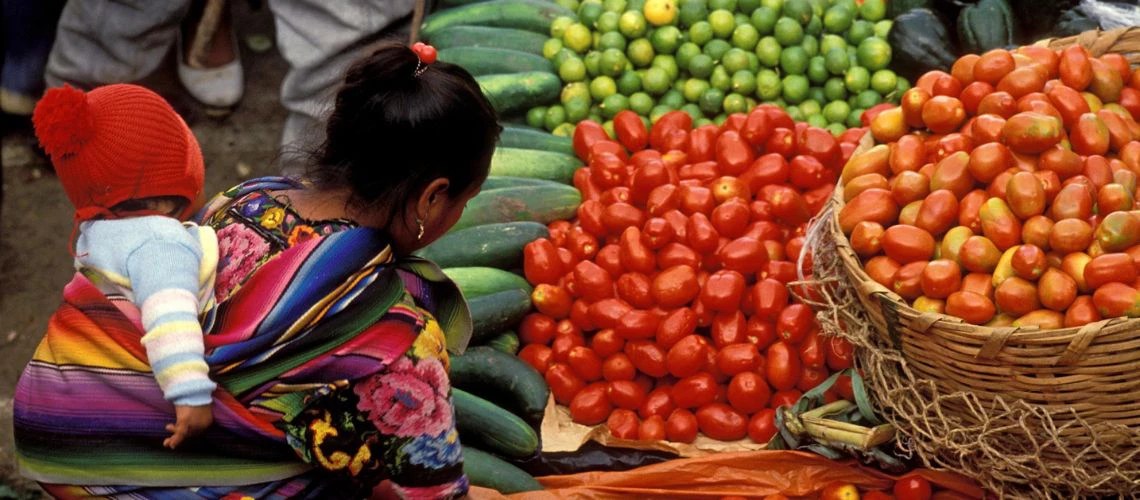
Jobs are the main driver of poverty reduction. They help build more resilient and self-sufficient societies, reduce the need for humanitarian aid, and address the root causes of unrest and migration. Jobs were the key to fighting poverty in Latin America during its last period of sustained poverty reduction (2009-2014): strong employment creation and wage growth drove two-thirds of the decrease in poverty rates. After this prosperous timeframe, both poverty and labor market conditions have remained largely stagnant across the region (COVID-19 aside).
Continue readingCategory Archives: Uncategorized
Seizing the Moment: Four Priorities to Unlock Job Creation in South Africa
Originally published in South Africa’s Sunday Times
Governments do not create many jobs—globally, they employ about 10%, and in South Africa only 6-8%, of the workforce. Instead, governments’ role is to create an environment where the private sector can drive employment. However, it is fair to say that South Africa has struggled to create such an environment over the past 15 years, with limited economic growth and job opportunities for its expanding labor force. With unemployment over 30% (excluding discouraged work seekers) and two-thirds of young workers jobless, improving conditions for private sector growth is more urgent than ever. These challenges have kept poverty and inequality entrenched, with nearly 39 million people surviving on less than R127 a day, equivalent to the $6.85 poverty line for upper-middle income countries.
Continue readingFurther strengthening how we measure global poverty
For 35 years, the World Bank Group has measured global poverty to track progress toward eradicating what is considered the most severe deprivation of basic human needs—extreme poverty. This goal is at the very heart of our organization’s mission.
Continue readingWomen Entrepreneurs Lead on Menstrual Health in Bangladesh
What if talking about menstrual health wasn’t a taboo— but a path to purpose, profit, and public health?
In rural communities across Bangladesh, dedicated champions like Rita Majumder are quietly driving change. A mother and teacher from Shilua, Rita is now also a menstrual hygiene entrepeneur. With limited household income, she needed a way to support her family. But her decision to sell sanitary napkins wasn’t only about earning money.
Continue readingHarnessing the private sector for better development data
Data is at the heart of development, powering the decisions and investments that help to reduce poverty and build a sustainable future. Yet most national statistical systems in low- and middle-income countries are under-resourced and ill-equipped to provide the timely, granular, and policy-relevant data needed for sound decision-making. Traditional surveys, which are often cross-sectional, infrequent, and costly, struggle to keep up with the blistering pace of economic and social change.
Continue readingSmall Grants for Big Global Impact
The world faces a collective action problem: countries naturally prioritize domestic investments while global challenges like climate change, pandemics, and food crises demand joint action. This creates systemic underinvestment in global public goods. Join country and development leaders at the 2025 Hamburg Sustainability Conference, as they explore ways to reshape the international finance to unlock transformative solutions. Discover the World Bank’s Framework for Financial Incentives and IDA’s Global and Regional Opportunities Window—innovative mechanisms that reward countries for projects with cross-border benefits. From energy transformation to water management, learn how small grants through the new Livable Planet Fund make big global impact possible.
Improving Healthcare Access Through Renewable Energy
On Monday December 23, a sense of normalcy prevailed at Hospital Justinien; the most important hospital in Haiti’s Northern region. This, despite persistent and surprising rain which affected the region for more than a week. Nestled in the heart Haiti’s historic city of Cap-Haitien, the Justinien University Hospital (JUH) is the largest public hospital in northern Haiti and the second-largest teaching hospital in the country. Thanks to a variety of available services, the hospital serves a population of over 1 million from Cap-Haitien and surrounding areas.
Continue readingPoised to thrive: Empowering women with skills and jobs in South Asia
Sangay Choden, in her own words, displayed much Tha Dhantse—a Bhutanese concept of having the courage to do the right thing with integrity and loyalty. Choden was the first female science graduate in her family and now handles complex power projects with ease as the manager with the Bhutan Power Corporation Limited. She has climbed mountains, both literally and metaphorically, she says.
Continue readingHow the World Bank is tackling the growing global waste crisis
Every year, the world produces over two billion tonnes of municipal waste, a figure expected to rise by 73 percent to nearly four billion tonnes by 2050. Managing this surge will be a major investment and policy challenge for cities in low- and middle-income countries.
Continue readingImproving Transport Connectivity for Food Security in Africa
Download Now
Despite increasing food production over the past three decades, 58% of Africans remain food insecure. Transport is an often-overlooked contributor to this challenge. Poor transport connectivity, failures at critical ports and border crossings, and high trade costs create long food supply chains that fail to reliably get staple products to people.
Continue reading


You must be logged in to post a comment.