
Sustainable Development Goal 6 (SDG6) calls for “universal and equitable access to safe  and affordable drinking water” by 2030, which is quite different from access to an “improved” water source, which has been our primary focus with the Millennium Development Goals. This makes water quality monitoring essential: how can we assess progress towards #SDG6 without knowing whether water is safe to drink?
Author Archives: NL4WorldBank

eC2:Firm for Data and Capacity Assessment of Selected Municipalities
Deadline: 07-Mar-2017 at 11:59:59 PM (Eastern Time – Washington D.C.)
The primary objective of this consultancy is to develop a comprehensive prioritized investment plan and policy strategy to enhance geospatial capacity going forward for municipalities across Nepal.
Pulling the chain: business solutions for managing human fecal waste
Private sector investment principles could make the fecal sludge management chain sustainable, says a new report released in time for FSM4
To understand why innovation in fecal sludge management matters, ask yourself this: In 15 years, when almost 5 billion people are using on-site sanitation, solutions like pit latrines and septic tanks, what will the world do with all the fecal waste? About half that many people use onsite sanitation today, and we already have a hard time keeping up.
eC2:Technology Partner Required for Conversational Two-way Text Message Intervention to Improve Financial Behaviour in Zambia
Deadline: 09-Mar-2017 at 11:59:59 PM (Eastern Time – Washington D.C.)
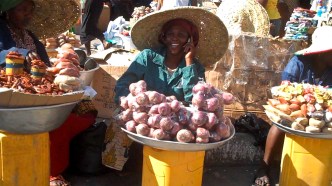
DIME is a global program in the Banks Research Group that carries out Impact Evaluations (IEs) to test innovations and find solutions to make policy work. As a bridge between research and development operations, DIME provides a substantial knowledge contribution by generating high-quality evidence across a set of strategic development areas. The IE Text Messaging for Behavior Change in Zambia is part of the DIME program and aims to use a novel text-messaging-based intervention to: 1) identify behavioral barriers that lead to low engagement with formal financial services amongst those using the services; and 2) test strategies to help people overcome those barriers to increase engagement and financial security. To implement this IE, DIME is seeking proposals for a technology partner to operate a two-way conversational text-message system to improve savings account usage and improve loan repayment rates for financial sector clients in Zambia
eC2:Consultancy for Program Review of Rwanda Program for Results Project
Deadline: 02-Mar-2017 at 11:59:59 PM (Eastern Time – Washington D.C.)
The review team will be responsible for the following tasks.
Design the review including methodologies, triangulation systems and timetable. Produce and inception report (no longer than 10 pages) A draft and report: Manage the process of the review (ensuring strong ownership on the part of all key stakeholders) Incorporate comments: Produce final review report which should be a maximum of 30 pages and include: a set of actionable recommendations for consideration in the design of any future P4R and ; a concise 2 page summary
Produce relevant presentations
Better Agriculture Regulations Could Help Feed World’s Growing Population, Says WBG Report
WASHINGTON, February 7, 2017 –Improving agriculture regulations in low and middle income countries could go a long way toward feeding the world’s growing population and improving farmers’ livelihoods around the world, says the latest edition of the World Bank Group’s Enabling the Business of Agriculture (EBA) 2017 report, released today.
The report argues that, while many countries are already home to strong, commercially-oriented agriculture, more needs to be done, for example, by lowering transaction costs for farmers and firms engaged in domestic trade and exports, by improving water permit systems for irrigation, or by providing better conditions for microfinance institutions. Smart regulations that ensure safety and quality control while avoiding burdensome and inefficient requirements are highlighted in the report as good practices that governments may wish to consider as part of their reform efforts.
Engaging Civil Society in Situations of Fragility, Conflict and Violence
 Follow the event on Twitter with #SocialAcc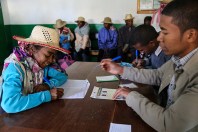
Date: Thursday, February 23rd, 2017
Time: 16:30 – 18:00 GMT/ 11:30 am – 1:00 pm ET
Location: MC C2-131, World Bank, DC
eC2:Development of curriculum and training materials for a PhD program in Educational Measurement and Evaluation
Deadline: 20-Mar-2017 at 11:59:59 PM (Eastern Time – Washington D.C.)
The goal of the assignment is to develop an international level capacity for training of professionals at a Ph.D. level in Russia in Educational Measurement and Evaluation area. Specific objectives of the assignment are to establish a Ph.D. (Philosophy Doctor) program in Educational Measurement and Evaluation.
Education for Growth and Prosperity: A Keynote Speech by President Jim Yong Kim
World Bank Group President Jim Yong Kim – World Government Summit, Dubai, United 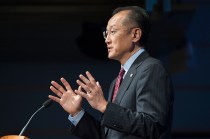 Arab Emirates
Good afternoon, your Excellencies, distinguished guests, ladies and gentlemen.
I am grateful to the people of the United Arab Emirates and to His Highness Sheikh Mohammed bin Rashid Al Maktoum for inviting me again to this year’s World Government Summit.
I can’t think of a more fitting place than Dubai to give this speech.
eC2:Preparation of a National Transport & Logistics Policy and Strategy
Deadline: 14-Mar-2017 at 11:59:59 PM (Eastern Time – Washington D.C.)
The overall objective of this assignment is to review and update the current Draft National Transport Policy and Strategy 2014, and include logistics and green transport policy and strategy elements, in order to produce a revised National Transport & Logistics Policy and Strategy. The revised policy and strategy is envisioned to be more holistic, and one that would set the directions as to how transport can contribute to the countrys economic development and competitiveness. This should be developed in support of the achievement of Governments Vision 2040 middle income status goal in an inclusive and sustainable manner.


You must be logged in to post a comment.