
WASHINGTON, DC, August 28, 2025 – The World Bank Board of Directors has approved a new operation to boost the environmental governance of the State of Amazonas by enhancing its fiscal sustainability, and mobilizing finance for forest conservation and a low-carbon bioeconomy. This will provide more economic opportunities and jobs for the State’s population, especially Indigenous Peoples, smallholders, and traditional forest-dwelling populations.
Continue readingAuthor Archives: NL4WorldBank

In Ethiopia, Reviving Soil and Improving Farming Livelihoods
STORY HIGHLIGHTS
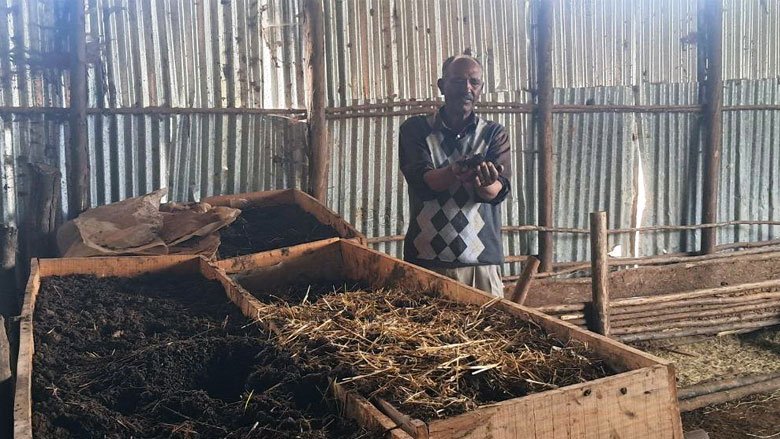
- Smallholder farmers have been taught to restore soil health by learning sustainable farming practices like vermicomposting and integrated pest management.
- The adoption of these techniques has led to increases in maize yields for individual farmers, improving their family’s food security and financial situation and contributing to broader community resilience.
- The Ethiopia Food Systems Resilience Program has so far reached over 1.2 million farmers with an even broader range of interventions.
Education is a key to jobs, growth, and lifelong learning
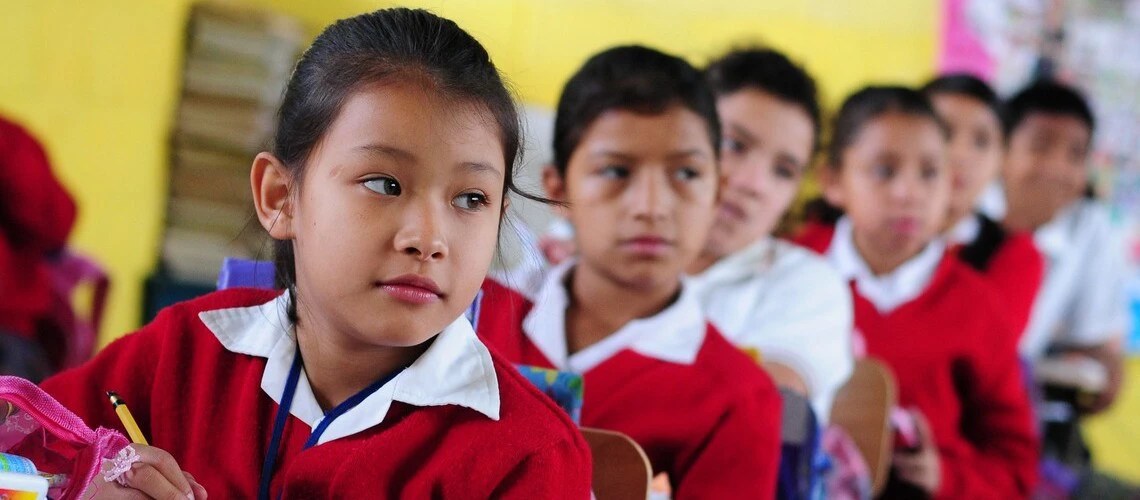
Education is a foundation for good jobs and the surest way out of poverty. We know a good education equips learners with important foundational skills—literacy, numeracy, and socio-emotional competencies—which are essential for work and life. These skills help today’s children become tomorrow’s productive workers and enable workers to reskill or upskill later in life.
Continue readingPrivate capital for infrastructure: Resilience amid uncertainty, urgency amid gaps

As the global economy continues to adapt to macroeconomic shifts, infrastructure investment remains a critical driver of job creation, long-term development opportunities and resilience. While recent interest rate hikes and inflationary pressures have reshaped return expectations and complicated financing conditions, infrastructure has stood firm as a preferred asset class. With relatively stable revenues and strong government support, infrastructure investment continues to offer investors lower risk, more predictable returns, and stronger performance than other private investment opportunities.
The World Bank’s Infrastructure Monitor 2024 presents new data and insights on how global trends are shaping private investment in infrastructure. It shows that while investment has continued to grow, especially in primary markets (i.e. greenfield and brownfield infrastructure as well as privatizations), disparities between regions and income levels are deepening. It also underscores that to close the investment gap, we must scale what works: targeted public support, sound regulation, and innovative financing instruments such as blended finance and guarantees.
Continue readingWorld Bank Reenters the Canadian Dollar Bond Market with a CAD 1.5 billion Benchmark Bond
WASHINGTON, D.C. August 21, 2025 – The World Bank (International Bank for Reconstruction and Development, IBRD, Aaa/AAA) today priced a new 3-year CAD $1.5 billion Sustainable Development Bond that matures in September 2028.
The 3-year benchmark transaction pays a semi-annual coupon of 2.90% p.a. and has an issue price of 99.946% and a final spread of 9.8 bps over the CAN 3.25% September 2028 reference bond, offering investors a yield of 2.919% (semi-annual). Joint lead managers for this transaction are BMO Capital Markets, CIBC, National Bank Financial and Scotiabank.
Continue readingUSAID Terminated Awards Staffing Assignments
Dear USAID Implementing Partners (IPs),
As a follow-on from our last Industry Liaison guidance “USAID Operations Post-September 2, 2025” on Friday, September 5, 2025, USAID Contracting/Agreement Officers (CO/AOs) will be assigned to all USAID terminated awards. Each IP will be assigned one CO/AO for all of your organization’s terminated awards.
The CO/AOs in the Office of Acquisition and Assistance (OAA) will begin reaching out next week. To facilitate communication between USAID and your organization, CO/AOs will be requesting a single point of contact. Please allow these CO/AOs time to reach out to you.
Please email IndustryLiaison@usaid.gov for any questions you may have about this notice, and we will respond as quickly as we are able. USAID Industry Liaison
Pakistan: World Bank Announces New Education Project to Benefit Over Four Million Children in Punjab
WASHINGTON, August 23, 2025— The World Bank has approved a US$ 47.9 million grant, funded by the Global Partnership for Education Fund, to help improve girls’ and boys’ participation at pre-primary and primary levels in Pakistan’s Punjab province. The new support is expected to improve learning outcomes at the primary level and strengthen remedial learning support at the elementary level of schooling.
The “Getting Results: Access and Delivery of Quality Education Services and System Transformation in Punjab Project” will expand early childhood education, re-enroll out-of-school children, strengthen teacher support, and improve the education sector’s responsiveness to climate change and emergencies.
Continue readingLatin America and the Caribbean Jobs Update: How has employment evolved in the region?
A good job is the safest way out of poverty. The Regional Labor Outlook report summarizes the main trends related to labor markets in Latin America and the Caribbean. Download it here.
“Credit: World Bank Group. All rights reserved”
Power More With Less: Scaling Up Energy Efficiency for Growth and Energy Security
Energy efficiency is a transformative, low-cost solution that can fast-track access to affordable and secure energy and boost economic growth. Amid soaring power demand, driven in part by air conditioners, heavy industry, and, increasingly, data centers needed to power artificial intelligence, energy efficiency can help countries avoid overspending on new energy infrastructure, importing fuels, and taking on more debt for their energy sectors.

Africa’s big push on electrification: A cautionary tale
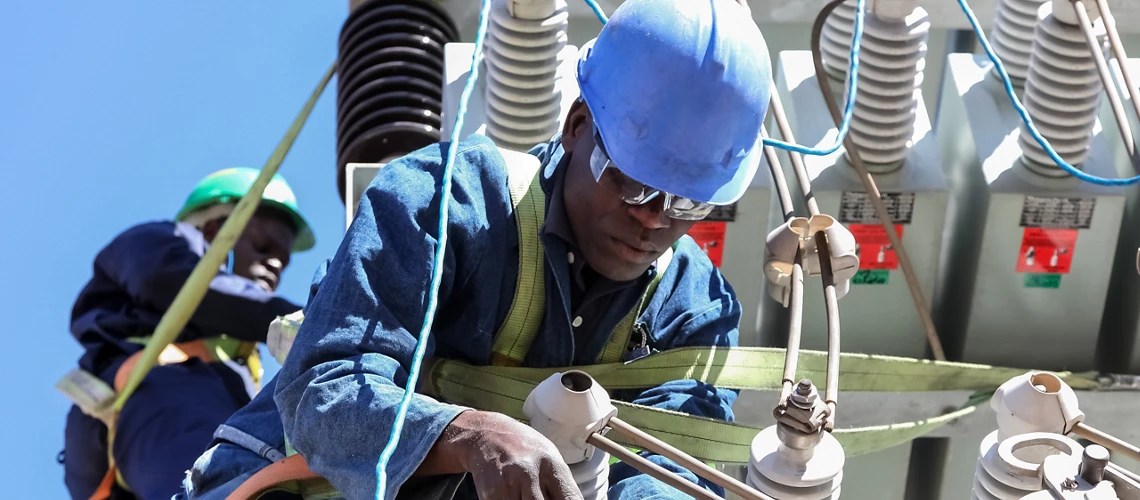
Africa is home to the largest share of the world’s unelectrified population—an estimated half a billion people, mostly in rural areas. In recognition of the significant role of electricity in economic development, the region is poised to erase this unwelcome statistic by achieving universal access by 2030 through several national and multilateral initiatives.
Continue reading Netherlands for the World Bank
You must be logged in to post a comment.