Deadline: 25-Jul-2018 at 11:59:59 PM (Eastern Time – Washington D.C.)

Elaboration of National Electrification Strategy (NES), National Electrification Plan (NEP) and Investment Prospectus (IP) for Chad, Mali and Mauritania

Deadline: 25-Jul-2018 at 11:59:59 PM (Eastern Time – Washington D.C.)
Elaboration of National Electrification Strategy (NES), National Electrification Plan (NEP) and Investment Prospectus (IP) for Chad, Mali and Mauritania
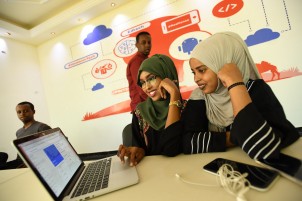 Somalia’s capital city of Mogadishu is defined by a complex mix of challenges and opportunities. Despite political and economic struggles, Somalis are innovating to break the chronic cycle of vulnerability. Supported in many cases by the international Somali diaspora, people in Mogadishu are using technology to solve problems and tap into new markets.
Deadline: 23-Jul-2018 at 11:59:59 PM (Eastern Time – Washington D.C.) 
A Risk Transfer Pilot Project is a project that develops and issues at least one distinct index-based insurance product for various crops for one or more clients in Nigeria. Risk Transfer Pilot Projects involve activities with the overall outcome being to provide customers with effective financial protection against defined weather and natural catastrophe risks that impinge upon their livelihoods. The capacity building component mainly involves putting in place internal structures and relevant teams within a private insurance company to develop and manage key index insurance product processes (hazard data collection, product design, evaluation, pricing, market analysis, value of insurance analysis, etc.). It also includes the delivery of general education and awareness-raising on the benefits of index insurance for mitigating climate risks and unlocking investment potential and income-generation for farmers. Continue reading
 Updated country income classifications for the World Bank’s 2019 fiscal year are available here.
The World Bank assigns the world’s economies into four income groups — high, upper-middle, lower-middle, and low. We base this assignment on GNI per capita calculated using the Atlas method. The units for this measure and for the thresholds is current US Dollars.
 Deadline: 16-Jul-2018 at 11:59:59 PM (Eastern Time – Washington D.C.)
The International Finance Corporation (IFC) seeks to accelerate the development of Kenyan MSME road contractors to enable them to submit more qualified bids and win more contracts in public sector road construction, rehabilitation and maintenance. The Kenya SME Road Contractors project would like to scale up the business skills of MSMEs engaged in road construction activities, with the aim of increasing their opportunities in the sector.
The overall objective of the assignment is the delivery of a business management training Program which will target Kenyan road contractors registered with Kenya National Construction Authority (NCA) in the categories NCA3 NCA6 to enhance their business management skills and capabilities to strengthen the efficiency of their business operations. This will include training on practical bidding skills and project management.
 Disaster losses disproportionately affect poor people
 , according to the 2017 “Unbreakable” report. The Caribbean Hurricane season of 2017 was a tragic illustration of this.
Not one, but two Category 5 hurricanes wreaked destruction on numerous small islands, causing severe damages on islands like Barbuda, Dominica, and Saint Martin. The human cost of these disasters was immense, and the impact of this devastation was felt most strongly by poorer communities in the path of the storms.
 Mary Banda in Zambia runs a small restaurant in one of Lusaka’s oldest markets. Before she learned that financial services could make the way she did business easier, her profits were low. But today, her profits have increased, both because she banks her money and because she uses mobile money transfer services.
Using financial services has simplified managing her business and increased profits. And business proceeds now pay her children’s school fees.
 It is impossible these days to drive around the cities of Gabon without noticing the large billboards promoting internet access at rates that were unimaginable only a few years ago.
This is a wonderful development for Alphonse, a young, 34-year old public-sector professional. WhatsApp, Facebook, LinkedIn and Instagram are all applications that this ultra-connected young man uses on his telephone for both work and pleasure.
 One of the encouraging signs that I pick up whenever I travel is the difference that technology is making to the lives of millions of marginalized people. In most cases it’s happening on a small, non-flashy scale in hundreds of different ways, quietly improving the opportunities that that have been denied to remote communities, women and young people for getting a foot on the ladder.
And because it is discreet and under the radar I dare as an optimist to suggest that we are at the beginning of something big – a slow tsunami of success. Let me give you some reasons why I believe this.
 Netherlands for the World Bank
You must be logged in to post a comment.