training, and over 875 million people are expected to migrate by 2050.
These figures often reflect unfulfilled aspirations and lack of opportunity.
training, and over 875 million people are expected to migrate by 2050.
These figures often reflect unfulfilled aspirations and lack of opportunity.
Deadline: 27-Sep-2018 at 11:59:59 PM (Eastern Time – Washington D.C.)
Assignment Description: Cumulative Impact Assessment and Management of Renewable Energy Development in the Myitgne River Basin in Myanmar. The purpose of this assignment is to conduct a cumulative impact assessment of renewable energy projects in the Myitgne River Basin in Myanmar. The objectives include: 1. Plan and execute an integrated assessment of the cumulative impacts of renewable energy development in the Myitgne River Basin, including power optimization and development scenarios. 2. Lead the participatory design of a framework for ongoing river basin co-management in the Myitgne, including collaborative environmental and social impact monitoring and management. 3. Strengthen the capacity of Myitgne River Basin stakeholders in CIA and co-management.
Deadline: 24-Sep-2018 at 11:59:59 PM (Eastern Time – Washington D.C.)
Assignment Description: The World Bank partners with the Government of Tanzania and DFID to support research and adaptive learning around PbR. As part of the research partnership, the World Bank will conduct an impact evaluation of a complementary intervention, which will be overlaid onto PbR. The goal of the complementary intervention is two-fold. First, it aims to augment the projects impact by addressing possible challenges. Second, the complementary interventions impact will be evaluated through econometric methods, thereby providing the Government of Tanzania and DFID with nuanced and actionable findings on how to increase PbRs impact, and rural water sustainability more generally. The intervention is expected to last two years in parallel with PbRs roll-out.
September 2018 edition of the NL4WorldBank newsletter is out!
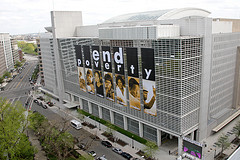
A World Free of Poverty which was published on the 11th of September.
In this edition we feature a story about Wijnand van Ijssel, the secondant for the Food 4 All Partnership between the Netherlands and the World Bank Group. The Partnership aims to find synergies and collaboration between Dutch knowledge programs and expertise in agriculture and food/nutrition and connect this with knowledge development and investment program needs of the World Bank Group.
Leveraging IDA to meet global ambitions and evolving client needs
This report examines what the International Development Association (IDA) achieved during the IDA17 period (July 1, 2014 to June 30, 2017), and takes a close look at how IDA continues to maximize development impact to deliver these results in a fluid and challenging global environment. This report covers three areas essential to understanding both IDA’s efforts and the environment in which it works: (1) The rapidly-evolving global economic and development landscapes; (2) The results achieved through IDA’s work with client countries and other partners; and (3) The unfinished agenda, which demands an ongoing, broad-based commitment to achieving results through IDA as the world’s global alliance for the poor.
The Netherlands embassy in Washington, D.C. published the handbook, “Zakendoen met de Wereldbank Groep” to provide interested Dutch companies and organizations a basic
introduction to the World Bank Group. We have updated the handbook with new information on the current procurement framework. Besides the handbook we also created fact sheets which include information on project cycles as well as Bank jargon which will be good to know when working with the World Bank Group.
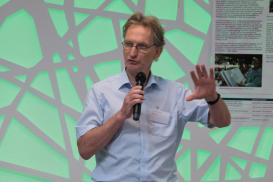
Tell us something about yourself.
Well, I was born and raised in Rotterdam. I received my Master’s degree in tropical forestry at Wageningen University a long time ago. After that, I spent 20 years in Mauretania, Bhutan, Costa Rica, Kenya, Vietnam, and Mozambique, with FAO, SNV, DHV Consultants, and eventually the Ministry of Foreign Affairs of The Netherlands. I love working in global development, particularly in the domains of rural development, sustainable land use, and environmental management. It has been great to be able to live in all these countries with different cultures and to meet different people – together with my family (my wife and three children, now all 20+). After 10 years at the Ministry of Foreign Affairs in The Hague, I opted for this secondment at the World Bank Group.
Deadline: 20-Sep-2018 at 11:59:59 PM (Eastern Time – Washington D.C.)
Assignment Description: IFC is seeking a firm to support landowners in the rehabilitation of degraded cattle pastures, develop a financial mechanism to finance farm level investments, and identify strategic partnerships between value chain actors to drive long-term professionalization and efficiency. The assignment will include three work streams as follows:
1. Development of innovative business models for climate smart ranching
2. Piloting climate smart beef production systems
3. Development of financial mechanisms for farm level investment
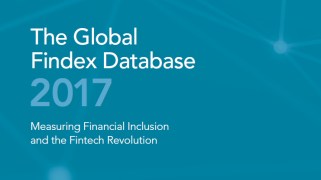
The Global Findex database is the world’s most comprehensive data set on how adults
save, borrow, make payments, and manage risk. Launched with funding from the Bill & Melinda Gates Foundation, the database has been published every three years since 2011. The data are collected in partnership with Gallup, Inc., through nationally representative surveys of more than 150,000 adults in over 140 economies. The 2017 edition includes updated indicators on access to and use of formal and informal financial services. And it adds new data on the use of financial technology (fintech), including the use of mobile phones and the internet to conduct financial transactions.
Deadline: 24-Sep-2018 at 11:59:59 PM (Eastern Time – Washington D.C.)
Assignment Description: The scope of work involves the following: (i) assessing the current sanitation service provision in the cities, considering technical, financial, institutional, legal/regulatory and social aspects; (ii) assessing strategic options for improving sanitation (on-site and sewered) services in the cities; (iii) developing a master plan, with strategic action plan, including appropriate institutional framework, financial and business arrangements, regulatory framework, customer-oriented programs, and infrastructure solutions covering on-site and sewered sanitation, including wastewater/fecal sludge collection, treatment and disposal; and (iv) providing support for consensus building around the strategy, institutional framework and action plan. An additional scope of this work is to develop an action plan to enhance the engagement of the private sector in this field.
You must be logged in to post a comment.