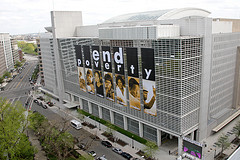
eC2: Action Planning for Social Inclusion in Disaster Risk Management Portfolio in South Asia

Qiangtang River BasinDeadline: 22-Jul-2018 at 11:59:59 PM (Eastern Time – Washington D.C.)

The World Banks South Asia Disaster Risk Management (DRM) team has commenced a new regional Technical Assistance (TA): Mainstreaming Inclusive Resilience in South Asia (P167456), to proactively incorporate social inclusion in the existing and new DRM lending portfolio. The objectives of this assignment are: (a) to develop action plans for five pilot projects, that are either new or existing, to better address social inclusion in the project design/implementation stage; and (b) to design and deliver training workshops that help government counterparts and World Bank’s DRM and Social Development specialists, to design more socially inclusive DRM projects. Under this assignment, two activities are planned: (i) action planning to identify practical entry points for more robust social inclusion elements in the five pilot projects; (ii)training workshop for consultation and learning opportunities.

Continue reading

eC2:Assessing impact of climate change on Kenya’s coastal assets, and identifying adaptation and mitigation measures

climateDeadline: 24-Jul-2018 at 11:59:59 PM (Eastern Time – Washington D.C.)

The objective of the consultancy services is to assess existing and projected impact of climate change on Kenya’s coastal assets that are critical for the livelihoods of coastal communities, with specific focus on marine fisheries, and develop a coastal ecosystem and community risk management framework. The consultancy will comprise a desktop component complemented by targeted field-based work, and include data collection and analysis, both geographically and thematically.

Continue reading

eC2: Value for Money analysis of the GEF supported Sustainable Forest Management and REDD+ projects

Deadline: 25-Jul-2018 at 11:59:59 PM (Eastern Time – Washington D.C.) Survey
The Independent Evaluation Office of the Global Environment Facility (GEF IEO) is requesting Expressions of Interest (Eol) from suitable national and/or international consulting firms and/or institutions to assist the Office in Value for Money (VfM) analysis of GEF supported Sustainable Forest Management and REDD+ projects.

From an evaluation standpoint, the VfM analysis will help examine the impact, efficiency and effectiveness of GEF support to SFM and REDD+ projects. The findings will show the cost and benefits of SFM interventions to generate multiple environmental benefits. The study will also highlight the environmental and socio-economic factors that affect the outcome of SFM interventions. The lessons from this VfM analysis will also help understand some of the challenges for monitoring and measuring environmental and socio-economic benefits as well as potential tradeoffs at landscape scales.

Continue reading

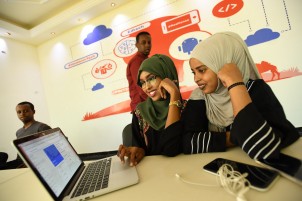
Mogadishu’s first tech hub

1_BkBrs2NfHlP53xw7ZfQ0PwSomalia’s capital city of Mogadishu is defined by a complex mix of challenges and opportunities. Despite political and economic struggles, Somalis are innovating to break the chronic cycle of vulnerability. Supported in many cases by the international Somali diaspora, people in Mogadishu are using technology to solve problems and tap into new markets.

Continue reading

eC2: Capacity Building and Risk Transfer Pilot in Nigeria

Deadline: 23-Jul-2018 at 11:59:59 PM (Eastern Time – Washington D.C.) ml-can-a-nation-build-its-future-if-it-cannot-feed-its-children-five-policy-actions-to-transform-crop-and-livestock-farming-in-mali-780x439

A Risk Transfer Pilot Project is a project that develops and issues at least one distinct index-based insurance product for various crops for one or more clients in Nigeria. Risk Transfer Pilot Projects involve activities with the overall outcome being to provide customers with effective financial protection against defined weather and natural catastrophe risks that impinge upon their livelihoods. The capacity building component mainly involves putting in place internal structures and relevant teams within a private insurance company to develop and manage key index insurance product processes (hazard data collection, product design, evaluation, pricing, market analysis, value of insurance analysis, etc.). It also includes the delivery of general education and awareness-raising on the benefits of index insurance for mitigating climate risks and unlocking investment potential and income-generation for farmers.  Continue reading

New country classifications by income level: 2018-2019

World Bank buildingUpdated country income classifications for the World Bank’s 2019 fiscal year are available here.
The World Bank assigns the world’s economies into four income groups — high, upper-middle, lower-middle, and low. We base this assignment on GNI per capita calculated using the Atlas method. The units for this measure and for the thresholds is current US Dollars.

Continue reading

eC2: Kenya SME Road Construction Program

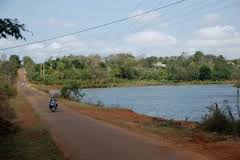
Rural Infra in CambodiaDeadline: 16-Jul-2018 at 11:59:59 PM (Eastern Time – Washington D.C.)
The International Finance Corporation (IFC) seeks to accelerate the development of Kenyan MSME road contractors to enable them to submit more qualified bids and win more contracts in public sector road construction, rehabilitation and maintenance. The Kenya SME Road Contractors project would like to scale up the business skills of MSMEs engaged in road construction activities, with the aim of increasing their opportunities in the sector.

The overall objective of the assignment is the delivery of a business management training Program which will target Kenyan road contractors registered with Kenya National Construction Authority (NCA) in the categories NCA3 NCA6 to enhance their business management skills and capabilities to strengthen the efficiency of their business operations. This will include training on practical bidding skills and project management.

Continue reading

After disasters hit, how countries and communities can build back better

asset_3Disaster losses disproportionately affect poor people, according to the 2017 “Unbreakable” report. The Caribbean Hurricane season of 2017 was a tragic illustration of this.

Not one, but two Category 5 hurricanes wreaked destruction on numerous small islands, causing severe damages on islands like Barbuda, Dominica, and Saint Martin. The human cost of these disasters was immense, and the impact of this devastation was felt most strongly by poorer communities in the path of the storms.

Continue reading

Gains in Financial Inclusion, Gains for a Sustainable World

images.jpgMary Banda in Zambia runs a small restaurant in one of Lusaka’s oldest markets. Before she learned that financial services could make the way she did business easier, her profits were low. But today, her profits have increased, both because she banks her money and because she uses mobile money transfer services.

Using financial services has simplified managing her business and increased profits. And business proceeds now pay her children’s school fees.

Continue reading