Prepares to support countries in the region affected by the conflict 
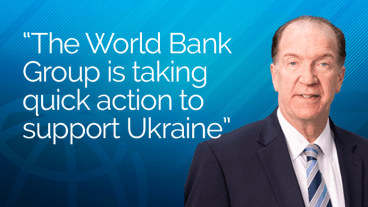
WASHINGTON, Feb. 24, 2022—David Malpass, President of the World Bank Group, today released the following statement:
“The World Bank Group is horrified by the shocking violence and loss of life as a result of the events unfolding in Ukraine. We are a long-standing partner of Ukraine and stand with its people at this critical moment.
Today, I discussed the situation with our Board of Directors and have mobilized our Global Crisis Risk Platform to accelerate coordination across the World Bank Group.
The devastating developments in Ukraine will have far-reaching economic and social impacts. We are coordinating closely with the IMF to assess these costs.
When I met with President Zelenskyy in Munich on Saturday, I reaffirmed the World Bank Group’s strong support and commitment to the people of Ukraine and the region.
We stand ready to provide immediate support to Ukraine and are preparing options for such support, including fast-disbursing financing. Alongside development partners, the World Bank Group will use all our financing and technical support tools for rapid response.
The World Bank Group is also in active dialogue to support neighboring countries and people that may be affected by this conflict and will make additional resources available.”
Prepares to support countries in the region affected by the conflict
WASHINGTON, Feb. 24, 2022—David Malpass, President of the World Bank Group, today released the following statement:
“The World Bank Group is horrified by the shocking violence and loss of life as a result of the events unfolding in Ukraine. We are a long-standing partner of Ukraine and stand with its people at this critical moment.
Today, I discussed the situation with our Board of Directors and have mobilized our Global Crisis Risk Platform to accelerate coordination across the World Bank Group.
The devastating developments in Ukraine will have far-reaching economic and social impacts. We are coordinating closely with the IMF to assess these costs.
When I met with President Zelenskyy in Munich on Saturday, I reaffirmed the World Bank Group’s strong support and commitment to the people of Ukraine and the region.
We stand ready to provide immediate support to Ukraine and are preparing options for such support, including fast-disbursing financing. Alongside development partners, the World Bank Group will use all our financing and technical support tools for rapid response.
The World Bank Group is also in active dialogue to support neighboring countries and people that may be affected by this conflict and will make additional resources available.”

 the immediate impact it is already having on the lives and livelihoods of those in the country. The World Bank Group continues to coordinate with Ukraine and other development partners to assess these costs and develop a robust response to help the Ukrainian people during this difficult period.
 exclusively on the private sector in developing countries.
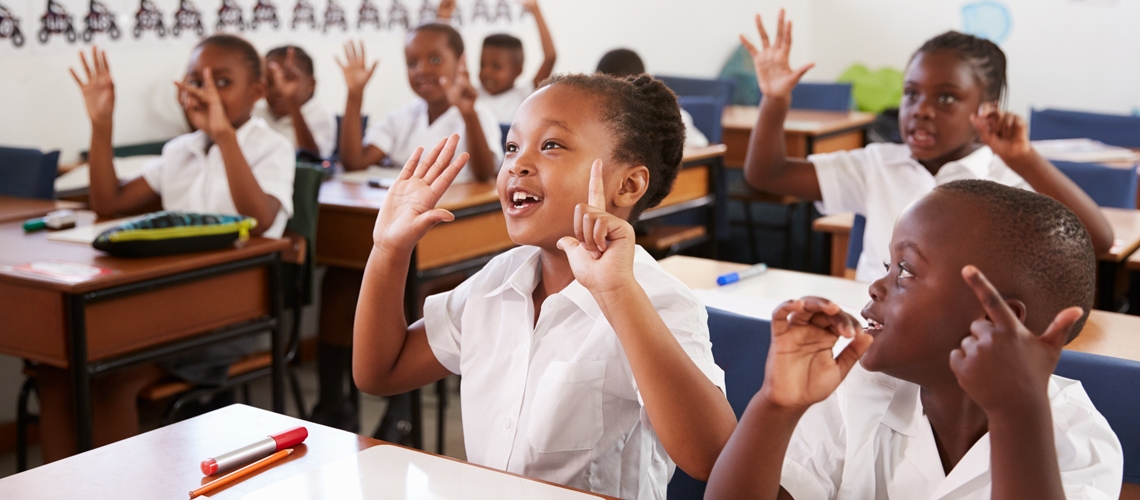 unless they get all children and young people back to school, keep them in class, and recover the central elements of learning, this generation could lose twice or three times that amount in earning losses.
 celebrate women’s achievements and contributions with a series of events and engagements – we look forward to your participation!
 lies the G.S. Kabuga school.
  related shutdowns are challenging the effectiveness of civil and institutional structures around the world and adding to fragility and violence, resulting in interrelated crises for foreign policy, development, and economics.

You must be logged in to post a comment.