Ec2: Maldives Scoping Study

Deadline: 29-Jan-2018 at 11:59:59 PM (Eastern Time – Washington D.C.) Malediven

Objective: The main objective of this assignment is to identify existing private sector investment opportunities in the Maldives. The scoping exercise should look at the Maldivian GDP private sector contribution and identify key industries, players and conglomerates through a market mapping exercise.

Continue reading →

Ec2: SUDAN TRANSACTION ADVISORY SERVICES FOR AGRO-INDUSTRIAL AND AGRI-BUSINESS PARKS

Deadline: 29-Jan-2018 at 11:59:59 PM (Eastern Time – Washington D.C.)

Objective: IFC is seeking to recruit a firm to provide customer acquisition services that will help to deliver on customer acquisition targets for a mobile money service in Cameroon. This acquisition activity will be centered around mobile money agents through interactive engagements with the market to register/activate and transact on the wallet.

Continue reading →

PPP & Infrastructure: A critical piece of the infrastructure puzzle

A major factor hindering infrastructure implementation and delivery is the absence of good governance, according to the 130 delegates from 27 countries who came together for the first Regional Roundtable on Infrastructure Governance in Cape Town in November.

There’s no denying infrastructure is crucial to Africa’s growth prospects. Nor can one ignore the ever-growing need for infrastructure on the continent—in Sub-Saharan Africa, only 35% of the population has access to electricity, and 23% still lack access to safe water and sanitation. Despite an estimated shortfall of nearly $100 billion in infrastructure investment in Africa, lack of financing is not the biggest problem.

Continue reading →

Water PPPs that work: The case of Armenia

Downtown Yerevan. Gusty winds, frosty air. Inside a hotel in the town square, cocktails and canapés, speeches and signatures. On this evening in November 2016, representatives of the State Committee for Water Economy (the Armenian water authority) and Veolia (a large international water operator) gathered to celebrate the signing of a new partnership: a 15-year national lease to provide water and wastewater services for the whole country. The lease began in January 2017, thus marking the start of a “second generation” of water PPPs in Armenia. Solid gains had already been made under the “first generation” between 2000 and 2016. At this crucial juncture, a World Bank study reviewed Armenia’s experience so far and analyzed the way forward under the new national lease.

Continue reading →

Empowering Women Through Tourism

The Middle East and North Africa (MENA) region has some of the most important historical and cultural sites in the world, and stunning natural landscapes. Couple these incredible assets with the region’s famous hospitality and rich culinary traditions, MENA is an ideal destination to grow travel and tourism, and harness its power for development work. However, MENA is behind other regions in women’s agency, economic opportunities, workforce participation and more. This presents a unique opportunity to leverage tourism to bridge the gender gap in the region. Gender differences in unemployment rates are particularly exacerbated in the West Bank and Gaza, where the overall economic situation is bleak due to instability, and gender dynamics are and exacerbated by the conflict.

Continue reading →

Green Buildings Specialist

Deadline: 22-Jan-2018 at 11:59:59 PM (Eastern Time – Washington D.C.)

Objective: The Green Buildings India program is a key component of IFCs cities initiative. It aims to champion voluntary uptake of resource-efficient buildings given that more than 70% of the buildings that will exist in India in 2030 have yet to be built. IFC is currently recruiting a senior-level short-term consultant (STC) for managing and executing key activities under its comprehensive Green Buildings India Program.

Continue reading →

Disaster Risk Management (DRM) Training for Government Counterparts

Deadline: 15-Jan-2018 at 11:59:59 PM (Eastern Time – Washington D.C.)

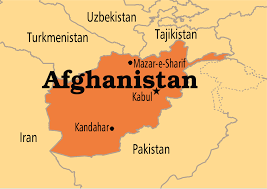
Objective: Under the auspices of the Citizens’ Charter Afghanistan Project National afganistan1Priority Program, the World Bank Group has been providing training to the Ministry of Rural Rehabilitation and Development (MRRD) and the Independent Directorate of Local Governance (IDLG) on disaster risk management to ensure resilient community infrastructure, greater sustainability in investments as well as more resilient communities. Based on the positive results achieved to date, there is increasing demand to expand these training efforts and train a broader set of key government stakeholders on best disaster risk management practices to increase resilience of public investments in Afghanistan.

Continue reading →

Top 7 water blogs of 2017

As a new year of insightful and interesting blogs begins here, we celebrate some of the most popular entries on The Water Blog from 2017.  Thanks to our readers and bloggers, The Water Blog is growing every year. From global, to regional, to national, and local perspectives, and covering key themes that resonate with a diverse community, we strive to ensure our content makes an important contribution to the global dialogue on water issues, and offers readers fresh insights as well as vital resources they otherwise may have not known about.

Continue reading →

Equality Means Business: Making the Business Case for Women

Despite women’s active role in Zimbabwe’s informal sector, they are underrepresented in its formal business sector.  When early December was upon us—heralding the start of the month of annual festivities—a group of women executives met to put forward strategies for equality in business. They met against a background of the harsh reality of women’s exclusion from leadership positions in Zimbabwe, brought to the fore in a recently released Confederation of Zimbabwe Industries (CZI) Manufacturing Survey for 2017.

Continue reading →

Cities: 12 big moments of building sustainable cities and communities (#7-#12)

At the World Bank, our teams working on social development, urban development, disaster risk management, and land issues have endeavored with countries and cities worldwide throughout the year to achieve a common goal: building inclusive, resilient, and sustainable cities and communities for all. How did they do? From our “Sustainable Communities” newsletter, we have captured 12 moments that mark the major accomplishments and lessons learned in 2017—and inspire our continued work to end extreme poverty and boost shared prosperity in 2018. Below the last 6 moments are described.

Continue reading →