Across the developing world, financial institutions have leveraged digital technologies and innovative business models to expand access to digital financial services (DFS), such
as digital transaction accounts and payment services, which serve as the gateway to financial inclusion. Providers are now diversifying their products offerings to newer DFS, such as credit, insurance, and savings. A recent World Bank Group report examines DFS products geared toward longer-term savings. Financial Inclusion Beyond Payments: Policy Considerations for Digital Savings, looks at how these digital savings products—though not yet mature–have the potential to advance an important element of digital financial inclusion.
Tag Archives: Wereldbank Groep
eC2: Identification of local and regional market opportunities and end-market consumption of cocoa-based products for Cote d’Ivoire and Ghana
Deadline: 30-May-2019 at 11:59:59 PM (Eastern Time – Washington D.C.) 
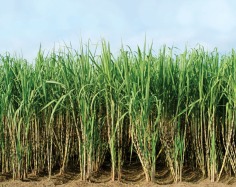
The objective of the assignment is to conduct an analysis of the local and regional market opportunities for cocoa-based products in the cluster cocoa production countries (Ghana, Côte dIvoire, Nigeria and Togo), and Senegal and Cape Vert the two (2) West African countries having the highest GDP per capita. More specifically, the study aims to:
– Identify and analyze the current local and regional market and potential opportunities for increased downstream uses of and end-market consumption of cocoa-based products;
– Perform an accurate market-sizing exercise for each of the different markets (i.e. Ghana, Côte dIvoire, and West African as a region) in terms of volume and value;
– Perform an analysis to determine the level of investment and capacity-building needed to develop these opportunities.
How digital remittances can help drive sustainable development
More people in the world have access to financial accounts and tools than ever before.
With this access, new products and services are being developed to facilitate convenient usage of these accounts. Taking this a step further, healthy financial inclusion incorporates customers’ ability to balance income and expenses, build and maintain reserves, and to manage and recover from financial shocks using a range of financial tools. The most useful financial services are those that provide customers with convenience, and support resilience through enhanced ability to weather shocks and pursue financial goals; effectively supporting the financial health of the user.
Harnessing creativity for change: The art of resilience
Scientists are constantly getting better at knowing when the next hurricane, landslide, or
flood will happen. However, science communication about these disasters lags behind.
Natural events and disasters of the past have influenced some of the most iconic art of our time. From Turner’s sunsets to Mary Shelley’s Frankenstein – both were composed in the shadow of the greatest volcanic eruption of our age, Mount Tambora in 1815. The Great Wave off Kanagawa by Japanese artist Hokusai (c. 1829–33) has been interpreted as a warning about tsunami risk. In an era of increasing natural hazards and climate change, art can also communicate the future risks we face.
Preventing and controlling corruption: A modern approach to procurement
Supporting good governance and addressing corruption are integral to the Bank’s
development work. Introduced in July 2016, VfM means the optimal combination of quality, whole-life costs and sustainability. This approach also enables selection of innovative technologies to address complex development challenges.
eC2: Development of national methodology for identification and designation of Heavily Modified Water Bodies (HMWBs)by further development of the national approach
Deadline: 07-May-2019 at 11:59:59 PM (Eastern Time – Washington D.C.) 
This assignment aims at the development of a national methodology for identification and designation of HMWBs by further development of the existing national approach and adaptation of most recent international best practices. The methodology should comply with the Water Framework Directive and the relevant Common Implementation Strategy Guidance documents and should simultaneously consider the local specifics and the identified deficiencies during the previous cycles of River Basin Management Plans (RBMPs). It should largely (at this stage for 3rd RBMP) be based on available data regarding the various modifications and any appraisal guidance for them and any findings of such appraisals. A testing of the methodology with application of the “mitigation measures” methods for all types of physical modifications and uses of the surface water bodies is planned within the frame of the assignment by the use of readily available data.
5 facts about jobs and economic transformation in IDA countries
What are the pathways people follow to better jobs? Economies grow when more people
find work, when they get better at what they do, and when they move from low-productivity work to better, higher-productivity jobs. Our newest report `Pathways to better jobs in IDA countries’ takes a closer look at how people benefit through jobs in the process of development. It identifies how the available jobs change with economic transformation and shows how the structure of labor markets differs between low, lower-middle, and middle-income countries. It points to key challenges in ensuring that workers can transition between sectors, between locations, and between self- and waged employment.
eC2: Vietnam Climate Smart Urbanization
Deadline: 05-May-2019 at 11:59:59 PM (Eastern Time – Washington D.C.)
Vietnam is urbanizing at a rapid pace. Cities, particularly those in low-lying delta areas are especially vulnerable to extreme weather events and impact of climate change. The rapid pace of urbanization is expected to intensify the economic costs related to extreme events. Urbanization in Vietnam has also been accompanied by rising air and water pollution, inadequate solid waste management and wastewater treatment, urban sprawl, and loss of green space threatening urban livability. Cities are also major users of energy and major contributors of GHG emissions. The proposed activity is being carried out in collaboration with the Government of Vietnam to enhance climate smart urbanization in the country.
From Data Day to a Data Decade
The World Bank’s inaugural Data Day had something for everyone and was a huge win
for data: more than 1,000 participants voted with their feet and their time to show their commitment for data—and that’s a commitment we share. Here’s what we learned from our first Data Day:
eC2:Determination of the capacity of water bodies to take nutrient pollution
Deadline: 02-May-2019 at 11:59:59 PM (Eastern Time – Washington D.C.)
The assignment comprises of three main activities:
Activity 1: Identification and quantification of the factors determining the self-purification ability of different types of water bodies of categories river, lake and transitional waters
Activity 2: Identification of the impact of different concentrations of nutrients (nitrogen and phosphorus forms) on the ecological status of the different types of water bodies of categories river, lake and transitional waters
Activity 3: Development, testing and validation of methodology/mathematical models for determining the capacity of different types of water bodies of categories river, lake and transitional waters
You must be logged in to post a comment.