
The fast spread of severe acute respiratory syndrome coronavirus 2 has resulted in the  emergence of several hot-spots around the world. Several of these are located in areas associated with high levels of air pollution. This study investigates the relationship between exposure to particulate matter and COVID-19 incidence in 355 municipalities in the Netherlands. The results show that atmospheric particulate matter with diameter less than 2.5 is a highly significant predictor of the number of confirmed COVID-19 cases and related hospital admissions. The estimates suggest that expected COVID-19 cases increase by nearly 100 percent when pollution concentrations increase by 20 percent.
Tag Archives: Wereldbank Groep
eC2: Gender Mainstreaming Guidelines for Regional Marine Plastic Management
Deadline: 04-Jun-2020 at 11:59:59 PM (Eastern Time – Washington D.C.) 
The World Bank has received financial support from the PROBLUE Multi Donor Trust Fund and intends to use part of the proceeds to integrate gender dimensions into regional government efforts to address plastic production, consumption, and waste management and to mitigate the impact of plastic on marine ecosystems.
The World Bank seeks to contract an experienced consulting firm to conduct a literature review on key gender aspects of marine plastic management within the six participating countries, and to develop practical gender-responsive guidelines that each participating country can integrate in their national marine plastic management strategies and action plans.
The new kids on the block: redefining “critical” minerals essential for a clean energy future
As the world battles the coronavirus (COVID-19) pandemic, and mine sites across the  world delay or suspend operations, we are reminded of Matshona Dhliwayo’s quote: “stars are born out of dark moments.” While the price of most so-called “critical minerals” may be down now, demand for these minerals will rise again, and certainly well before 2050. Indeed, the World Bank Group’s latest report has found that the more ambitious the climate targets become, the more minerals and metals will be needed for a low-carbon future. Continue reading
Weekly Round Up
| 3 phases to build more inclusive, efficient and resilient education systems in the wake of COVID-19
The pandemic has already had profound impacts on education. But it is possible to counter those shocks, and to turn crisis into opportunity. The policy responses to achieve this can be summarized in these three overlapping phases. |
How COVID-19 is changing the world: a statistical perspective from international agencies
We are living through unprecedented times. The impact of the novel coronavirus and its  disease, COVID-19, has reverberated through every corner of the globe—taking lives, destroying livelihoods, and changing everything about how we interact with each other and the world.
At a time of crisis, governments more than ever must rely on timely, reliable data to make decisions to mitigate harm and support their citizens. What’s more,
eC2: China Agricultural Weather Index-based Insurance (WII) Project-WII Product Design and
Deadline: 28-May-2020 at 11:59:59 PM (Eastern Time – Washington D.C.) 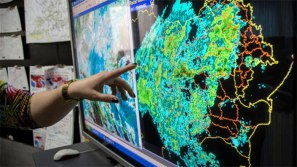
The project team is seeking the services of a vendor/consultant with proven track records in designing successful agricultural Weather Index Insurance products in the China market, and having strong expertise in weather/loss data collection, processing, analysis, WII product modeling, pricing and conducting related research etc.
Human capital and climate action: Outcomes that deliver for people and planet
There is now a wealth of evidence that ensuring a well-educated, healthy, and well- nourished population can pay bigger dividends to the economy than investing in roads and bridges alone. The World Bank Group’s Human Capital Project, launched in 2018, aims to accelerate more and better investments in people as a key way to unlock greater equity and inclusive growth.
Updates from the WBG
|
Upcoming Live Events: People, Peace and Prosperity |
|---|

Broad, fast action to save lives and help countries rebuild
The COVID-19 pandemic is uncharted territory for every country in the world. It has unleashed both a global health emergency and an unprecedented economic crisis of historic magnitude. That is substantially bigger than South Asia’s entire regional economy (which is about $3.5 trillion), and as if we somehow wiped both Germany and Belgium off the economic map. Worse still, the fall from where we expected to be in 2021 if COVID-19 hadn’t hit is closer to $7.5 trillion dollars—equivalent to 40% of the entire U.S. economy, as well as larger than the combined GDP of Latin America and the Caribbean plus the Middle East and North Africa.
Cities, crowding, and the coronavirus: Predicting contagion risk hotspots
Across the globe, well-functioning cities do one thing really well – they bring people  together. Social and economic interactions are the hallmark of city life, making people more productive and often creating a vibrant market for innovations by entrepreneurs and investors. No country can achieve significant economic growth without vibrant cities.


You must be logged in to post a comment.