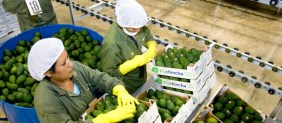
The circular economy can support COVID-19 response and build resilience

eC2: Economist for Water Security Analytical Studies

Deadline:  27-Aug-2020 at 11:59:59 PM (Eastern Time – Washington D.C.) water

The Water Security Diagnostics (WSD) team under the Water Global Practice is looking for an economist expert on water security assessment on a short-term consultancy basis. The position will entail providing support to the global team, in addition to teams working on WSD in countries and regions. Solid expertise in the field of water economics is required, particularly in developing contexts and including hydro-economic modelling and political economic analysis. The contract will initially starting out as a 40-day timeframe with the potential for recurring contract limited to 150 days per financial year based on need and performance. Location is flexible and commensurate with identification of best candidate for position.

Continue reading

eC2: Market Assessment of the Temperature-Controlled Logistics (TCL) in Thailand

Deadline: 10-Aug-2020 at 11:59:59 PM (Eastern Time – Washington D.C.)logistics_management_information_system_sarah_farhat

This Assignment is a market study for TCL services sector in Thailand. TCL services would include transportation/storage/distribution, together with other value-added services, of food/perishable products in a temperature-controlled environment.

The main objectives of the Assignment are to:
i. determine the existing and future demand and supply for TCL services along the entire value chain for several sub sectors requiring such services such as agribusiness, supermarkets, dairy, meats, quick foods, seafood, pharmaceuticals etc. and the extent of inhouse versus independent TCL service providers (3PL players) in this space
ii. carry out a comprehensive analysis of the margin structure and economics of the value chain
iii. determine the key constraints and growth drivers for these services as well as for increased outsourcing of such services to 3PL players, and
iv. recommend strategies which could be followed for establishing a new TCL service operation in Thailand, especially private sector involvement and help IFC identify leading operators in this space, that may be candidates for potential financing to support their growth plans.

Continue reading

eC2: Offshore Wind Financing for Emerging Markets

Deadline: 03-Aug-2020 at 11:59:59 PM (Eastern Time – Washington D.C.)

Wind turbine farm

The objective of this assignment is to assist IFC staff (primarily investment, credit and management) in understanding: 1) differences between offshore wind and onshore solar/wind/hydro projects in terms of risks, challenges, contractual structures, studies and financing structures, and; 2) potential project financing structures for offshore wind in emerging markets and how IFC can best mitigate any associated risks. Note that the analysis of current projects will focus on fixed foundation rather than floating or intertidal/nearshore projects. The analysis of future projects will consider floating, although to a lesser extent than fixed.

Continue reading

Corruption has modernized, so should anticorruption initiatives

The World Bank’s commitment to helping countries control corruption dates to 1996 20038907351_4a3e9c5c97_kwhen then President James Wolfensohn made his “cancer of corruption” speech. It was the first time the issue was given such prominence by a World Bank President and put squarely on the agenda of the institution.

Continue reading

What do we know about the relationship between air pollution and COVID-19?

The global COVID-19 lockdown to contain the spread of the virus has severely restricted economic activity, and reports are emerging from across the globe of blue skies becoming visible, in some cases for the first time in people’s lifetime. These improvements will likely dissipate as lockdowns are lifted, and economic activity resumes. Will the air once again become polluted, or is there a possibility for countries to use economic recovery programs to grow back stronger and cleaner? Discover in our latest analysis!

Continue reading

Why we need a Blue Recovery

COVID-19 has brought untold suffering to communities worldwide, compounded by what blue_recovery_world_bank_environmentWorld Bank estimates suggest will be the worst recession since World War II. Such a cataclysmic event requires a bold response, both in the immediate term by providing medical care and the safety nets needed to prevent people from falling into poverty but also in the longer term. As we work with countries to build back their economies and strengthen their communities, it cannot be business as usual and sustainability needs to be fully built into the recovery. But building back better should go beyond the green recovery that is being spoken about and embrace a “Blue Recovery.” The pandemic struck at a time when oceans are under increasing threat from myriad impacts  – ranging from the warming effects of climate change to pollution caused by coastal run-off and marine litter, overfishing and coral reef and biodiversity loss.

Continue reading

A lesson on the pandemic – the lesson we didn’t learn about inequality

School after this pandemic will be different.  To a large extent this is due to many actors – jaime-5094183737_0a362cb9fc_cparents, teachers, mass media, the government, and others – who will have changed their views and perceptions about their role in the education process. This shift of mindsets will be critical for the future of the education system.

Parents now have a better understanding of the need to work jointly with schools to foster the education of their children. They now know that they can be, and actually are, a major figure in the education process of their children. And many parents who are now struggling with supporting they children to maintain some of their learning process at home will have a better understanding of just how demanding and challenging the teacher’s job is.  Parents have a much greater appreciation for teachers and what they do. And parents now clearly recognize that education is a social experience – a lot of the magic of learning, of the development of ideas and creativity, come from the social interaction with teachers and peers. If someone ever thought that teachers could be replaced by artificial intelligence, it is now clear that is not the case.

Continue reading

Productivity growth threatened by COVID-19 disruptions

Productivity growth, a force that has contributed to lifting millions of people out of poverty in developing countries, will need substantial support from policymakers if it is to withstand the severe challenges posed by the COVID-19 pandemic’s economic shock. More in our latest study.

Continue reading

Diversification and cooperation in a de-carbonizing world: Climate strategies for fossil-fuel dependent countries

Countries’ attempts to tackle climate change will depend on their circumstances and coal-fired_power_plant_lundrim_aliu_world_bankcapabilities.  Among the most challenging, will be how fossil fuel–dependent countries (FFDCs) do so, given their economies are the most dependent on fossil-fuel income and carbon-intensive industries. These countries represent almost one-third of the world’s population. They are themselves responsible for roughly 20 percent of global greenhouse gas (GHG) emissions but are home to over 80 percent of emissions embodied in known fossil fuel reserves. Many also have foundational systems built on the back of (expected) fossil fuels and related value chains and are, therefore, at risk as the global low-carbon transition gets fully underway.

Continue reading