eC2: Vietnam Horticulture Value Chain Competitiveness

Deadline:    25-Mar-2021 at 11:59:59 PM (Eastern Time – Washington D.C.) Horn-Oeun
The purpose of the Upstream Seed study is to evaluate the value chain with a commercial focus and identify a pipeline of 3-5 projects with company sponsors. The study intends to assess Vietnam horticulture sectors supply-side and demand-side factors from an investment angle. As the existing market players in the horticulture sector are relatively small and immature, IFC can play an important role in building capacity and enabling these companies to accelerate growth, scale their businesses and become more investment-ready.
Continue reading

eC2: Eastern Caribbean Currency Union: Renewable Energy Market sounding and barriers diagnostics

Deadline:    22-Mar-2021 at 11:59:59 PM (Eastern Time – Washington D.C.) Renewable-energy

The objective of this assignment is to provide consulting services to conduct diagnostics assessment for market barrier for renewable energy (RE) development and private sector investments in RE. The work will entail assessing RE investment readiness in the Eastern Caribbean Currency Union (ECCU) countries and develop a market report.

Continue reading

eC2: Green hydrogen investment opportunities in developing countries

Deadline:   18-Mar-2021 at 11:59:59 PM (Eastern Time – Washington D.C.) Hydrogenfuelcell

This assignment will support ESMAP and IFC to develop a market report identifying investment opportunities in green hydrogen in developing countries. It will produce an analytical framework to assess green hydrogen investments in different economic sectors that could use green hydrogen or derived fuels as feedstock or energy supply. The Consultant will apply the framework to systematically assess green hydrogen investment opportunities across the full value chain in the industry, agriculture, electric power, heating, and transport sectors. This framework will be based on a straightforward scorecard system, and will be used to identify viable applications, business models, and local players that could benefit from private and public sector support. For each relevant sector, the report will also identify and develop case studies from developing countries.

Continue reading

eC2: Climate-Smart Urban Development and Urban Resilience in Ethiopia

Deadline:   15-Mar-2021 at 11:59:59 PM (Eastern Time – Washington D.C.)

World Bank Group's Business Opportunities Fair: Climate-Smart En

The objective of the proposed activity is to support climate smart urban development in AA by (i) integrating Climate Smart Capital Investment Plans (CsCIP) into urban development planning, and (ii) preparing an integrated action plan, including policy actions, prioritized investments and institutional building towards green, climate-resilient urban development. In alignment with other ongoing WB engagements and based on international experiences in adapting to Covid-19, a locally attuned CS-CIP and action plan will be developed in coordination with AA City Administration.

Continue reading

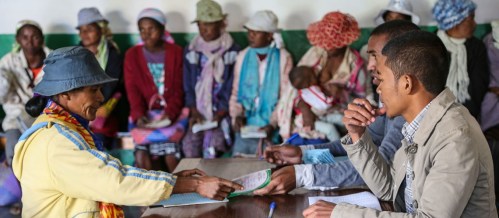
Economic inclusion programs: A springboard out of extreme poverty


As the world grapples with the pandemic, the new State of Economic Inclusion peileaderreport points to paths out of poverty for the poorest and most vulnerable.
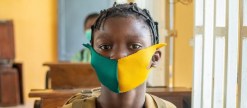
For the first time in two decades, extreme poverty is rising around the world, as COVID-19 threatens to erode years of hard-won progress.   The World Bank estimates that the economic fallout from the pandemic may add as many as 150 million extreme poor by 2021. Women, children, displaced populations, and people with disabilities have been particularly hard hit.

Continue reading

Better Farming on Their Own Land: How Rural Communities in Cambodia Overcome COVID-19 Restrictions and Sustain Incomes


Story highlights:Horn-Oeun

  • In Cambodia, the Land Allocation for Social and Economic Development (LASED) projects secured about 16,000 hectares of land for landless and small landholder families across five provinces.
  • Over 5,000 households have received direct benefits, including land titles.
  • The projects will phase out by ensuring the sustainability of achievements and improving family incomes.

Continue reading

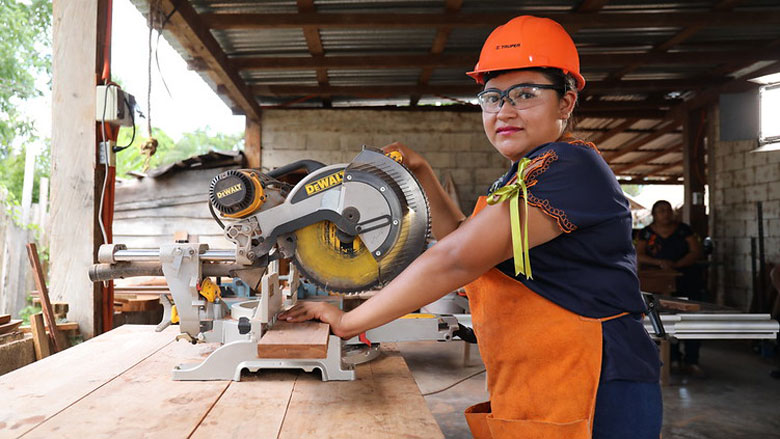
After the pandemic, put women first


From education to entrepreneurship, global recovery efforts need to pay shutterstock_1835789131particular attention to the needs of women and girls. 

Policymakers haven’t always considered how economic shocks impact women and men differently — or how governments should respond.  When the 2008 recession hit, few asked how stimulus measures would affect women compared with men.

Continue reading

How to use technology to help teachers be better and to make life better for teachers

Teachers matter enormously to student learning. Teachers deliver academic knowledge. d_evans_blogTeachers impart model socioemotional skills. Good teachers boost students’ long-term life outcomes. Teachers can inspire (and in another demonstration of their importance, in some cases, sadly, teachers can disappoint or even abuse). 

Continue reading

The COVID-19 pandemic has reinforced gender inequalities around the world

 
COVID-19 has seriously impacted the global progress towards gender equality, with women around the world continuing to face laws and restrictions that hinder their economic opportunity, according to the latest Women, Business and the Law 2021. Reforming laws toward gender equality must be a priority as governments look to recover from COVID-19.
 
WBL21

Website | Report | Video | Blog