Netherlands for the World Bank

Your guide to the World Bank Group

Netherlands for the World Bank

eC2:Technical Partner for Disaster Risk Management and Business Continuity as a tool for Water Safety Planning

Deadline: 12-Jan-2017 at 11:59:59 PM (Eastern Time – Washington D.C.)water

The specific objectives of the consultancy are to (i) prepare a curriculum and related training materials necessary to deliver the Disaster Risk Management and Business Continuity capacity building program; (ii) validate the capacity of the participating Hubs to deliver the Disaster Risk Management and Business Continuity capacity building program (iii)Train the Trainers in the hubs of likely three countries including Serbia, Kosovo and possibly Bosnia & Herzegovina as well as other countries in the region according to demand (iv) oversee the quality of development and delivery of the Risk Program by the Hubs; and (v) ensure lessons learned and good practices developed during the activity are incorporated in subsequent programs.

Continue reading

10 Best World Bank Moments 2016

What will you remember about 2016? At the World Bank Group, it was a remarkable year that included a record IDA replenishment and a landmark speech by Michelle Obama. Get inspired by our Top Ten moments of 2016 and work together with us to help end extreme poverty and boost shared prosperity in the new year.

IFC and agribusiness in a changing environment

IFC event on GAFSP and climate smart agriculture RVO, Prinses Beatrixlaan 2, The photoHague – 28 October 2016

Executive summary

RVO and IUCN NL organized together with the International Finance Corporation (IFC) on 28 October a one-day event in The Hague in the framework of the World Bank Group-Netherlands strategic partnership ‘Food for All’. The event convened more than 80 professionals in the private sector, knowledge institutions, NGOs and policy makers engaged in agribusiness in developing countries.

Continue reading

West African countries commit to common vision for coastal resilience

Togolese families often place talismans, thought to contain magical or spiritual properties, outside their homes facing the Atlantic Ocean in hopes of westafrica_coastalerosion_780x520protecting their dwellings from encroaching tides.

Unfortunately, dozens of villages have been devoured since the mid-1990s, leaving behind shells of houses, livelihoods and memories in the wake of a coast receding as much as 5-10 meters per year. When expatriates return to Togo’s coast to visit their childhood homes, they are astonished to see that communities have literally washed out to sea.

Continue reading

eC2:Geodata and data Wrangling Workshops and Assessment

Deadline: 16-Jan-2017 at 11:59:59 PM (Eastern Time – Washington D.C.) index

The objective of this consultancy is to design and conduct a workshops in both mainland Tanzania and Zanzibar that will improve fluency with geospatial data across government in order to support and improve geospatial capacity in Tanzania and in particular understanding of open geospatial data. This will provide skills development for data collection and management, help participants improve the content and quality of geospatial datasets and strengthen the knowledge of open geospatial principles and standards.

Continue reading

eC2:Coordinator for Study on Local equity sharing schemes for hydropower projects in Nepal

Deadline: 09-Jan-2017 at 11:59:59 PM (Eastern Time – Washington D.C.)HYDRO

The hydropower potential of Nepal offers a unique opportunity for both economic and social development. In order to maximize these economic and social benefits and opportunities, the government of Nepal in consultation with the various stakeholders has provisioned for various benefit sharing mechanisms arising from the hydropower development. One key aspect of the Benefit Sharing mechanism focuses particularly on the practice of offering direct financial equity or shares to local populations affected by the development of hydropower projects. The main objective of the consultants assignment is to oversee and guide the study of the delivery of Local Equity Sharing Schemes commonly referred to as Community Shares in Nepal, in the context of benefit sharing mechanisms applicable to hydropower projects.

Continue reading

These are the world’s most sustainable cities

World Economic Forum

What does it mean to be a ‘sustainable city’, and which cities around the worldr8ansexefvgog2knfwagqi3r2drh44rbuin_samryey are best at it? A new index sets out to find the most successful from a list of 100 cities. The ranking from Arcadis, a design and consultancy firm, and the Centre for Economic and Business Research, assesses the sustainability of cities based on three dimensions. The ranking also highlights the pressure cities are under – from population growth to natural disasters.

How can we help smallholder farmers seize opportunities in Africa?

World Bank Blog coffeeuganda

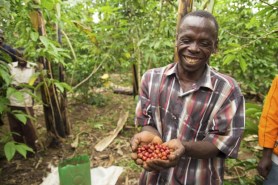
Agriculture is at the heart of addressing poverty in Africa. I was reminded of that during my recent trip to Addis Ababa, Ethiopia, where different stakeholders had gathered to explore how to transform smallholder agriculture for growth. The recent End Poverty Day activities in Africa, which focused largely on agriculture, was also a reminder of how central the sector is to ending poverty and boosting prosperity. Indeed, the different stakeholders I work with on a daily basis—which includes African governments, development partners, civil societies, the private sector and farmers—all agree: Agriculture is important to the future of Africa.

Continue reading

How can Hong Kong stay smart and competitive? By driving change through a ‘Public-Private-People Partnership’ approach

World Bank Blog – 12/14/2016Smart-Cities-All-you-need-to-know

According to the World Economic Forum’s “Global Competitiveness Report 2016-2017,” Hong Kong dropped two notches to rank as No. 9 in its Global Competitiveness Index. The decline occurred mainly because the city faces challenges to “evolve from one of the world’s foremost financial hubs to become an innovative powerhouse.”

Continue reading

Global Community Makes Record $75 Billion Commitment to End Extreme Poverty

Targets fragility, refugees, climate change and other pressing challengesWorld Bank building

YOGYAKARTA, INDONESIA, December 15, 2016— A coalition of more than 60 donor and borrower governments agreed today to ratchet up the fight against extreme poverty with a record $75 billion commitment for the International Development Association (IDA), the World Bank’s fund for the poorest countries.

This is a pivotal step in the movement to end extreme poverty,” World Bank Group President Jim Yong Kim saidThe commitments made by our partners, combined with IDA’s innovations to crowd in the private sector and raise funds from capital markets, will transform the development trajectory of the world’s poorest countries. We are grateful for our partners’ trust in IDA’s ability to deliver results.”

Continue reading