
If you are born into a low-income family, what are the chances that you will rise higher 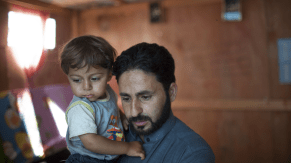 regardless of your background? The ability to move up the income ladder, both in one’s lifetime and with respect to one’s parents, matters for fighting poverty, reducing inequality, and even for boosting growth. Yet, mobility has stalled in recent years in large parts of the world, with the prospects of too many people across the world still too closely tied to their parents’ social status rather than their own potential, according to the findings of a new World Bank report launched today. Mobility is also much lower, on the average, in developing economies than in high-income economies. The developing world accounts for 46 of the bottom 50 economies in terms of mobility in education from the bottom to the top.
Tag Archives: Wereldbank Groep
Leveraging technology to achieve the Sustainable Development Goals
Billions of people are connected by mobile devices, with unprecedented processing  power, storage capacity, and access to knowledge — foreshadowing stunning possibilities.
  This potential is multiplied by technologies such as artificial intelligence, robotics, big data processing, the internet of things, autonomous vehicles, 3-D printing, blockchain, etc.
Investing in waste management to create job opportunities for Malawi’s Youth
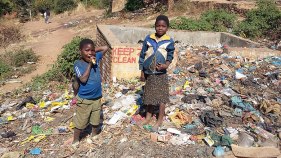 Malawi, a small country in Africa, has a population of over 18 million. According to World Bank estimates, Malawi had 52.2% of the total population between 15 and 64 years as of the beginning of 2017. However, Malawi has a high level of unemployment among the productive population which is largely composed of young people.
GIF: making climate-smart infrastructure bankable
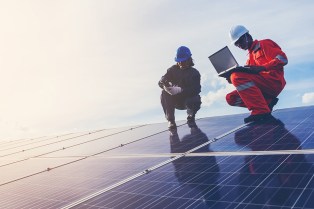 There are many drivers of climate change, but few would disagree that energy infrastructure built according to “business-as-usual” standards is a major one. Meeting the lofty goals set at the 2015 Paris Climate Accords requires powering our homes, businesses, and government agencies with a cleaner mix of energy that includes more renewable sources. It also requires promoting standards that encourage energy efficiency—for example, for appliances or building codes—as a low-cost and high-impact way to reduce greenhouse gas (GHG) emissions.
#AfricaCAN: A Lesotho farmer can now grow vegetables all year long
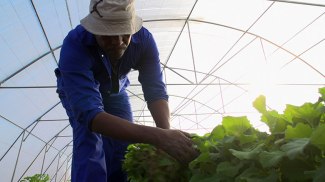 I met Thabo Lefatle on a cold winter day in Lesotho. We – a team from the World Bank Communications Department – had driven an hour and a half south of the capital Maseru to get to his farm. As we traveled through different parts of the small mountainous kingdom, we met several farmers to find out exactly how the Smallholder Agriculture Development Project (SADP) impacted their lives.
Indian agriculture at a crossroads: Smart solutions towards doubling farmers’ incomes
 A few weeks ago, I felt a sense of déjà vu. I was at a roundtable on agriculture in Delhi, in the same conference hall where, ten years ago, I participated in the consultations on the Bank’s World Development Report 2008 on Agriculture for Development.
This time we were discussing how India can build a stronger agriculture sector without further harm to the environment or depletion of its natural resources. The high-level dialogue was attended by senior representatives from India’s Niti Aayog, Ministry of Agriculture and Farmers’ Welfare, leaders of farmers’ associations from Punjab and Haryana, as well as by researchers, academics and donors. We focused on the ‘agriculture-water-energy’ nexus, achieving India’s second green revolution, making agriculture more climate resilient, as well as options to stop the burning of crop residue that is worsening air quality in much of northern India. It was heartening to see the torch bearers of India’s drive towards food security unhesitatingly debate a host of complex and sensitive issues.
eC2:Technical Assistance on Project Screening and Prioritization and Outline Business Cases (OBCs) Development for PPPs in Infrastructure Sector
Deadline: 30-May-2018 at 11:59:59 PM (Eastern Time – Washington D.C.) 
Description: The objectives are to provide technical assistance and advisory services to BAPPENAS Directorate of PPP and Financial Engineering, specifically on: (a) PPP project screening and prioritization; and (b) development of outline business cases (OBCs) for selected PPP projects. The technical assistance under this TA will be structured into two main activities: (i) project screening and prioritization; and (ii) development of OBCs. The activity outcomes are to screen and prioritize the projects and expected to feed into the subsequent OBCs development for the most priority projects.
Continue reading
eC2: Scaling Solar – Independent Engineer Register
Deadline: 21-May-2018 at 11:59:59 PM (Eastern Time – Washington D.C.) 
Description: The World Bank Group’s Scaling Solar program aims to accelerate the roll out of competitively priced, utility-scale solar photovoltaic power in Sub-Saharan Africa (see http://www.scalingsolar.org). The template Scaling Solar power purchase agreement (PPA) requires an Independent Engineer to act as an impartial technical expert for the two main PPA parties (the Purchaser and the Seller). The role of the IE is adjusted depending on the requirements of each transaction but it would normally include tasks such as: – monitoring progress in the implementation of the project – reviewing proposed commissioning procedures – witnessing completion and performance tests A shortlist of 4 potential IEs is included in each Scaling Solar PPA. Firms with relevant expertise are invited to submit EOIs to be considered for inclusion on future IE shortlists. Selected firms will be contacted to confirm their willingness to be included in specific transaction shortlists in due course. N.B. This selection is to identify a register of potential IE firms to be included on transaction-specific shortlists only. The ultimate selection of the preferred IE for each transaction will be conducted by the PPA parties for that transaction in due course.
Continue reading
Getting to zero traffic fatalities: What will it take?
 We must stop deaths on the roads. No one would argue with that, of course. But for us who live in Peru and many other developing countries, the importance of making road safety a global development priority really hits home—especially after a string of dramatic crashes that have made headlines across the country.
Last February, a bus fell to the bottom of a 200-metre ravine and left 45 dead in Arequipa, including several children. A month before, the country witnessed its deadliest traffic crash on record when a bus plunged down a cliff in Pasamayo, just north of Lima, killing some 52 people.
eC2: ABP2 Mekong Delta Pillar: Firm consultants for climate-resilient livelihood models and transition strategies in the Mekong Delta
Deadline: 17-May-2018 at 11:59:59 PM (Eastern Time – Washington D.C.) 
Objective: The Consultant will provide technical expertise across a range of fields including agro-ecology, livelihood adaptation, agricultural economics and value chain, and community and gender, to review, identify and provide analysis of sustainable climate-resilient transition models in agriculture, aquaculture, and horticulture livelihoods in the Mekong Delta. 1. Task 1: Define and describe the context and trends in at least six (06) agro-ecological sub-regions in the Mekong Delta: Plain of Reeds, Coastal LXQ, Mid-Tien and Mid-Hau River, West-Hau River, Ca Mau Peninsular, and West Coast Peninsula . 2. Task 2: Describe the most prevalent livelihood models in the six (06) agro-ecological sub regions. 3. Task 3: Assess the performance of the viable potential livelihood models. 4. Task 4: Identify livelihood transition pathways and strategies. Details in TOR attached.


You must be logged in to post a comment.