
Less than an hour after landing in Port-au-Prince, Haiti, on Wednesday last week we were 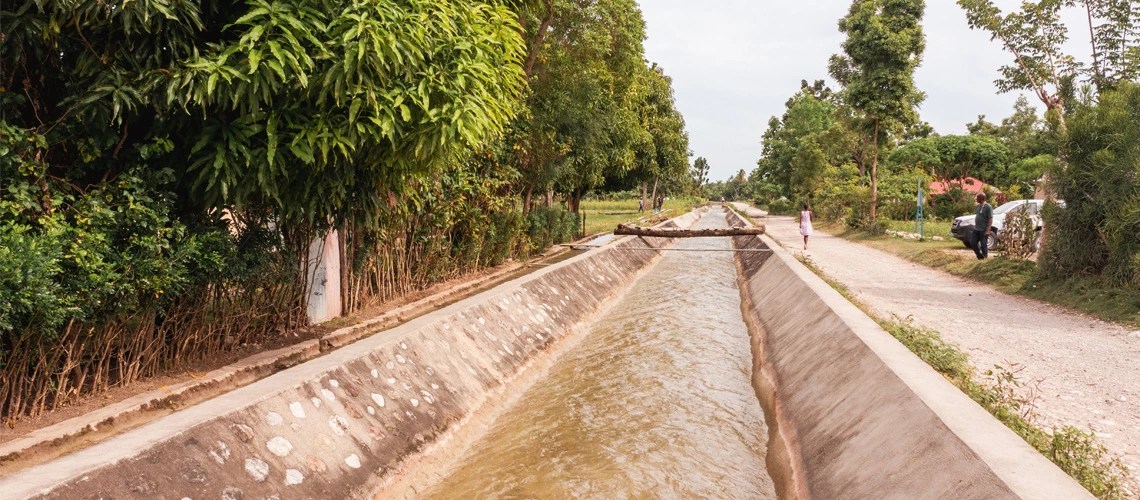 already at the National Emergency Operation Center of the Direction Générale de la Protection Civile discussing how the International Development Association (IDA) can help strengthen the country’s disaster risk management capacity. Remarkably, the center was launched in May 2024 despite the ongoing security and political crisis at the time, demonstrating the resilience of the IDA program implementation in Haiti. We witnessed similar results in other programs and during the field visit to the Southern Peninsula, where IDA projects are having a visible impact on the lives of the Haitian residents of that area.
Tag Archives: RVO
A new World Bank database to support a new era in biodiversity conservation
Biodiversity conservation is vital for sustainable development, poverty alleviation,  and a livable planet. It sustains ecosystems that support human livelihoods, particularly in developing nations, by providing essential resources like food, clean water, and climate stability. Healthy ecosystems are crucial for agriculture, fishing, and forestry, which reduce poverty and foster sustainable economic growth. Additionally, biodiversity fuels industries such as ecotourism and pharmaceuticals, generating jobs and income. Maintaining biodiversity strengthens ecosystem resilience, stabilizes climate, and mitigates climate change impacts, making it key to environmental health and global sustainability.
What middle-income countries can learn from America’s innovation system
The American model of innovation has long been the envy of the world. From the garage  tinkerers of Silicon Valley to the research labs of prestigious universities, the United States has consistently churned out groundbreaking technologies that have reshaped industries and transformed lives. Today, the United States leads the world in the number of patents produced per person—as well as the importance of these patents.
Financial Sector at a Crossroads in Emerging Markets: Climate Risks and Financing Gaps Demand Action
More than 400 Million Students Affected by Climate-Related School Closures since 2022
For less than $20 per student schools can adapt and minimize learning losses
WASHINGTON, Sept. 4, 2024 – A staggering 400 million students globally experienced school closures from extreme weather since 2022, according to a new World Bank report released today. The report examines the detrimental impacts of climate change on education in low- and middle-income countries and offers solutions to harness education to spur climate action. It also estimates that a one-time investment of $18.51 per child can mitigate the impact from climate shocks.
Why land is key to tackling climate change and infrastructure gaps
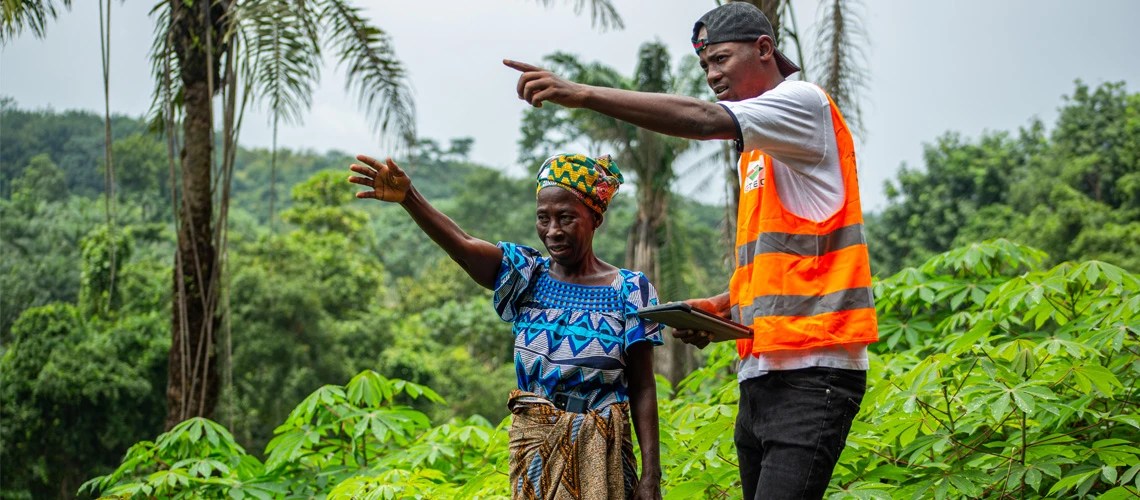 significant gaps remain around the world.
Globally, a billion people live more than two kilometers from an all-weather road, 685 million people are without electricity, and nearly 3 billion people lack internet access. In addition, 2.6 billion people don’t have access to safe drinking water and 3.5 billion people lack safely managed sanitation.
Becoming a Leader in Latin America’s Wastewater Treatment – The Case of Guayaquil
Guayaquil, Ecuador’s largest city and economic hub, has long grappled with a pressing  environmental and public health challenge: inadequate wastewater treatment. With a population of over 2.7 million people, this bustling metropolis has historically struggled to manage its wastewater effectively, mirroring a widespread issue across Latin America.
Education for Climate Action
Ingredients for Accelerating Universal Electricity Access: Lessons from Rwanda’s Inspirational Approach
In just 15 years, Rwanda has increased its electricity access to 75% from 6% in 2009. This took government ownership, leadership, and commitment, partnership with the private sector, funding from development partners, and dedicated structure and institutional strengthening.
The goal of lighting up every household is not a dream, but an achievable reality. In a remarkable 15-year journey, Rwanda increased access to electricity to households from 6% in 2009 to 75% as of March 2024. The country has connected 100% of health centers and administrative facilities at the sector level and 84% of schools and most productive users (micro, small, and medium-sized enterprises). This electrification expansion was one of the fastest in the world between 2010 and 2020, ranking 11th globally and 3rd in Africa.

Government ownership, leadership, and commitment to universal electrification. Since 2008, the Government of Rwanda (GoR) has been intentional in engraining electrification targets in its development strategies. The Economic Development and Poverty Reduction Strategy 1 (EDPRS1 2008-2012) set out targets for electricity connections from 70,000 to 200,000 households, and for institutions providing social and administrative services from 50% to 80%. Likewise, both the EDPRS2 (2013-2018), and the National Strategy for Transformation 1 (2017-2024) set a universal electrification target by 2024.
Continue readingNavigating troubled waters: The Red Sea shipping crisis and its global repercussions
The Red Sea, a critical conduit for 30% of the world’s container traffic, is currently facing a shipping crisis of unprecedented scale. The New Brief, first of a new series analyzing recent economic and social developments and special issues in Fragile, Conflict, and Violence (FCV) situations in the Middle East and North Africa (MENA), explores the impact of the Red Sea shipping crisis. The recent conflict in the Middle East has led to attacks on commercial vessels, causing a significant downturn in maritime activity (Figure 1). As of end-March 2024, the volume of traffic through the strategic Suez Canal and Bab El-Mandeb Strait has dropped by half, while the alternative route via the Cape of Good Hope route has witnessed a 100% increase in navigation (Figure 2).
 Netherlands for the World Bank
You must be logged in to post a comment.