
Washington DC, October 7th, 2024 – Developing East Asia and Pacific (EAP) is continuing to grow faster than the rest of the world in 2024, but slower than before the pandemic, the World Bank said in its semi-annual economic outlook for the region – the East Asia and Pacific Economic Update.
Tag Archives: RVO
Innovative financing solutions for improved nutrition
In spite of a commendable decline in stunting rates over the past 30 years, 148 million children  worldwide remain stunted. The condition impairs their growth, health, development, and education and has long-term consequences for their future wellbeing.
Powering progress: How Digital Public Infrastructure is transforming Latin America and the Caribbean
As the digital revolution sweeps across Latin America and the Caribbean (LAC), Digital Public 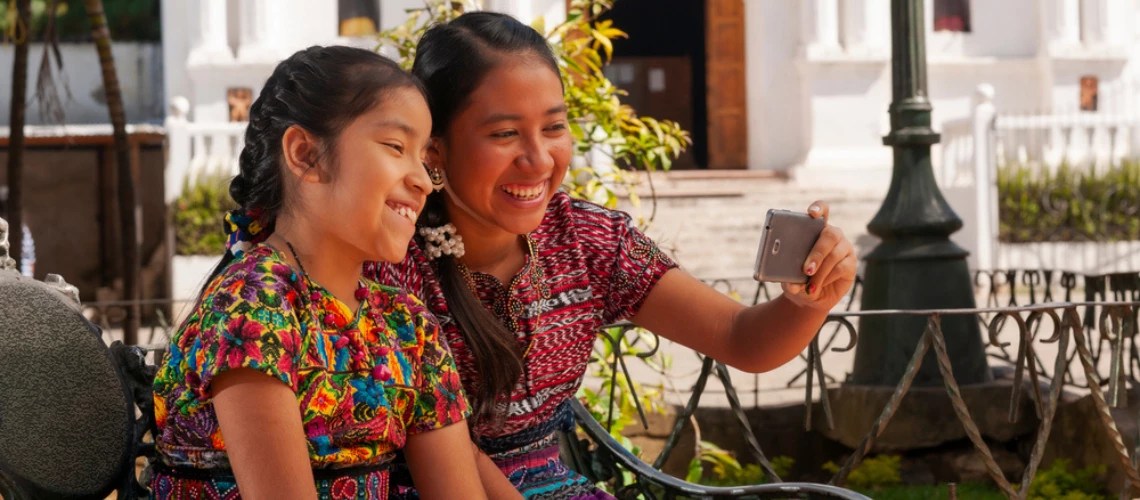 Infrastructure (DPI) is at the heart of this shift. DPI refers to the essential systems that make digital services accessible to everyone. It’s the common digital plumbing that supports digital identities, payment systems, and data-sharing networks. But how is the LAC region progressing in building these critical digital services?
Financial system trends in six charts
Financial sector vulnerabilities in emerging market and developing economies (EMDEs) are largely divided along income lines. While vulnerabilities are low to moderate in higher-income EMDEs, half of lower-income countries face much higher risks. In addition, progress on financial development goals such as local capital market deepening has stalled in many countries. Advances, however, have been made on financial inclusion for individuals and in efforts to green the financial sector.
Food Security Update | World Bank Response to Rising Food Insecurity
Five Ways the World Bank Group Will Achieve “Mission 300”
STORY HIGHLIGHTS
- Roughly 600 million people in Sub-Saharan Africa lack access to electricity.
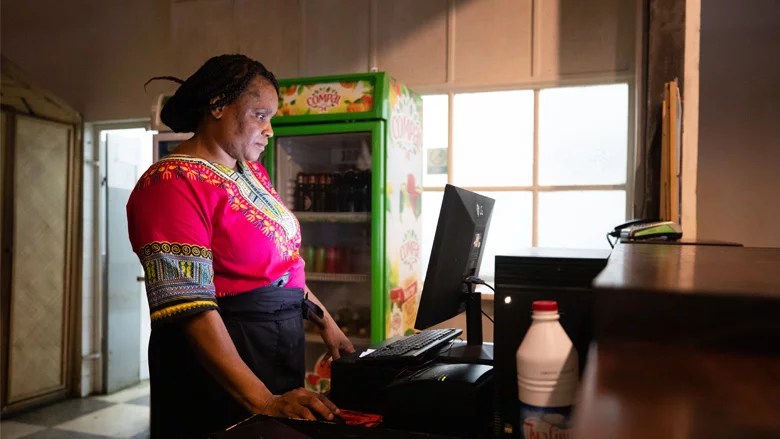
- The World Bank Group, together with the African Development Bank, has committed to providing access to electricity to 300 million people in Sub-Saharan Africa by 2030.
- Known as “Mission 300,” this ambitious plan is attracting widespread support.
Forests For Us: Dominica Harnesses Nature for Climate Resilience and Economic DevelopmentIndia incorporates green bonds into its climate finance strategy
The forest is for us… It is what we have. It helps us maintain our livelihoods.
Her Excellency Sylvanie Burton
President of the Commonwealth of Dominica
Continue readingHigh-Level Retreat in New Hampshire as part of Bretton Woods at 80 Initiative
WASHINGTON, September 24, 2024 – As part of the previously announced Bretton Woods at 80 Initiative, the IMF and the World Bank Group are hosting a high-level retreat at Bretton Woods, New Hampshire, on September 26‒27, 2024.
This two-day Chatham House Rules event will bring together a small and diverse group of global thinkers—including individuals prominent in the fields of history, international relations, political science, finance, and business—at the location of the 1944 United Nations Monetary and Financial Conference (the “Bretton Woods Conference”).
Event | Business Ready 2024 – New Data for a Dynamic Private Sector | World Bank Live

Event | Business Ready 2024 – New Data for a Dynamic Private Sector | World Bank Live
In developing economies, the private sector generates 90% of jobs, 75% of investment, and over 70% of output. A well-functioning and well-regulated private sector is essential to accelerating economic growth, boosting productivity, and reducing carbon emissions. Yet, as the world grapples with the slowest growth rate in three decades, this engine of growth struggles to regain its footing.
The World Bank’s Business Ready 2024 (B-READY) report assesses the business environment across the globe. Improving upon the Doing Business report, B-READY offers more comprehensive data and analysis that can guide policy reforms and foster private sector development that benefit firms, workers, markets, and society as a whole.
Join the conversation with #BusinessReady
Why inclusive finance must be central to the climate response

As we approach the high-level week of the United Nations General Assembly and the UN climate change conference COP29, the global climate agenda is being defined by intense discussions around climate finance. But largely missing from this debate is the question of who has access to this funding.
The need to channel climate finance into the hands of those most affected by climate change is well recognized. The issue is at the heart of the loss and damage talks and was central to UN Secretary-General António Guterres’s speech on World Environment Day, where he underscored how it’s “a disgrace that the most vulnerable are…struggling desperately to deal with a climate crisis they did nothing to create,” and argued that “the global financial system must be part of the climate solution.” It has also been key to COP negotiations ever since the Warsaw International Mechanism on Loss and Damage was established in 2013.
Continue reading

You must be logged in to post a comment.