A good job is the safest way out of poverty. The Regional Labor Outlook report summarizes the main trends related to labor markets in Latin America and the Caribbean. Download it here.
“Credit: World Bank Group. All rights reserved”

A good job is the safest way out of poverty. The Regional Labor Outlook report summarizes the main trends related to labor markets in Latin America and the Caribbean. Download it here.
“Credit: World Bank Group. All rights reserved”
Guayaquil, Ecuador’s largest city and economic hub, has long grappled with a pressing  environmental and public health challenge: inadequate wastewater treatment. With a population of over 2.7 million people, this bustling metropolis has historically struggled to manage its wastewater effectively, mirroring a widespread issue across Latin America.
Our goal at the World Bank is to end poverty on a livable planet. As part of that mission, it is 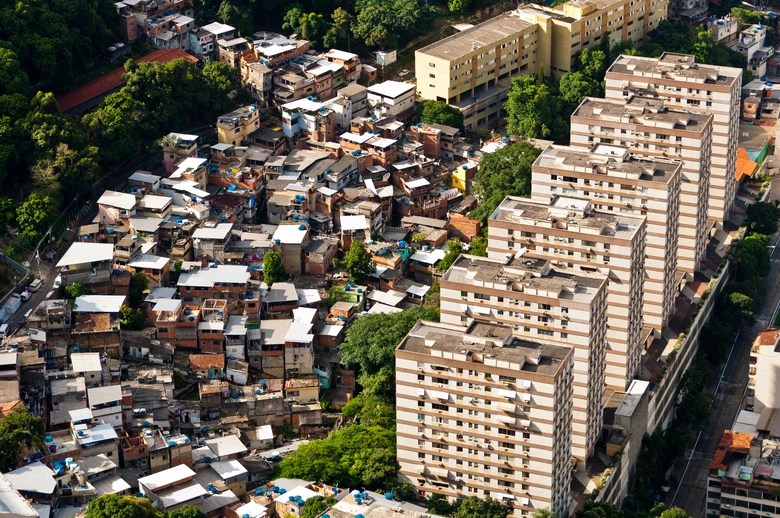 critical that we understand both the current state and evolution of the associated challenges, so as to inform policies that raise the standard of living of people in Latin America and the Caribbean (LAC), where poverty and inequality impact millions. Our new Regional Poverty and Inequality Update leverages the latest data and provides an in-depth analysis of these critical challenges within LAC. It offers detailed insights about the evolving landscape of poverty and inequality that can guide informed decisions for future action.
Partnership will boost innovation and unlock opportunities across Latin America and the Caribbean
WASHINGTON, August 31, 2023 ― The World Bank and the Inter-American Development Bank (IDB) today announced a groundbreaking four-year partnership to drive stronger results for people in Latin America and the Caribbean.
Hello everyone and let me start by expressing my appreciation to you and the Japanese government for hosting us for this launch of the IDA20 replenishment, in which Japan has played such a leadership role. I would like to thank the Finance Minister personally for playing such a crucial part in this process. I would also like to thank and congratulate the colleagues gathered here in Tokyo today, coming from all over the world, for making IDA20 a successful replenishment.
Food lines that stretch across multiple city blocks. Spiraling unemployment. Out-of-control inflation. Unsustainable debt. These issues, which traumatized many economies across Latin American in the 1980s, continue to reverberate today and, given current economic conditions, you could be forgiven for fearing that history is about to repeat itself.
However,
The debt crises of the 1970s and 1980s were searing experiences that find an echo in today’s troubles. Then, as now, Latin American countries had large debt loads. Then, as now, the global economy experienced unique macroeconomic shocks that sent inflation soaring (the Arab oil embargo then; the pandemic and Ukraine war now). And then, as now, central banks around the world – especially the US Federal Reserve – were raising rates to fight inflation.
The COVID-19 crisis has hit the Latin America and Caribbean (LAC) region harder than any other region in the world and has brought the need for a resilient and inclusive recovery into sharp focus. Greater digital access—in support of distance learning, digital cash transfers, telemedicine, and online public services—is the cornerstone of this agenda and requires both an ambitious policy and regulatory agenda as well as increased infrastructure investments. This is particularly important as the region gears up for 5G auctions and continues its 4G expansion.
From education to entrepreneurship, global recovery efforts need to pay
particular attention to the needs of women and girls.
When the 2008 recession hit, few asked how stimulus measures would affect women compared with men.
IFC’s award-winning match-making program, TechEmerge, has launched its new  Sustainable Cooling program in Latin America (Mexico, Colombia) to drive innovation in climate-smart, energy-efficient cooling technologies, products, and services, where it’s needed most. Phase one focuses on Latin American cities, specifically those in Mexico and Colombia, and will match innovators from across the world with leading local companies and municipalities to pilot projects and build commercial partnerships. Click here to respond to our open call. Applications close September 18, 2020.
Join the Webinar
Learn about the benefits of joining the Tech Emerge Sustainable Cooling program in Latin America (Mexico, Colombia), how to apply to our open call, our match-making process, market opportunities, pilot funding, and the valuable support participants receive from our panel of respected industry advisors. We have two timeslots designed to make it easy for you to participate, no matter where you are located.

August 18, 2020
11:00 AM -12:30 PM EST
Virtual – Webex
August 19, 2020
9:00 PM -10:30 PM EST
Virtual – Webex
IFC’s award-winning match-making program, TechEmerge, has launched its new Sustainable Cooling program in Latin America (Mexico, Colombia) to drive innovation in climate-smart, energy-efficient cooling technologies, products, and services, where it’s needed most. Phase one focuses on Latin American cities, specifically those in Mexico and Colombia, and will match innovators from across the world with leading local companies and municipalities to pilot projects and build commercial partnerships. Click here to respond to our open call. Applications close September 18, 2020.
Join the Webinar
Learn about the benefits of joining the Tech Emerge Sustainable Cooling program in Latin America (Mexico, Colombia), how to apply to our open call, our match-making process, market opportunities, pilot funding, and the valuable support participants receive from our panel of respected industry advisors. We have two timeslots designed to make it easy for you to participate, no matter where you are located.
August 18, 2020
11:00 AM -12:30 PM EST
Virtual – Webex
August 19, 2020
9:00 PM -10:30 PM EST
Virtual – Webex
 Netherlands for the World Bank
You must be logged in to post a comment.