A new World Bank report shows how partners are joining forces to deliver impact at greater speed and scale, reducing fragmentation and strengthening country ownership.
In a world facing compounding crises—from climate change and fragility to shrinking fiscal space—the ability to mobilize resources efficiently and collaboratively has never been more urgent.
A new report, Building Together: Co-Financing with the World Bank – Progress Report 2025 (PDF), showcases how the World Bank and its partners are working together to deliver development impact at greater speed and scale. The report highlights how co-financing reduces fragmentation, lowers transaction costs, and strengthens country ownership by aligning partners behind shared priorities.
From Santiago to Abidjan, Milan to Dubai, the first half of 2025 brought a wealth of insight into how multilateral donors are reshaping their funding strategies, procurement systems, and development priorities. Assortis attended and monitored five of the most influential events on the global development calendar—those organised by the Inter-American Development Bank (IDB), the African Development Bank (AfDB), the Asian Development Bank (ADB), the European Bank for Reconstruction and Development (EBRD), and the Dubai International Humanitarian Aid & Development Conference (DIHAD). Across these gatherings, the message was clear: development cooperation is entering a new phase—one that requires agility, digital capacity, local engagement, and a deeper alignment with ESG principles. In this report, we share our synthesis of key messages, thematic takeaways, and practical implications for professionals and organisations working across the development spectrum
The idea behind debt-for-development swaps is straightforward: A country exchanges its expensive debt for cheaper debt, often supported by a credit enhancement like a guarantee, and then redirects the savings into development spending.
Can you imagine a job where you can decide where to work, when to work, and which projects to work on? According to our recent data analysis, this is exactly how 243 million youth around the world are challenging the traditional career path, particularly in developing countries where they seek higher pay and jobs that are not easily available close to home.
As explored in the recent World Bank report Working without Borders, many young workers are using digital platforms to access jobs from all over the globe and embracing online gig work rather than pursuing informal, low-quality, local jobs. They are performing task-based jobs facilitated through online gig platforms, continually upgrading their skills, and trying to stay ahead of the competition and evolving technology.
In addition to flexibility, online gig work also presents the opportunity to earn higher pay compared to traditional employment. This income potential, coupled with the ability to be one’s own boss and access job opportunities in areas where local demand for labor may be low, makes online gig work an attractive proposition for many. It also enables people to cover income gaps and achieve greater financial stability, especially during shock or transition.
Figure 1: Motivations for Youth Participation in Online Gig Work
Source: Global Online Gig Workers Survey (2022)
Where do online gig workers live, and how does internet access affect this trend?
Contrary to a commonly held assumptions, our research revealed that a significant number of online gig workers hail from smaller towns rather than major metropolitan areas. This presents a valuable opportunity for youth living in smaller cities, where there may be few local employment opportunities.
Online gig workers may not need to move to big cities to find work, but they need access to the internet, a reliable connection, and digital devices. In countries with higher internet coverage, the percentage of online gig workers from smaller cities is notably higher, highlighting the importance of expanding internet access to address spatial inequalities in labor markets.
So, is expanding internet access enough? The answer is NO. Our survey found variations across countries with similar levels of internet coverage, suggesting there are barriers to online gig work beyond internet access. For example, in the Middle East and Northern Africa, the share of youth performing online gig work in smaller cities is lower despite higher internet coverage, highlighting untapped potential opportunities.
Figure 2: Internet coverage and the share of young online gig workers in smaller cities
Source: Global Online Gig Workers Survey
Source: Global Online Gig Workers Survey
What are the benefits of online gigs for different workers?
Online gig work offers better pay and opportunities for young people regardless of their education attainment. For example, in Pakistan’s Khyber Pakhtunkhwa region, online gig workers earn more than informal sector workers, even after adjusting for education, age, marital status, and working hours. Our research, however, suggests that in general workers with a college education have a greater chance of accessing higher-paying gigs.
Young gig workers aim to improve their skills, while also earning an income. While technical and digital skills are important, youth also highlight the importance of learning communication and time management skills to be successful as gig workers.
How can we help address potential challenges of online gig work?
While online gig work holds immense potential, most online gig workers – like other informal jobs in developing countries – do not have adequate social protection. While most young gig workers lack access to health insurance or old age benefits, they aspire for more than just traditional social security benefits; they are keen to develop their skills and want financial support for work-related needs such as computers and devices, highlighting the need for targeted social protection programs.
In fiscal year 2021 The World Bank Group (WBG) disbursed about $3.6 billion dollars ofTrust Fund contributions through development partners, IBRD, IDA and the IFC. Trust fund resources complement World Bank operations, expanding their scope and reach and supporting their quality. They promote increased development effectiveness and enable the World Bank to provide assistance when its ability to lend is limited, including in fragile and emergency situations, and for countries in arrears and to non-member countries. Trust Funds also contribute to the World Bank’s knowledge agenda by financing close to two-thirds of its advisory services and analytics products as well as technical advisory services for clients. Trust Funds attract new sources of finance and promote innovative financial solutions in support of the global public goods agenda, including combating climate change and addressing the challenges of fragility, conflict, violence, forced displacement and pandemics.
Every year, international organizations spend billions of euros on projects in developing countries and emerging markets. This results in tenders and assignments that could be interesting for the Dutch private sector. Team International Organizations (TIO) of the Netherlands Enterprise Agency (RVO) supports Dutch companies whom are interested in knowing more about doing business with the IFIs. TIO is focused solely on organizations the Netherlands is a shareholder or member of: Asian Development Bank, African Development Band, Asian Infrastructure Investment Bank, European Bank for Reconstruction and Development, European Union, European Investment Bank, Inter-American Development Bank, United Nations, and World Bank Group.
TIO functions as the first point of contact for Dutch companies. We can put you in contact with the IFIs, give information on how the different international organizations function, on how to be effective at doing business with these organizations, and the opportunities that could be relevant for your company. Other services that are provided are seminars, webinars, trade missions, individual and group tracks.
Through TIO companies have access to a broad network of contacts and organizations. On a daily basis, we work together with the PSLO liaison network of the World Bank Group, The Netherlands Embassy in Washington D.C. liaison officers Esther Smith and Vincent Kooijman as well as the different Ministries and Dutch embassies worldwide.
Meet the World Bank Group team of TIO:
Interested in TIO’s work? Contact us for more information via tio@rvo.nl.
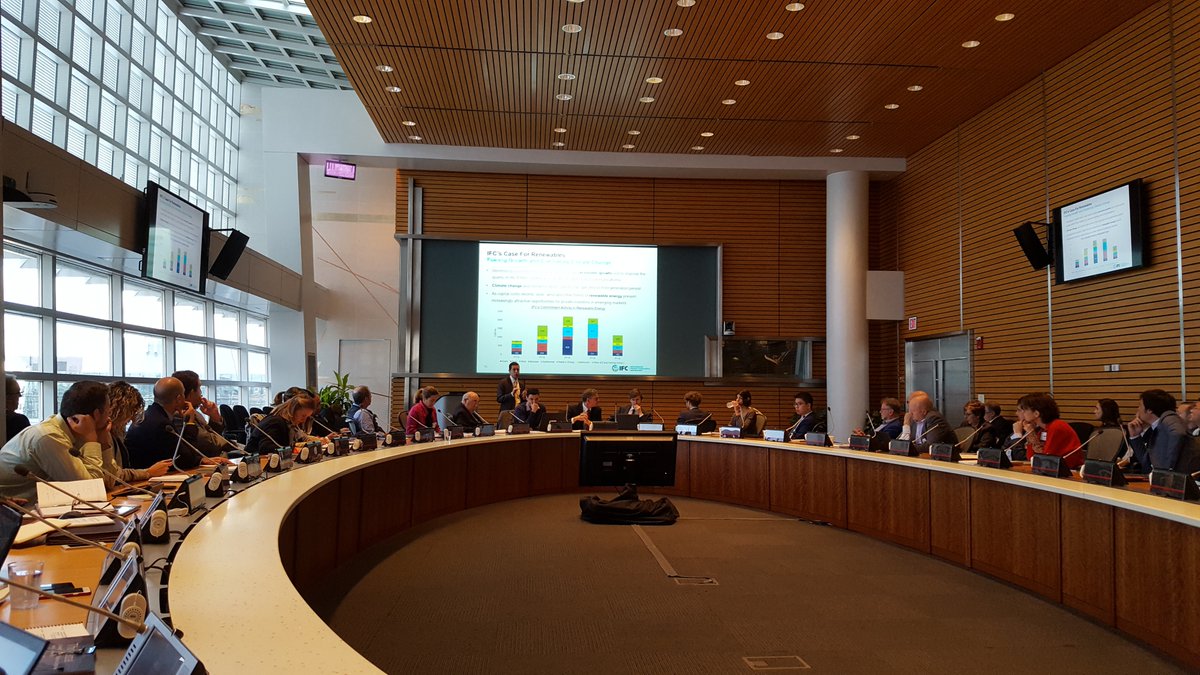
The Private Sector Liaison Officers (PSLO) Energy Sector Mission 2017 with the theme ‘Integrating Sustainable Energy in Global Development’ attracted more than 80 energy organizations from eight different countries interested in the work International Financial Institutions do in the Energy Sector. The PSLO Energy Sector Mission 2017 was jointly hosted by the following organizations: Alberta Canada, the Embassy of the Netherlands, Advantage Austria, Business France, ICEX and the World Bank Group.



 Trust Fund

 Netherlands for the World Bank
You must be logged in to post a comment.