
In 2023, India experienced the hottest February since 1901, the first year the country’s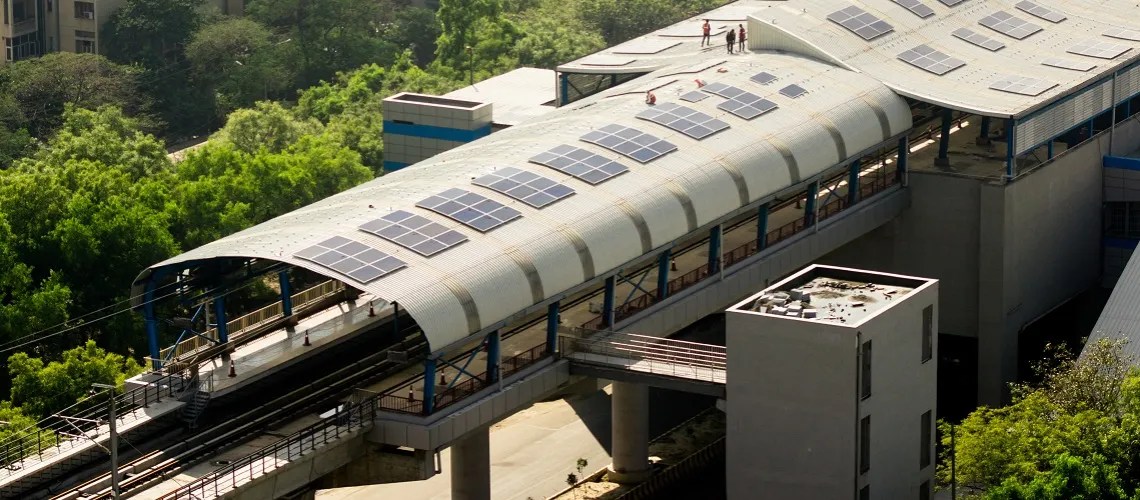 Meteorological Department started its weather records. Extreme weather events like this are becoming frequent and are expected to get worse due to climate change. India is among the countries most affected by the impacts of extreme weather events.
Tag Archives: IFC
Global Food and Nutrition Security Dashboard
Latest Update – September 30, 2024
Domestic food price inflation remains high in many low- and middle-income countries. Inflation higher than 5% is experienced in 77.3% of low-income countries (18.2 percentage points higher since the last Update on June 27, 2024), 54.3% of lower-middle-income countries (8.7 percentage points lower), 44% of upper-middle-income countries (8.0 percentage points higher), and 10.7% of high-income countries (0.2 percentage points lower). In real terms, food price inflation exceeded overall inflation in 55.6% of the 167 countries where data is available.
Download the latest brief on rising food insecurity and World Bank responses
Pathways Out of the Polycrisis
The World Bank Group has set a clear mission: ending poverty and boosting shared  prosperity on a livable planet. This report offers the first post-pandemic assessment of global progress toward these interlinked goals, and explores potential pathways out of today’s polycrisis – an environment where multiple and interconnected challenges are impacting the world simultaneously. The report’s messages are presented around progress in terms of the goals, pathways to move forward, and priorities depending on where countries stand on the interlinked goals.
Spain Announces Early Financial Commitment of €400 Million to IDA, a Near 40% Increase in Pledge
Washington, D.C, October 24, 2024 — Spain has announced an early financial commitment of €400 million to the International Development Association, the World Bank’s fund for low-income countries. This is a 37% increase compared to the previous IDA replenishment cycle and underscores Spain’s continued commitment to sustainable development worldwide. This raises Spain’s total contribution to over €5 billion since IDA’s creation.
Replay annual meetings: Agriculture and Food
World Bank Group Announces Strategic Pivot in Agribusiness, Doubles Financial Commitment
Initiative will Unleash Private Investment, Boost Productivity, and Bolster Climate Resilience
WASHINGTON, October 23, 2024— The World Bank Group today announced a strategic pivot in its approach to agribusiness with a goal to create a comprehensive ecosystem for the industry. The shift will combine a new way of working with a new level of investment – doubling its agri-finance and agribusiness commitments to $9 billion annually by 2030.
The new approach arrives as four trends are fundamentally reshaping the agribusiness landscape: climate change, innovations in finance, digitalization, and solutions to fragmentation. It also aims to take advantage of demand for food that is set to increase by 60 percent in the coming decades, and respond to a critical need for jobs in emerging markets.
“We stand at a crossroads, and the path we choose today will determine the future,” said World Bank Group President Ajay Banga. “The World Bank’s ecosystem approach moves us beyond fragmented efforts to a constellation of solutions that includes everything from warehousing to logistics to production, but with smallholder farmers and producer organizations at the center.”
The ecosystem is made possible because of the work the World Bank Group has advanced over the past 16 months to become a better, simpler, more coordinated institution. The more integrated approach will bring together all the institution’s resources to offer comprehensive support and tailored solutions.
The Bank is developing a continuum with IBRD and IDA’s experience building capacity and services of the public sector; and IFC and MIGA’s financing and private sector access. Ultimately, this contiguous way of working will be seen and felt by business and government partners alike – with a goal to increase mobilization to $5 billion in 2030.
Three examples of this approach:
- The World Bank Group’s public sector arms can help countries develop regulations and standards, like those that ensure products comply with export market requirements. They can advise on land tenure solutions or develop national irrigation networks. In the area of climate finance, they can help governments repurpose some of the $1.25 trillion of fossil fuel, agriculture, and fishery subsidies to incentivize greener practices, unlocking a significant source of financing for the agricultural sector.
- The World Bank Group’s private sector teams can focus on everything from debt and equity funding to mitigating risk with guarantees, overcoming access challenges. The new, simplified World Bank Group Guarantee Platform is a key step in this transformation, making it easier to deliver tailored solutions that meet the diverse demands of our partners.
- The World Bank Group together can help smallholder farmers connect into the supply chains. IBRD can work with smallholder and producer organizations to improve their productivity and climate resilience, making them viable suppliers that can meet the scale, consistency, and high standards that larger companies need. While IFC can come in at later stages to provide financing for equipment, and connect these cooperatives with companies seeking reliable sources of production when ready for private investment.
The increase in agricultural productivity—and incomes—will help create jobs, boost revenues, and improve the quality of food and nutrition. Climate-smart production practices will mean fewer emissions and cleaner air and water. Overall, a better quality of life.
PRESS RELEASE NO: 2025/025/Planet
Replay: Creating Jobs for Young People
Replay: 2024 Annual Meetings: Plenary
World Bank Group Advances Gender Strategy, Unveils Economic Opportunity Ambitions
New targets aim to accelerate use of broadband internet, social protection programs, and capital by 2030
WASHINGTON, Oct. 24, 2024 – The World Bank Group today took the first steps toward implementing Gender Strategy 2030, announcing a set of actions and concrete goals that aim to boost economic opportunities for more women.
The targets, unveiled at a flagship event during the 2024 World Bank Group Annual Meetings, will focus on use of broadband, social protection, and access to capital. These efforts will contribute to one of the three pillars of the Gender Strategy, which is dedicated to expanding and enabling women’s participation in the global economy.
World Bank Group Announces New Financing, Adjusts Pricing Terms
New Equity-to-Loans Ratio and other measures could enable $150 bln over 10 years
WASHINGTON, October 15, 2024—The World Bank Group announced on Tuesday a package of financial measures that will boost lending capacity and make loans from the International Bank of Reconstruction and Development more affordable at a time of immense development need. Combined with previous reforms, the package could enable more than $150 billion in additional financing over 10 years.
Two key elements announced today are:
- The minimum Equity-to-Loans ratio is being lowered to 18% from 19%, generating $30 billion more in additional financing.
- In an effort to be a better partner to the countries we serve, we have removed some fees so they can borrow money and pay it back more easily. And we are charging less for loans to smaller countries that need our help the most. Together, these steps will make our loans easier to get and cheaper to repay.
“These new financial measures will boost our lending capacity and enable us to drive meaningful change in the lives of people. Our Equity-to-Loans change is the latest step of sustained effort, and whenever we are able to responsibly secure additional optimization to IBRD’s balance sheet – we will,” said World Bank Group President Ajay Banga.
IBRD was able to secure an additional percent reduction in its Equity-to-Loans ratio because of new protections that safeguard its triple-A rating. These include a strengthened IBRD credit rating monitoring system with contingency measures to restore IBRD’s financial health in a stress event. Contingency measures include cutting costs, adjusting lending volumes, raising loan prices, suspending income transfers, and possibly additional shareholder support.
In a move to better serve countries and ease costs, financing term changes include introducing a grace period for paying commitment fees on undisbursed balances, removing the pre-payment premium to widen clients’ repayment options, introducing discounted pricing for short maturity loans with a final maturity of seven years, and extending IBRD’s lowest pricing to more vulnerable, small states.
The latest package includes a new way to enhance the value of callable capital, part of stakeholders’ capital that can be called on in extreme circumstances. In a first for development banks, this Enhanced Callable Capital is a portion of callable capital that can be leveraged like equity and called on earlier if the Bank’s rating is under pressure. Shareholders can now sign up for this instrument.
The World Bank Group has implemented a series of reforms and developed innovative financial instruments as part of the Capital Adequacy Framework review, which was recommended by the G20 Expert Group. These reforms include:
- A shareholder hybrid capital product and a Portfolio Guarantee Platform – expanding lending by $70 billion over 10 years thanks to the generosity of 12 donors.
- The adjustment of the minimum Equity-to-Loans ratio since April 2023 adds $70 billion in additional capacity over 10 years.
- Increased limits for shareholder bilateral guarantees by up to $10 billion.
PRESS RELEASE NO: 2025/023/MDCFO
Contacts
In Washington:
David Young
(202) 473-4691
dyoung7@worldbankgroup.org
 Netherlands for the World Bank
You must be logged in to post a comment.