
It’s not so long since the days when speaking of ‘universal health coverage’ used to ![medical-appointment-doctor-healthcare-clinic-health-hospital-medicine[7]](https://nl4worldbank.org/wp-content/uploads/2015/09/medical-appointment-doctor-healthcare-clinic-health-hospital-medicine7.jpg?w=180&h=120) provoke shockwaves. Happily, the principle that “… everyone having access to the health care they need without suffering financial hardship” is now widely recognized and documented. And although few countries have achieved this goal in practice, it is clearly within reach, including in low-income countries like Rwanda.
provoke shockwaves. Happily, the principle that “… everyone having access to the health care they need without suffering financial hardship” is now widely recognized and documented. And although few countries have achieved this goal in practice, it is clearly within reach, including in low-income countries like Rwanda.
Social protection seems to be on a similar trajectory, with universality now enshrined in commitments and declarations. Yet the provision of universal social protection (USP) is hotly contested — take the debates around Universal Basic Income and Employment Guarantee Programs.
 Guinea Treasury and the Western Highlands Provincial Health Authority, to assess the potential to develop, finance, upgrade, operate and maintain the Mt Hagen Hospital under a Public Private Partnership (PPP) transaction (The Project).
 management of demand side care services such as maternity incentive scheme and procurement of medicines/equipment). The analysis will be based on prepared information collection instruments, data forms, records of interviews with stakeholders and direct observation. The methodology will be a mix of quantitative and qualitative methodology.
 When the door closed behind her, Maria’s world seemed to collapse. The mother of a girl and two boys had just learned that her eldest son, the teenager who became the pillar of the family after their father died, was not only in a deep depression and increasingly using alcohol but he was gay. She had noticed him becoming moodier and even heard he received a warning at his job for not showing up, something totally unlike him at all. She felt helpless but knew his depression had to stay hidden from the rest of the family and the neighbors as mental health problems brought with them social stigma. But she was most afraid someone would find out he was gay, causing the family to be ostracized and endangering the future of the other children.
 The East Asia and Pacific region is vital to global pandemic preparedness. The region has been the epicenter of emerging and re-emerging infectious diseases. China and Southeast Asia alone accounted for approximately 90 percent of SARS cases and two-thirds of the human cases of avian influenza in the world. These outbreaks are driven by several socio-economic, demographic, environmental, and ecological factors, including close contact between humans and animals, encroachment with wildlife, high population density, rapid urbanization, high growth rates, and climate change.
![medical-appointment-doctor-healthcare-clinic-health-hospital-medicine[7]](https://nl4worldbank.org/wp-content/uploads/2015/09/medical-appointment-doctor-healthcare-clinic-health-hospital-medicine7.jpg?w=283&h=189)
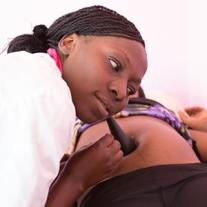
![medical-appointment-doctor-healthcare-clinic-health-hospital-medicine[7]](https://nl4worldbank.org/wp-content/uploads/2015/09/medical-appointment-doctor-healthcare-clinic-health-hospital-medicine7.jpg?w=247&h=165) A child has a fever. Her father rushes to his community’s clinic, his daughter in his arms. He waits. A nurse asks him questions and examines his child. She gives him advice and perhaps a prescription to get filled at a pharmacy. He leaves.
A child has a fever. Her father rushes to his community’s clinic, his daughter in his arms. He waits. A nurse asks him questions and examines his child. She gives him advice and perhaps a prescription to get filled at a pharmacy. He leaves.

You must be logged in to post a comment.