New Program to Protect Millions from Rising Climate-Related Deaths and Illness

At least 21 million could die from five main health risks caused by a warmer planet

DUBAI/WASHINGTON, Dec. 3, 2023 — The World Bank announced today at COP28 a new Climate and Health Program to urgently respond to the rising negative health impacts of climate change in low- and middle-income countries.

Through this program, the World Bank will help countries to assess their climate and health vulnerabilities, increase investments in climate-resilient health systems, and work with partners to mobilize additional financing, evidence, and collective action to reduce the impacts of climate change on people’s health and livelihoods.

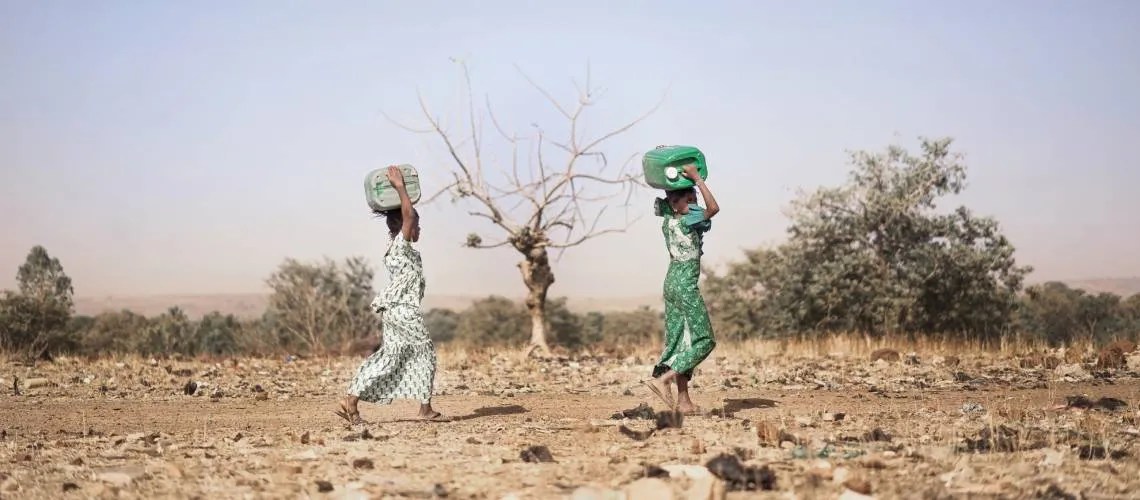
New World Bank data shows that a warmer climate could lead to at least 21 million additional deaths by 2050 from just five health risks: extreme heat, stunting, diarrhea, malaria, and dengue. Preventing these deaths requires immediate action to reinforce health systems, particularly in climate-vulnerable countries, predominantly in sub-Saharan Africa and South Asia. The World Bank also estimates that by 2030 the impacts of climate change on health will force 44 million more people into extreme poverty.

“Climate change amplifies health risks, creating a cycle of ill health and poverty with far-reaching consequences for human capital development,” said Mamta Murthi, Vice President for Human Development at the World Bank“Through the Climate and Health Program, the World Bank will use its knowledge and financing to help countries address health risks stemming from climate change, work across related sectors, and bring together partners to maximize financing and harmonize investments and actions.”

The Climate and Health Program will include generating evidence on the most cost-effective interventions to tackle the climate and health crisis; increasing financing for solutions that can build sustainable and resilient health systems in client countries; and build strong partnerships to amplify impact. Specifically, the program will:

  • Create evidence and knowledge to identify country needs and inform investments. This includes systematically assessing climate-related health vulnerabilities in developing countries, focusing on the impacts on lives, livelihoods, and economies and identifying country-specific ‘best buys’ for climate and health. 
  • Invest in solutions that are country-tailored and evidence-based and scale-up investments for low-carbon resilient health systems through the Bank’s $34 billion health portfolio which is already active in over 100 countries. Investments will focus on better surveillance and early warning systems, improving health service delivery in the face of climate-driven disease patterns, climate-proofing health facilities, and strengthening health worker capacity.
  • Work in partnership with the World Health Organization, Gavi, The Global Fund, foundations, and others to maximize impact by supporting global, regional, and country efforts to scale up climate-health action.

As part of this program, the World Bank is co-convening a Development Bank Working Group for Climate-Health Finance with participation from multilateral and public development banks to align and maximize climate and health investments. The World Bank also works in partnership with the World Health Organization, Gavi and the Global Fund, foundations, and others to scale up climate and health action.

The impact of the climate crisis on the health of current and future generations depends on the decisions we make today. The World Bank is committed to supporting countries to address the greatest health challenge of our time.  

For more information, please visit our health and climate change brief and follow @WBG_Health


PRESS RELEASE NO: 2024/034/HD


Contacts

Alexandra Humme

ahumme@worldbank.org

World Bank Group at COP28

Live From Dubai, United Arab Emirates

Join us for a series of events on climate change,
live from the 28th United Nations Climate Change Conference.

The World Bank Group is doubling down on its climate action, as part of its new vision to end poverty on a livable planet. Our live programming will focus on climate solutions, emissions reduction, energy transition, adaptation and climate finance; all while exploring the link between climate change and development.

Follow the conversation on social media #LivablePlanet

In the global development math, multiplication beats division

Concessional finance—that is, grants and low-interest loans—is more important than ever for the2023-ida-finance-blog-1440x500.jpg world’s poorest countries. Yet today’s aid architecture is highly complex, fragmented, and offers limited concessionality. In this context, it’s important to find ways to leverage the available resources for the biggest, most effective impact.   

Continue reading

Sowing the seeds of change to solve the water crisis

Image

Solving the water crisis is central to our future on a livable planet. Whether it is too much, too little, or too polluted water, this triple threat, exacerbated by climate change, denies billions of people reliable access to safe water and sanitation.  It threatens economies, fuels migration, and can ignite conflict. We need global action to establish water security for green, resilient, and inclusive growth, and to tackle the water-climate-conflict nexus.

Continue reading

Unlocking SME finance in fragile and conflict affected situations

factory_producing_shirts_hero_image_.jpg

Small businesses can play an impactful role in fragile and conflict affected situations (FCS). They can create jobs and directly provide necessity goods and services such as food, water, health, education, and transportation. They can also contribute to the resilience of local populations during periods of conflict.

However, small businesses operating in FCS countries endure numerous setbacks to their activity, from frequent electricity cuts to bribery to armed attacks. Surviving and growing in these situations is difficult. Navigating daily challenges without access to affordable credit is almost impossible.

As it turns out, access to bank credit is consistently reported as a key business environment constraint for small- and medium-sized enterprises (SMEs) in FCSs countries. True, access to finance is a problem for SMEs in every country, including in advanced economies, but it is particularly acute in FCS countries  (figure 1).

Figure 1. Access and use of financial services by SMEs

Image

Side by side bar charts showing Figure 1: Access and use of financial services by SMEs
Source: Author’s elaboration on WBES data

What drives SME financial exclusion in FCS countries vis-à-vis non-FCS countries? In a recent paper we examine this question, focusing in particular on the role of economic fundamentals and institutional factors. Economic fundamentals matter for SME financial inclusion. Higher incomes and better physical infrastructure increase savings and the pool of funds in the economy and improve access to finance while macroeconomic and financial stability can positively affect credit and other financial services to SMEs.

Institutions—the rules of the game in a society—matter too. Institutions influence the development of entrepreneurship and can support SME financial inclusion by improving the information environment and strengthening contract enforcement, as well as supporting equal treatment of firms in access to financial services.

On both counts, FCS countries generally lag behind non-FCS countries, especially, as would be expected, in terms of institutional development (figure 2). But what do we find in the data?

Figure 4. Macroeconomic, financial sector, institutional and business environment features

Image

A set of four bar charts showing Figure 4. Macroeconomic, financial sector, institutional and business environment features
Source: Author’s elaboration on WDI, GFD, WGI, WDI, Heritage Foundation

The results of our analysis show that output growth has a negative impact on SME financial inclusion in FCS countries, probably reflecting demand for countercyclical finance — typically backed by the government — by financially constrained SMEs that otherwise tend to resort to internal funds to finance their operations and investment. 

On the other hand, price stability, a key sign of macroeconomic stability, is associated with higher SME financial inclusion in FCS countries. Moreover, access and usage of financial services by SMEs in FCS countries tends to increase with economic development, for example, income levels.

Other economic fundamentals also play a role in SME financial inclusion in FCS countries. Economies with large informal sectors tend to face tighter constraints on SME financial inclusion. Similarly, the lack of economic diversification also has a significant impact. Financial sector characteristics also affect SME access and usage of finance. The quantity of financial intermediation, such as deeper credit markets, helps enhance SME financial inclusion, and this is particularly important in FCS contexts.

The quality of financial intermediation is equally important because government and state-owned enterprise financing can crowd out credit to the private sector, including SMEs. In our sample of FCS countries, available credit tends to go proportionally more to the public sector than the private sector compared to non-FCS countries. Our analysis suggests that a significant role is played by crowding out effects in FCS countries.  A lack of competition among banks reduces SME financial inclusion in FCS countries. Reducing banking market concentration is found to have a positive impact on SME access and usage of formal financial services in FCS countries. Finally, banking sector soundness, as measured by the quality of lending (NPL ratio), significantly and strongly supports SME financial inclusion.

Turning to institutional factors, strong governance and stable institutions exert a significant influence on SME access and usage of formal financial services in FCS countries. Voice and accountability, political stability, government effectiveness, and control of corruption are all positively correlated with SME financial inclusion. The importance of government effectiveness and control of corruption is particularly strong for FCS countries.

Credit information is also a key factor for SME financial inclusion. Rules affecting the scope, accessibility, and quality of credit information available through public or private credit registries can greatly facilitate banking relationships, and they are especially important for FCS countries.

Constraints to the quality of contract enforcement, property rights, and the effectiveness of courts, as well as to the ability of the authorities to formulate and implement policies and regulations that permit and promote private sector development, are negatively correlated with SME access and usage of formal financial services. Their impact is significantly stronger for FCS countries, suggesting that improvements in the overall business environment can have relatively sizable effects on SME financial inclusion in those countries.

Our analysis shows that the macrofinancial and institutional constraints that affect SME access and usage of formal financial services are similar across FCS countries and non-FCS countries, with differences in degree rather than in kind , that is, the relative importance of constraints is greater in FCS countries, particularly in middle- income FCS countries. Accordingly, to advance SME financial inclusion it is important to designing and implementing comprehensive strategies that take into account proper macroeconomic and financial policy frameworks and conducive governance, institutional and regulatory arrangements, tailored to country contexts.

eC2: TECHNICAL & E&S CONSULTANTS for Port PPPs, Europe PPP team

Deadline: 06-Jul-2022 at 11:59:59 PM (Eastern Time – Washington D.C.) PPPs

The Government of Serbia (the IFCs Client) aims to attract private investment through a Public-Private Partnership for the development of the Danube riverway corridor port(s). The Client will be assisted by IFC in structuring and implementing the project(s). IFC is hereby seeking the assistance of a Technical Environmental & Social Consultant (the Consultant) for the structuring and tendering of a concession for the ports. The Consultant will report directly to IFC. IFCs advisory mandate will be implemented in two phases and the Consultant will work alongside IFC and the other specialized consultants (legal, etc.), as will be further described in RFP to be sent to short-listed candidates.

Continue reading

eC2: Study on Climate and Natural Hazard-Induced Migration in Vietnam

Deadline:  20-Jun-2022 at 11:59:59 PM (Eastern Time – Washington D.C.)global-warming-climate-change-tree_1big_stock2

Vietnam is one of the most vulnerable countries in the world to climate change. Given Vietnams concentration of both population and industry in low-lying coastal areas and river
deltas, sea level rise poses a particular risk to continued development in the country.
The World Bank East Asia and the Pacific (EAP1) is conducting a Study on Climate and Natural Hazard-Induced Migration in Vietnam. The objective of the research is to better understand how vulnerable population groups in urban and rural settings projected to see high climate induced in- and out-migration are particularly (and differently) affected by climate change, what adaptation measures are currently being employed, and what policy makers and government programs might do to reduce barriers or facilitate opportunities for more effective and inclusive adaptation to climate change. In so doing, the research would help to better understand and respond to disaster risks, to reduce the number of people adversely affected by disasters, and to promote adaptation that leverages community resilience. The World Bank East Asia and the Pacific (EAP1) is looking for a qualified and experienced research firm or organization based in Vietnam to carry out the analytical work. If you encounter technical difficulties while uploading documents, please send an e-mail to the Help Desk at wbgeconsultant@worldbank.org.

Continue reading

eC2: Exploring the Links between Climate Change, Migration and Livelihood in Forest Communities in Vietnam

Deadline: 20-Jun-2022 at 11:59:59 PM (Eastern Time – Washington D.C.)Forestry

Vietnam is one of the most vulnerable countries in the world to climate change. Forests play a crucial role in averting climate catastrophe. The World Bank East Asia and the Pacific (EAP1) is conducting a study on Exploring the Links between Climate Change, Migration and Livelihood in Forest Communities in Vietnam. The objective of this analytical work is to understand the links between climate change impacts, migration, and livelihood strategies among forest communities in Vietnam. It will examine the impacts of climate change on forest communities, which include identifying differential vulnerabilities faced by forest communities and exploring communities perceptions, experiences, and responses toward climate change impacts in relation to livelihood strategies (including through migration), food security, and other areas of interest. This in turn would help in identifying

Continue reading