Netherlands for the World Bank

Your guide to the World Bank Group

Netherlands for the World Bank

How important are Global Value Chains for development? Read the new WDR2020 draft report and comment

Following an intense research and writing process over the last 10 months, I am pleased figure_1_-_2020_wdr_framework to announce that a draft of the World Development Report (WDR) 2020 – Trading for Developing in the Age of Global Value Chains is now available online for public comment.

Why Global Value Chains (GVCs) and why now? 

The World Bank’s last report on trade was more than thirty years ago – WDR 1987 Industrialization and Foreign Trade. In the meantime:

Continue reading

eC2: Logistics Market and Business Analysis in Indonesia

Deadline: 16-Jul-2019 at 11:59:59 PM (Eastern Time – Washington D.C.)

Assignment of developing:general-transport-mosaic-main
A) A market overview of the logistics sector in Indonesia (traditional plus e-logistics) including a demand-supply analysis now and in the next 5 years.
B) A market share estimation for the Platform with estimated revenues, which necessarily includes an estimation of fares and Average Order Value (AOV) evolution.
C) An overall assessment of the Platform business plan, including growth assumptions, estimated necessary resources, Capex and Opex to achieve the objectives, like facilities, fleet, human resources and systems.

Continue reading

eC2: Chemical status assessment methodology reflecting the impacts of the climate changes on the status of surface water

Deadline: 11-Jul-2019 at 11:59:59 PM (Eastern Time – Washington D.C.)

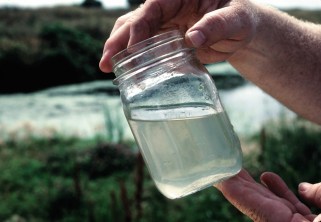
water_quality_mason_jar

The assignment consists of the following activities:
Activity 1. Pressure and impact analysis taking into account new priority pollutants included in Directive 2013/39/EC and new industrial activities.
Activity 2 Chemical Status assessment.
Activity 3: Training of experts on the application of developed methodology for chemical status assessment.
Activity 4. Assessment of chemical status of water bodies in the country based on defined background concentrations, refined methodologies for chemical status assessment (including application of BLM) and available results (EEA).
Activity 5. Proposal for new monitoring programs or at least proposal for new monitoring points and pollutants for measurement. Critical evaluation of concentration of pollutants that has never been introduced in the country and never measured above EQS and proposal for their elimination from monitoring programs.

Continue reading

eC2: Assessing & Designing an End-to-end Data System for Disaster Risk Financing in Indonesia

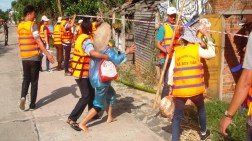
Deadline: 15-Jul-2019 at 11:59:59 PM (Eastern Time – Washington D.C.) vn-communitybased-disasterrisk-780x439

To help the Government of Indonesia better produce and utilize Disaster Risk Financing (DRF) analysis for decision making, the World Bank is seeking a suitably experienced and qualified firm to help the Government assess and design an end-to-end data system for DRF. Functional specifications of an end-to-end risk data flow include, but are not limited to following components: (i) Data collection & valuation module; (ii) Damage reporting, loss assessment, and claims management module; and (iii) Risk data analysis for decision-making module.

Continue reading

eC2: Small Scale Solar PV Portfolio: Assessment of battery storage options

Deadline: 11-Jul-2019 at 11:59:59 PM (Eastern Time – Washington D.C.) index

Locating smaller, utility-scale facilities closer to population centers can reduce reliance on long transmission lines that are vulnerable to damage during storms. It also means that if one facility goes down, others are still able to operate. This strategy of developing decentralized generation has already been utilized in more developed economies and is particularly relevant in areas that are prone to natural disasters. Batteries can provide backup power in the case of outages caused by storms and help utilities meet spikes in power demand. IFC is assessing the development of small solar PV sites and assessing whether battery storage could be included as part of the solar PV plants to offset the intermittency and provide other benefits. This consultancy is focused on the analysis of the battery storage options.

Continue reading

eC2: Reporting on EU Urban Waste Water Treatment Directive and Structured Implementation and Information Framework

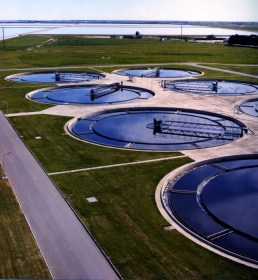
Deadline: 03-Jul-2019 at 11:59:59 PM (Eastern Time – Washington D.C.) Waste water plant

On January 28, 2019, The World Bank (WB) and the Ministry of Waters and Forests (MWF) have agreed to a Reimbursable Advisory Service (RAS) contract for the delivery of Technical Support to Romania for analyzing and addressing the challenges for meeting the Urban Wastewater Treatment Directive (UWWTD Directive 91/271/EEC) requirements. The Bank has been asked by the Government of Romania to provide technical assistance for i) updating the National Plan for implementation of UWWTD; ii) updating the national mechanisms for monitoring and evaluation of UWWTD implementation; and iii) drafting recommendations towards development of a National Water Supply and Sanitation (WSS) Strategy.
The objective of the required services will be to assist the World Bank team in recommending how to update the national mechanism for monitoring, evaluation and reporting on UWWTD implementation in Romania and implement the Structured Implementation and Information.

Continue reading

eC2: STRENGTHENING HYDROMET SERVICES AND FLOOD/DROUGHT MANAGEMENT IN CENTRAL AFRICA

Deadline:  08-Jul-2019 at 11:59:59 PM (Eastern Time – Washington D.C.) Bangladeshi villagers repair a vital flood-protecting embankment

Overall Objective of the assignment
The overall objective of this assignment is to better understand the state of meteorology, hydrology and climate services and early warning systems in Central Africa and draft a regional framework to improve decisions making for flood and drought management in Central Africa.

Specific objectives:
More specifically, the assignment has the following objectives:
(i) Draft a regional synthesis report on state of hydrometeorological and climate services and early warning systems (EWS) in Central Africa
(ii) Develop a guidance note for improving early warning systems in Central Africa
(iii) Elaborate a draft regional framework for hydrometeorological services improvement with an action plan for Central Africa.
(iv) Support the World Bank in organizing the 2nd HYDROMET Forum in Central Africa

Continue reading

eC2: Cyber Security Technical Assistance

Deadline: 04-Jul-2019 at 11:59:59 PM (Eastern Time – Washington D.C.) index

The World Bank Groups Digital Development Global Practice is implementing a Global Cybersecurity Programme designed to develop Cybersecurity capacity and strategic awareness for public sector public officials in Africa and Asia. These public officials are then expected to champion their national Cybersecurity agendas and lead the cultural Cybersecurity change that is desperately needed in most developing countries.

Continue reading

eC2: CONSULTING SERVICES TO UNDERTAKE AN ASSESSMENT OF THE POTENTIAL OF RECENT DEVELOPMENTS IN THE INLAND WATER TRANSPORT SECTOR IN INDIA AND BANGLADESH FOR NEPAL

Deadline: 20-Jun-2019 at 11:59:59 PM (Eastern Time – Washington D.C.) trade-LPI-fishing-ship-container-docker

The primary objective of this assignment is to undertake a regional study, at a pre-feasibility level of analysis, that would seek to ascertain whether the current and proposed developments in the Inland Water Transport (IWT) sector in India and Bangladesh offers potential benefits to Nepal, with or without additional actions/investments, to realize a significant reduction in the cost of international trade.

Continue reading

eC2: Bio-Medical Engineer and Medical Planner to Develop Generic Technical Specifications

Deadline: 13-Jun-2019 at 11:59:59 PM (Eastern Time – Washington D.C.) medical-appointment-doctor-healthcare-clinic-health-hospital-medicine[7]

The World Bank is seeking to hire a consultant team to assist the Ministry of Health and Family Welfare (MOHFW) in updating/ preparing generic technical specifications for medical equipment to ensure that the procurement is efficient, competitive and generates value-for-money and are in line with the relevant international standards. The generic specifications should be developed considering the local context particularly capacity, condition and service load of the various health facilities (at different tier of the system) where these equipment will be used.

Continue reading