World Bank Financing for COVID-19 Vaccine Rollout Reaches $2 Billion

Financing for the poorest countries is on grant or highly concessional terms

Kuala Lumpur, Malaysia. 03rd Mar, 2021. A healthcare worker holds a vial of the Pfizer-BioNTech Covid-19 vaccine during the first phase of the country nationwide vaccination drive at the Hospital UiTM in Sungai Buloh, outskirts of Kuala Lumpur. Credit: SO

WASHINGTON, April 20, 2021— The World Bank announced today that it has reached $2 billion in approved financing for the purchase and distribution of COVID-19 vaccines for 17 developing countries. This financing is part of the $12 billion envelope over 24 months for developing countries to acquire and deploy vaccines and strengthen their vaccination systems. For poorer countries financing is on grant or highly concessional terms. The Bank expects to support 50 countries with $4 billion financing for COVID-19 vaccines by mid-year.

Continue reading

Message of His Holiness Pope Francis to the World Bank Group and International Monetary Fund

I am grateful for the kind invitation to address the participants in the World Bank Group and International Monetary Fund 2021 Spring Meetings by means of this letter, which I have entrusted to Cardinal Peter Turkson, Prefect of the Holy See’s Dicastery for Promoting Integral Human Development.

Continue reading

Webinar Recap WBG/IMF Spring Meetings

Key Green Transitions: How Systems Are Changing for People and Planet

#GreenRecoveryWBG

Everyone should be able to live a sustainable life on a healthy planet. But the last six years have been the hottest on record. Record-breaking wildfires, droughts, floods and hurricanes have taken lives, damaged homes, hospitals and businesses. Meanwhile, COVID-19 took a heavy health and economic toll and pushed millions into extreme poverty.

COVID-19: Vaccines for Developing Countries

The rollout of COVID-19 vaccines in developing countries is critical to protecting lives, building human capital, and stimulating economic recovery. The current crisis is exacerbating inequalities throughout the world and, without access to vaccines, the gap will widen further.This event begins with voices of youth from around the world reflecting on the impact of the pandemic and their hopes for a speedy recovery with a return to school, friends, and family.World Bank Group President David Malpass then describes what vaccines mean for the world, what needs to be done to accelerate production and ensure safe and effective distribution to developing countries, and the importance of collaboration amongst all stakeholders for a sustainable and inclusive recovery


Webinar April 9th – COVID-19: Vaccines for Developing Countries

Working toward a green, resilient, and inclusive recovery

At the close of the 2021 Spring Meetings, the Development Committee stressed that strong international coordination is urgently needed to contain the impacts of the COVID-19 pandemic, resume progress toward development goals, and lay the groundwork for green, resilient, and inclusive development.

Read Full Article


Webinar April 9th – COVID-19: Vaccines for Developing Countries

About the Event: LINK

The rollout of COVID-19 vaccines in developing countries is critical to protecting lives, building human capital, and stimulating economic recovery. The current crisis is exacerbating inequalities throughout the world and, without access to vaccines, the gap will widen further. Ensuring developing countries can access, as well as safely distribute vaccines, calls for strong partnership and cooperation at the national, regional & global levels. This event will explore:  

Continue reading

Making markets work for all: Unlocking the private sector’s role in supporting refugees

The world is witnessing the highest levels of displacement on record.  Of the more thanifc_kenya_final_edit_0013.jpg 70.8 million forcibly displaced persons worldwide, around 41 million are people who have been displaced from their homes but remain in their home country and nearly 25.9 million are refugees who have fled their countries.

One surprising fact: Some 85 percent of those who fled are hosted not in rich countries, but in developing countries with limited resources.

Continue reading

Lifelines for Better Development

Published on http://www.worldbank.org, June 19, 2019

STORY HIGHLIGHTS

  • Resilient infrastructure is about people. Particularly in developing countries, Lifelines22--1-infrastructure disruptions are an everyday concern that affects people’s well-being, economic prospects, and quality of life.
  • There is a significant economic opportunity from investing in resilient infrastructure: the overall net benefit of doing so in developing countries would be $4.2 trillion over the lifetime of new infrastructure.
  • For infrastructure investors, governments, development banks and the private sector the message is clear: rather than just spending more, also spend better

Infrastructure is at the heart of lives and livelihoods. It can enable schools and hospitals, businesses and industry, and access to jobs and prosperity. In developing countries, however, disruptions to infrastructure are an everyday concern, reducing opportunities for employment, hampering health and education, and limiting economic growth.

In low and middle-income countries, direct damages from natural hazards to power generation and transport alone cost $18 billion a year, cutting into the already scarce budget of road agencies and power utilities. But the main impact of natural shocks on infrastructure is through the disruptions they impose on people and communities, for instance, businesses unable to keep factories running or use the internet to take orders and process payments; or on the households that don’t have the water they need to prepare meals or on people unable to go to work, send children to school, or get to a hospital.

Continue reading

New International Partnership Established to Increase the Use of Energy Storage in Developing Countries

A global partnership convened by the World Bank Group to fostindex.jpger international cooperation to adapt and develop energy storage solutions for developing countries

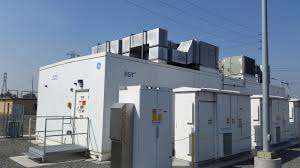
VANCOUVER, May 28, 2019 – On the occasion of the 10th Clean Energy Ministerial and 4th Mission Innovation Ministerial, a new international partnership has been established to help expand the deployment of energy storage and bring new technologies to developing countries’ power systems. The Energy Storage Partnership (ESP) comprises the World Bank Group and 29 organizations working together to help develop energy storage solutions tailored to the needs of developing countries.

Continue reading

Facing substantial investment needs, developing countries must sustainably manage debt

With just over ten years until 2030, developing countries face important and complex debt-socialmedia2.jpgchallenges around the Sustainable Development Goals (SDGs).  Not least of which is how to finance the investments needed to achieve them.

Estimates suggest that developing countries face a $2.5 trillion annual financing gap to meet the SDGs. Other studies conclude that the challenge of meeting this annual financing gap is substantial in low-income countries, which would require additional annual spending of 15.5 percentage points of GDP in 2030, focused relatively evenly on infrastructure and education and health.

Continue reading