COVID-19 response: Where we stand now, and the road ahead

20200511_indonesia_covid19_27.jpg

The world is now a full year into the COVID-19 pandemic—both the health emergency and the global economic crisis it has generated. Its impacts have touched every person in every country, causing illness and death, disrupting livelihoods, and potentially pushing an estimated 150 million more people into extreme poverty around the globe by the end of 2021. And while the rapid development of vaccines offers all of us some hope, we know that the pandemic will continue to dominate our lives in 2021.  
Continue reading

COVID-19 is hitting poor countries the hardest. Here’s how World Bank’s IDA is stepping up support

A year ago, before the COVID-19 pandemic struck, I was optimistic about the trends in global ida_covidpoverty: extreme poverty rates had been steadily declining for more than two decades. Although considerable challenges like debt still loomed large for the poorest countries, the positive trajectory in the fight against poverty brought great hope for a better future—a future I still believe in.

Continue reading

COVID crisis is fueling food price rises for world’s poorest

Over the last year, COVID-19 has undone the economic, health and food security of millions, 14114340279_c7363a7eb7_kpushing as many as 150 million people into extreme poverty. While the health and economic impacts of the pandemic have been devastating, the rise in hunger has been one of its most tangible symptoms. 
Continue reading

COVID-19 vaccines – A path for recovering human capital

The COVID-19 pandemic presents a global health emergency and an unprecedented Nigeria. Photo © Dominic Chavez The Global Financing Facility_0 (1) sizedeconomic crisis. In addition to the loss of life and productivity directly attributable to COVID-19, the pandemic poses risks to human capital through several other pathways,  key among which is the disruption in the provision of essential primary health, education, and community services. 

Continue reading

Webinar: Global Economy: Reversing the Scars of COVID-19


World Bank Live Presents : The COVID-19 pandemic has caused major disruptions in the global economy that could have  lasting adverse effects. If history is any guide, the global economy is heading for a decade of growth disappointments. Uncertainty about the post-pandemic economic landscape and policies has discouraged investment; disruptions to education have slowed human capital accumulation; concerns about the viability of global value chains and the course of the pandemic have weighed on trade and tourism.

REGISTER LINK

Continue reading

Supporting a Green, Resilient and Inclusive Recovery on West Africa’s Coast


In Gbekon, Benin, summers come with flooding from the Mono River. Erosion of the nearby supporting-green-resilient-and-inclusive-recovery-west-africas-coast-1140x500coast, along with more unpredictable rainfall, have made these floods worse over time. Each flood cuts access to the only road connecting people to farms, jobs, and public health services and put thousands of lives and livelihoods at risk. In 2020, the World Bank-financed West Africa Coastal Areas Program (WACA) built dikes and instituted other measures to manage river flows and prevent flooding, with the result  that more than 3,600 households were less exposed to coastal erosion and flooding.

Continue reading

What we’ve learned about supporting jobs in fragile and conflict-affected environments

The development community has begun paying more attention to supporting jobs in situations somaliland-schulman-5981of fragility, conflict, and violence (FCV). There are still many things we don’t know, but we have made progress: We can draw lessons from programs financed out of the US$14 billion investment in FCV through IDA18 and a number of new impact evaluations.
We summarized these lessons in our recent Jobs Note, “Supporting Jobs in Fragility, Conflict, and Violence (FCV) Situations.” Here are a few key takeaways.

Continue reading

World Bank Supports First COVID-19 Vaccine Rollout in Lebanon

US$34 million in emergency financing will provide access to vaccines for over 2 million people in Lebanon

BEIRUT, January 21, 2021 — The World Bank today approved a re-allocation of US$34 million under the existing Lebanon Health Resilience Project to support vaccines for Lebanon as it faces an unprecedented surge in COVID-19, with record-breaking numbers of around 5,500 daily confirmed cases since the beginning of the year. This is the first World Bank-financed operation to fund the procurement of COVID-19 vaccines. The financing will provide vaccines for over 2 million individuals. The vaccines are expected to arrive in Lebanon by early February 2021.

Continue reading

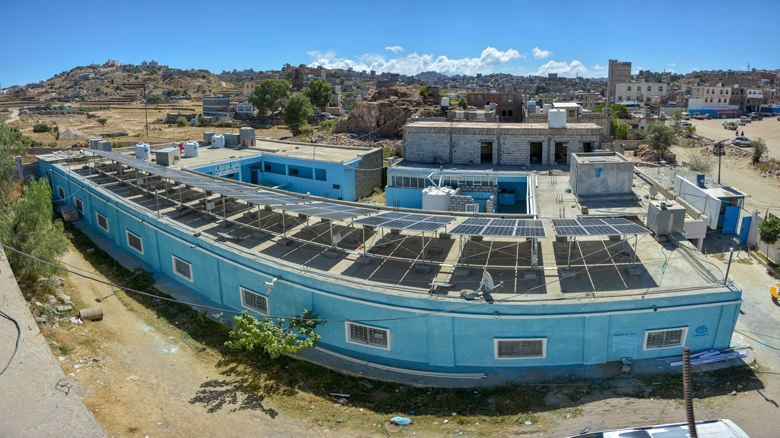
Living in the Dark No More: How Solar Power Helps Yemenis Resume their Lives

The Yemen Emergency Electricity Access Project has worked across several of the country’s governorates and villages. We heard directly from the people on the ground about how, exactly, this project has changed their lives. Supported by the World Bank’s International Development Association (IDA) and the United Nations Office for Project Services (UNOPS), we went to different areas and villages to listen to the people whose voices matter most for World Bank projects.

MULTIMEDIA