
In the spring and summer of 2020, large parts of the world were hunkering down as governments locked 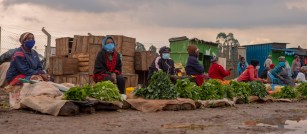 down societies and economies. Millions of families were confined to their homes. Across the globe, people were losing their lives and livelihoods to the COVID-19 pandemic. At the time, we only had a hunch about how the pandemic would play out differently for different people. We asked ourselves: How is COVID-19 going to affect gender equality across the world?
Tag Archives: COVID-19
As hunger rises, the World Bank supports vulnerable people now and in the future
Growing hunger and food insecurity are making headlines around the world.

Hunger has been rising since 2014, due to conflict, economic shocks, and weather extremes. According to the FAO, 688 million people were hungry in 2019, compared to 624 million in 2014.
Monitoring the Safety & Effectiveness of COVID-19 Vaccines and Vaccination
As the world continues to face the public health, social, and economic unravelling due to the 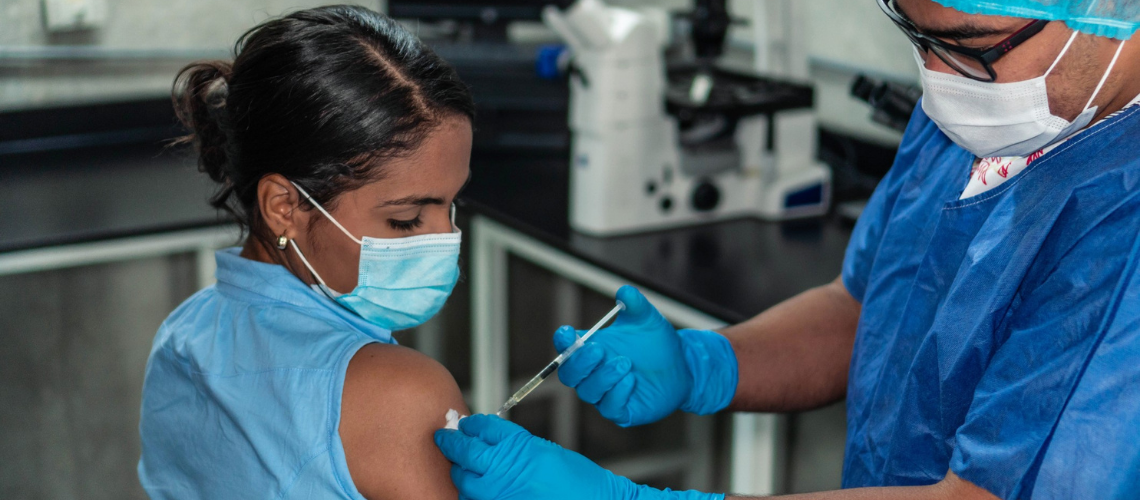 COVID-19 crisis, it should be clear that, The World Bank Group is helping developing countries purchase and distribute vaccines and strengthen health systems through a $12 billion vaccine financing facility, which complements the $6 billion Global COVID-19 Strategic Preparedness and Response Program in the health sector approved in April 2020 and that now covers more than 110 countries.
The Global Economy: on Track for Strong but Uneven Growth as COVID-19 Still Weighs
A year and a half since the onset of the COVID-19 pandemic, the global economy is poised to stage its most robust post-recession recovery in 80 years in 2021. But the rebound is expected to be uneven across countries, as major economies look set to register strong growth even as many developing economies lag.
Five reasons to be concerned about the shadow economy
Informal activity—sometimes dubbed the “shadow economy”—is widespread in emerging  market and developing economies. Its pervasiveness is of particular concern at the current juncture, because it may make it harder for these economies to achieve the inclusive development that is needed to undo the damage of the COVID-19 pandemic.
Food Relief for Poor Afghans Amid COVID-19
Story Highlights:
- 750,000 Afghan households facing food insecurity and hunger have received food and basic necessities packages. Over 5 million households are expected to benefit.
- Two World Bank projects support this relief effort through the Afghan government’s Dastarkhwan-e-Meli program, which aims to alleviate hunger and unemployment for the most vulnerable.
- Local Community Development Councils buy the relief packages from local providers, thus helping create jobs and stimulate local economies.
World Bank Financing for COVID-19 Vaccine Rollout Reaches $2 Billion
Financing for the poorest countries is on grant or highly concessional terms

WASHINGTON, April 20, 2021— The World Bank announced today that it has reached $2 billion in approved financing for the purchase and distribution of COVID-19 vaccines for 17 developing countries. This financing is part of the $12 billion envelope over 24 months for developing countries to acquire and deploy vaccines and strengthen their vaccination systems. For poorer countries financing is on grant or highly concessional terms. The Bank expects to support 50 countries with $4 billion financing for COVID-19 vaccines by mid-year.
WBG/IMF Spring Meeting Webinar Recap
Economic Recovery: Toward a Green, Resilient, and Inclusive Future
As countries rebuild their economies after COVID-19, it is fundamental that they see this as a unique opportunity to lay the foundation for a green, resilient, and inclusive future. These efforts were the theme of the event kicking off the Spring Meetings on Tuesday, Economic Recovery: Toward a Green, Resilient, and Inclusive Future.
2021 Spring Meetings Opening Press Conference
World Bank Group President David Malpass will address the press during the World Bank Group/International Monetary Fund 2021 Virtual Spring Meetings. He will share his views on the key outcomes from the Development Committee, as well as the G20 discussions. He will also report on the World Bank Group’s response to the global crisis caused by the COVID-19 pandemic.
This year, due to the coronavirus, the Management of the IMF and World Bank Group and their Executive Boards are adapting the 2021 IMF-World Bank Spring Meetings to a virtual format.
Website: The World Bank Group’s Response to the COVID-19 Pandemic
Rethinking Debt: Financing the Future Amid Crisis
On April 7th, the World Bank invited several leading experts to explore perspectives on a new global financial architecture for debt. Speakers discussed lessons from past restructuring efforts, the private sector’s role, and the increased need for debt transparency.
Tackling the COVID-19 Pandemic of Inequality to Build a Green, Inclusive, & Resilient Recovery
‘We have to help countries improve their readiness for future pandemics.’
World Bank Group President David Malpass called on the world to move urgently toward opportunities and solutions that achieve a green, resilient, and inclusive recovery from the COVID-19 pandemic in a speech today that advances the World Bank-IMF Spring Meetings.
“Our collective responses to poverty, climate change, and inequality will be the defining choices of our age.”
Mr. Malpass delivered the speech virtually at the London School of Economics; it was followed by a discussion with students, moderated by Baroness Minouche Shafik, Director of the London School of Economics.
Fighting climate change in the world’s poorest countries
In 2020, swarms of desert locusts descended on northern Kenya in the country’s worst locust  infestation in 70 years. They ate crops and threatened the food security of 3 million people. Locusts brought similar devastation to some of the poorest countries in Africa, the Middle East, and South Asia, as governments and communities braced for the COVID-19 pandemic.
 Netherlands for the World Bank
You must be logged in to post a comment.