
Tag Archives: Business
eC2: Support to the identification and implementation of priority reforms in the agribusiness sector in Guinea
Deadline: 24-Jun-2019 at 11:59:59 PM (Eastern Time – Washington D.C.)
The Investment Climate (IC) in Agribusiness project is a pillar of the IFC-World Bank  Action Plan to promote the agribusiness sector in Guinea. The World Bank Group recently assessed the main constraints and opportunities for the development of the agribusiness sector in Guinea.
The IC in Agribusiness project aims to improve the business climate for agribusiness through the implementation of targeted reforms aimed at unlocking investments high potential value chains and improving investments retention and generation. To implement these reforms, a dialogue mechanism to mobilize government and business community’s commitment is needed.
The IFC seeks to hire the services of a Consultant to support the identification and implementation of priority reforms for the agribusiness sector in Guinea. The Consultant will help drive the reforms on the Guinea agribusiness sector and will work closely with the designated teams within to implement these reforms.
eC2: Solar PV generation at Central de Abastos, Mexico
Deadline: 18-Jun-2019 at 11:59:59 PM (Eastern Time – Washington D.C.)
Determine viable Business Models for the establishment of a photovoltaic energy 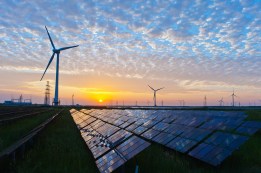 generation project at the Central de Abastos in Mexico City. This project will include the installation of solar panels and internal interconnection, as well as connection to the public network in common areas (existing ceilings and current roofless parking areas) with the objective of generating clean energy.
Report: Women, Business and the Law 2019- A Decade of Reform
Women, Business and the Law measures global progress toward gender equality in the  law. Topic notes and related research provide further analysis of the data. To gain new insight into how women’s employment and entrepreneurship choices are affected by legal gender discrimination, this study examines ten years of Women, Business and the Law data through an index structured around economic decisions women make as they go through different stages of their working lives.
eC2: Enterprise Survey (ES) in Belgium, Luxembourg and the Netherlands
Deadline: 08-Apr-2019 at 11:59:59 PM (Eastern Time – Washington D.C.)
The 2019 Enterprise Survey (ES) in Belgium, Luxembourg and the Netherlands (ES  Belgium, Luxembourg and the Netherlands 2019) will involve implementation of the ES in the countries, collecting information about business environment and firm performance from a representative sample of private sector firms. The ES will require 600 face-to-face interviews in Belgium, 360 face-to-face interviews in Luxembourg and 800 face-to-face interviews in the Netherlands.
Continue reading
Helping poor women grow their businesses with mobile savings, training, and something more?
Growing a business is not easy, and for women firm owners the challenges can be acute, 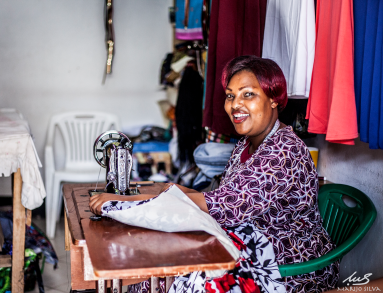 especially when they are poor and run subsistence level firms. In developing countries, 22 percent of women discontinue their established businesses due to a lack of funds, and women are more likely than men to report exiting their businesses over finance problems, according to the Global Entrepreneurship Monitor. Meanwhile, personal savings are a crucial source of entrepreneurial financing, and nearly 95 percent of entrepreneurs globally state that they used their own funds to start or scale up their businesses. Women, however, face unique constraints in accumulating savings to invest in growing their firms.
 Netherlands for the World Bank
You must be logged in to post a comment.