The Middle East and North Africa (MENA) has become a hotspot of unsustainable water use, with more than half of current water withdrawals in some countries exceeding the amount naturally available. This could have serious long-term consequences for the region’s growth and stability. Solutions for narrowing the gap between the supply of and demand for water are an urgent priority.
As the Fourth Arab Water Forum gets underway next week in Cairo, Egypt, much is at stake in the region’s water management. Armed conflict and massive numbers of refugees have put tremendous additional stress on land and water resources in MENA as well as on infrastructure in communities receiving the refugees. In Jordan alone, according to the country’s Ministry of Water and Irrigation, climate change and the refugee crisis have reduced water availability per person to 140 cubic meters, far below the globally recognized threshold of 500 cubic meters for severe water scarcity.

Continue reading →

 conducive PPP framework in Cameroon. Through a modernized PPP legal and institutional framework and enhanced capacity of PPP institutions, in particular CARPA, to identify and prepare PPP projects, the Government in Cameroon will be in a better position to attract private sector participation in infrastructure development.



 Imagine that you are an advisor to your country’s Minister of Education. A recent earthquake damaged hundreds of schools in several cities. The minister has called for a meeting with you and asked:
 improve the equity, efficiency and transparency of major safety nets to benefit the poorest households. Through this project, the World Bank is supporting the Bangladesh Bureau of Statistics, under the Statistics and Informatics Division (SID), carry out data collection activities nationwide. This will be carried out in three phases, with Phase 2 scheduled to be conducted in January 2018 in Dhaka and Chittagong Division.
 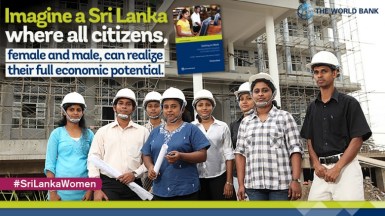 Pushpa drops her youngest son off at the day care centre at St. Theresa’s Church in Thimbirigasaya every day. The 37-year-old then heads to work as a maid. There are days when this routine becomes impossible. If her child is feverish, for instance, the day care won’t accept him because he may infect the other children.
 Netherlands for the World Bank
You must be logged in to post a comment.