
Deadline: 08-Apr-2019 at 11:59:59 PM (Eastern Time – Washington D.C.) 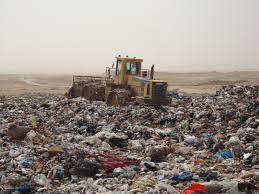
IFC’s Manufacturing, Agribusiness and Services team is seeking a consultant to provide support on an assignment for a major producer of alternative fuels for the cement sector (including RDF), or the Client. The Client is planning to expand operations in two governorates. The consultant is expected to support the preparation phase of this project. This gap assessment will help confirm the viability of the client’s business model, strength of the local supply chain and overall waste management operations, as well as the capacity of the Client itself to play the bigger role in integrated waste management operations.
 suppose it wouldn’t be inaccurate to say that they can help you decide how to dress, whether or not to carry an umbrella, or water the garden. But their purpose is so much bigger than that.
 Belgium, Luxembourg and the Netherlands 2019) will involve implementation of the ES in the countries, collecting information about business environment and firm performance from a representative sample of private sector firms. The ES will require 600 face-to-face interviews in Belgium, 360 face-to-face interviews in Luxembourg and 800 face-to-face interviews in the Netherlands.
 from the World Bank and the World Resources Institute (WRI) that aims to advance the integration of green and gray infrastructure solutions on the ground. It places a spotlight on the world’s growing infrastructure crisis, driven by climate change and growing populations. It proposes insights, solutions and examples for putting nature to work. It examines the technical, environmental, social and economic dimensions of a typical project assessment but also outlines, with new clarity and detail, the enabling conditions required to facilitate successful implementation of green-gray projects. Harnessing the collective analytical and technical expertise of the World Bank and WRI, it aims to build momentum in both policy and practice.
 at meetings both within the World Bank and more broadly. The issue is not just linguistic hair-splitting. Technology optimists prefer the first term and see new technologies, digitization in particular, as an opportunity for low-income developing countries to leapfrog into the 21st century. Moonshot Africa, an ambitious World Bank initiative to connect individuals, firms, and governments in Africa to fast internet is inspired by this vision. Technology pessimists on the other hand emphasize the disruptive effects digital technologies are expected to have on labor markets. Concerns about robots and algorithms replacing human labor increasingly dominate the public debate not only in advanced economies, but also in emerging and developing economies. Against this background, it is natural to ask how these two views are compatible. To be more specific: How will Moonshot Africa create jobs on a continent where job creation is needed more than anywhere else in the world with Africa’s working-age population projected to rise by 70% in the next twenty years?
 gathering at the





You must be logged in to post a comment.