
Category Archives: WBG News & Reports
COVID-19 (Coronavirus) Drives Sub-Saharan Africa Toward First Recession in 25 Years
WASHINGTON, April 9, 2020—Growth in Sub-Saharan Africa has been significantly  impacted by the ongoing coronavirus outbreak and is forecast to fall sharply from 2.4% in 2019 to -2.1 to -5.1% in 2020, the first recession in the region over the past 25 years, according to the latest Africa’s Pulse, the World Bank’s twice-yearly economic update for the region.
“The COVID-19 pandemic is testing the limits of societies and economies across the world, and African countries are likely to be hit particularly hard,” said Hafez Ghanem, World Bank Vice President for Africa. “We are rallying all possible resources to help countries meet people’s immediate health and survival needs while also safeguarding livelihoods and jobs in the longer term – including calling for a standstill on official bilateral debt service payments which would free up funds for strengthening health systems to deal with COVID 19 and save lives, social safety nets to save livelihoods and help workers who lose jobs, support to small and medium enterprises, and food security.”
Europe and Central Asia: Health Systems, Safety Nets, and Support to Businesses All Critical to Protecting Lives and Livelihoods
WASHINGTON, 8 April 2020 – Decisive policy measures that prioritize investments in ![medical-appointment-doctor-healthcare-clinic-health-hospital-medicine[7]](https://nl4worldbank.org/wp-content/uploads/2015/09/medical-appointment-doctor-healthcare-clinic-health-hospital-medicine7.jpg?w=249&h=166) health care systems and provide safety nets for people, especially the most vulnerable, are critical to mitigating the impacts of the COVID-19 (coronavirus) pandemic in Europe and Central Asia, says the Spring 2020 Economic Update for the region.
health care systems and provide safety nets for people, especially the most vulnerable, are critical to mitigating the impacts of the COVID-19 (coronavirus) pandemic in Europe and Central Asia, says the Spring 2020 Economic Update for the region.
In addition, countries in the region can help sustain economic activity by supporting the private sector with temporary business credits, tax cuts, or tax payment deferrals. Small and medium enterprises that are impacted could benefit significantly from targeted government subsidies.
How development policy financing can support COVID-19 response and preserve human capital
With Madagascar’s health system under strain from the COVID-19 pandemic and schools 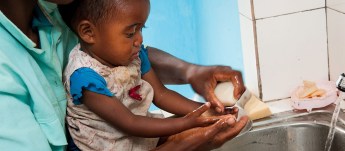 shuttered for the foreseeable future, the health, education, and overall well being of the Malagasy people are increasingly at risk. As the pandemic hits more and more countries, the World Bank Group and other organizations like ours are stepping up to provide immediate support to countries in order to quickly get resources to the front lines of fighting this disease.
World Bank Group’s Operational Response to COVID-19 (coronavirus) – Projects List
The World Bank Group is taking broad, fast action to help developing countries 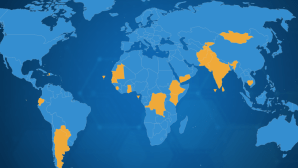 strengthen their pandemic response, increase disease surveillance, improve public health interventions, and help the private sector continue to operate and sustain jobs. It is deploying up to $160 billion in financial support over the next 15 months to help countries protect the poor and vulnerable, support businesses, and bolster economic recovery. On April 2, the first group of projects using the dedicated COVID-19 Fast-Track Facility, amounting to $1.9 billion and assisting 25 countries, was rolled out. In addition, the World Bank is working worldwide to redeploy resources in existing World Bank financed projects worth up to $1.7 billion, including through restructuring and use of projects’ emergency components as well as contingent financing instruments designed for catastrophes, including pandemics. Below is list of countries that are getting Bank Group support through the FTF as well as other financing mechanisms.
Countries benefiting from the dedicated COVID-19 Fast-Track Facility
Does Being A Large Country Lead to Higher Corruption?
Corruption is one of the most vexing problems confronting us today: it causes
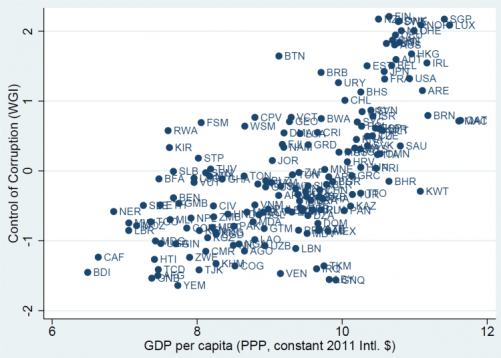
Notes: Higher values of Control of Corruption variable imply lower corruption. WGI stands for Worldwide Governance Indicators. Year 2018 values are shown. Source: Worldwide Governance Indicators and World Development Indicators
misallocation of resources and holds back investment, innovation, entrepreneurship, growth and productivity. It can have important distributional implications as its effects may fall more heavily on some agents than others.
At the same time, levels of corruption vary across countries, even among ones at roughly the same level of economic development (figure 1). Why is corruption higher in some places than others? Answering this can help identify what leads to corruption. This is an essential first step in designing polices aimed at curbing this undesirable practice.
Poorest, most vulnerable countries likely to be hit hardest from coronavirus
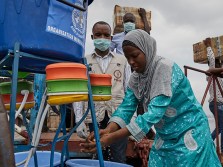 World Bank Group teams around the world remain focused on country-level and regional solutions to address the ongoing crisis. In this piece, President David Malpass highlights the progress the Bank Group has made in responding to the COVID-19 pandemic.
Related: The World Bank’s Managing Director for Development Policy and Partnerships, Mari Pangestu, shares her thoughts on how the world’s poorest will face the pandemic. The fight against COVID-19 requires concerted international effort, she wrote. “Going it alone will hurt the poorest and most vulnerable countries.”
March 2020 global poverty update from the World Bank: New poverty estimates for 2018
The March 2020 global poverty update added more than 200 new surveys to PovcalNet,
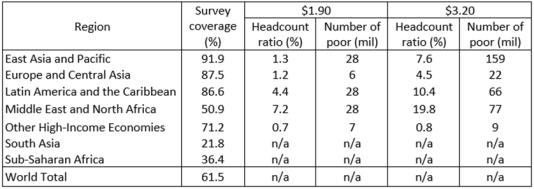
Table 1. Poverty estimates for reference year 2018, different poverty lines
bringing the total number of surveys to more than 1,900. New poverty estimates for the reference year 2018 are now included for some regions, and the previously published global and regional estimates from 1981 to 2015 have been revised, reflecting data revisions and the availability of new data. More details on the revisions can be found in Atamanov et al. (2020).
How ministries of education work with mobile operators, telecom providers, ISPs and others to increase access to digital resources during COVID19-driven school closures (Coronavirus)
With schools closed around the world as a result of the coronavirus pandemic, many  countries that are seeking to promote and support online learning for students at home are running into challenges.
One easy-to-understand challenge relates to access:
World Tuberculosis Day: Remembering an ancient disease as we fight a modern one
As COVID-19 dominates the world’s attention, it bears remembering that another, older  respiratory disease that is both preventable and treatable is still killing 1.5 million people every year: TB.
Tuberculosis (TB) is a disease that has persisted since antiquity – it was often referred to as ‘consumption’ – and yet remains one of the top 10 causes of death globally. Approximately 10 million people fall ill with TB each year, including one million children.
 Netherlands for the World Bank
You must be logged in to post a comment.