
Our global economy relies on deeply intertwined supply chains, sustained by more than  100 billion tons of raw materials entering the system each year. It has been unsustainable for decades, and
Category Archives: WBG News & Reports
IFC TechEmerge Sustainable Cooling in Latin American Cities program
We are very pleased to inform you that today we launched an International Call for  Innovation under the IFC TechEmerge Sustainable Cooling in Latin American Cities program.
Companies interested in joining the TechEmerge Sustainable Cooling program can apply from now until September 18, 2020.
Relief, restructuring and resilient recovery key to building back better

The COVID-19 pandemic demands World Bank engagement with unprecedented speed, scale and selectivity. We’re organizing our crisis response across the three stages of relief, restructuring, and resilient recovery. Learn more about our priorities for broad and fast action with our new crisis response paper, Saving Lives, Scaling-up Impact and Getting Back on Track.
Four strategies for helping women in fragile settings succeed in the digital economy
The coronavirus (COVID-19) pandemic is disproportionately impacting women’s  livelihoods. Young women are more prone to unemployment and under-employment than men, and many work in service and informal sector jobs that have been most disrupted during the crisis.
As part of their COVID-19 response, governments are exploring digital solutions to promote economic recovery. However, gender gaps in internet use and mobile phone access mean that job opportunities in the digital economy remain out of reach for many women. This inequality is exacerbated in communities affected by fragility, conflict and violence (FCV), where women often face greater safety and security concerns, significant mobility constraints, and restrictive sociocultural norms. This is the case in Kaduna, a state in northern Nigeria affected by years of conflict and instability.
Corruption has modernized, so should anticorruption initiatives
The World Bank’s commitment to helping countries control corruption dates to 1996  when then President James Wolfensohn made his “cancer of corruption” speech. It was the first time the issue was given such prominence by a World Bank President and put squarely on the agenda of the institution.
What do we know about the relationship between air pollution and COVID-19?
 hip between air pollution and COVID-19? A lot, although it is not conclusive yet.
The global COVID-19 lockdown to contain the spread of the virus has severely restricted economic activity, and reports are emerging from across the globe of blue skies becoming visible, in some cases for the first time in people’s lifetime. These improvements will likely dissipate as lockdowns are lifted, and economic activity resumes. Will the air once again become polluted, or is there a possibility for countries to use economic recovery programs to grow back stronger and cleaner? Discover in our latest analysis!
Why we need a Blue Recovery
COVID-19 has brought untold suffering to communities worldwide, compounded by what 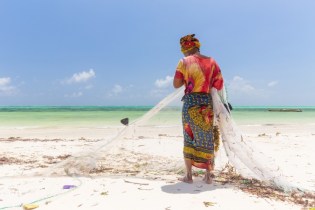 World Bank estimates suggest will be the worst recession since World War II. Such a cataclysmic event requires a bold response, both in the immediate term by providing medical care and the safety nets needed to prevent people from falling into poverty but also in the longer term. As we work with countries to build back their economies and strengthen their communities, it cannot be business as usual and sustainability needs to be fully built into the recovery. But – ranging from the warming effects of climate change to pollution caused by coastal run-off and marine litter, overfishing and coral reef and biodiversity loss.
A lesson on the pandemic – the lesson we didn’t learn about inequality
School after this pandemic will be different. To a large extent this is due to many actors –  parents, teachers, mass media, the government, and others – who will have changed their views and perceptions about their role in the education process. This shift of mindsets will be critical for the future of the education system.
Parents now have a better understanding of the need to work jointly with schools to foster the education of their children. They now know that they can be, and actually are, a major figure in the education process of their children. And many parents who are now struggling with supporting they children to maintain some of their learning process at home will have a better understanding of just how demanding and challenging the teacher’s job is. Parents have a much greater appreciation for teachers and what they do. And parents now clearly recognize that education is a social experience – a lot of the magic of learning, of the development of ideas and creativity, come from the social interaction with teachers and peers. If someone ever thought that teachers could be replaced by artificial intelligence, it is now clear that is not the case.
Productivity growth threatened by COVID-19 disruptions

Productivity growth, a force that has contributed to lifting millions of people out of poverty in developing countries, will need substantial support from policymakers if it is to withstand the severe challenges posed by the COVID-19 pandemic’s economic shock. More in our latest study.
Diversification and cooperation in a de-carbonizing world: Climate strategies for fossil-fuel dependent countries
Countries’ attempts to tackle climate change will depend on their circumstances and  capabilities. Among the most challenging, will be how fossil fuel–dependent countries (FFDCs) do so, given their economies are the most dependent on fossil-fuel income and carbon-intensive industries. These countries represent almost one-third of the world’s population. They are themselves responsible for roughly 20 percent of global greenhouse gas (GHG) emissions but are home to over 80 percent of emissions embodied in known fossil fuel reserves. Many also have foundational systems built on the back of (expected) fossil fuels and related value chains and are, therefore, at risk as the global low-carbon transition gets fully underway.
 Netherlands for the World Bank
You must be logged in to post a comment.