
The lingering pandemic has dealt the global economy an unprecedented shock, and the 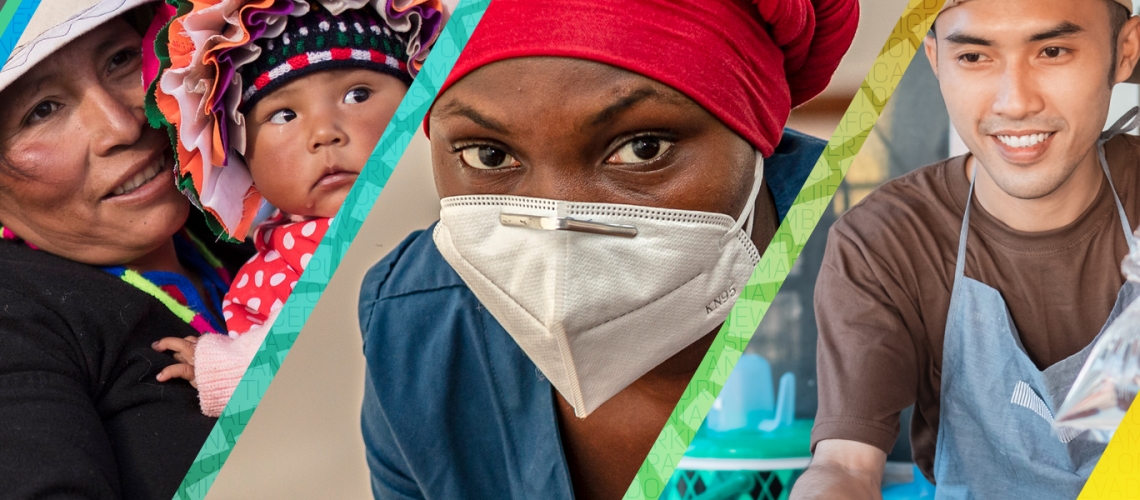 recovery is likely to be slow and uneven. The current crisis is exacerbating inequalities throughout the world and, without access to vaccines, the gap will widen further.
Meanwhile, COVID-19 has made clear the need to establish a better way to handle the debt-financing needs of developing economies. And for a sustainable future, solutions are most urgently needed in developing countries, where the investment gap is deepest, and people are most disproportionately impacted by the climate crisis. So, what will it take to shape a resilient recovery that works for people and the planet?
 infestation in 70 years. They ate crops and threatened the food security of 3 million people. Locusts brought similar devastation to some of the poorest countries in Africa, the Middle East, and South Asia, as governments and communities braced for the COVID-19 pandemic.
 populations have been hardest hit. This crisis – more so than other crises before – requires scalable solutions for the world’s poorest. For many countries, this presents unchartered territory.
 in extreme poverty? When data are turned into valuable information, they have the potential to improve lives, transform economies, and help end poverty. Now more than ever, the world is facing new demands for data as our principal weapon in the war against COVID-19. The latest edition of the World Development Report from the World Bank provides a blueprint on how to harness the power of data for development, to ensure no one is left behind.
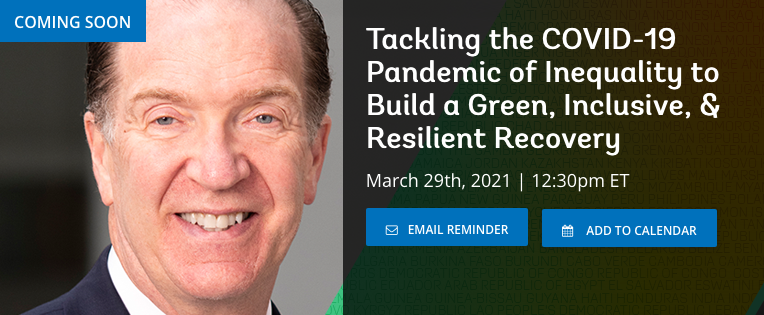 School of Economics as he discusses what is needed to build a green, inclusive, and resilient recovery from the pandemic. The crisis has worsened inequality and disproportionately impacted the poorest and most vulnerable, particularly women and children.
 governments to catalyze private investment in climate adaptation and resilience.
 UK Prime Minister Boris Johnson and US President Joe Biden. Building Back Better—or BBB—is the seeming light at the end of the COVID-19 tunnel. But what does BBB really mean in the world’s poorest countries? And how can these countries—which are supported by the World Bank’s
  Netherlands for the World Bank
You must be logged in to post a comment.